Blogs
Blogs  Leap Digest
  Events
  About Us
 The Water Cycle Process Diagram: PTE Describe Image Question with Sample Answers - Page 3
Your task
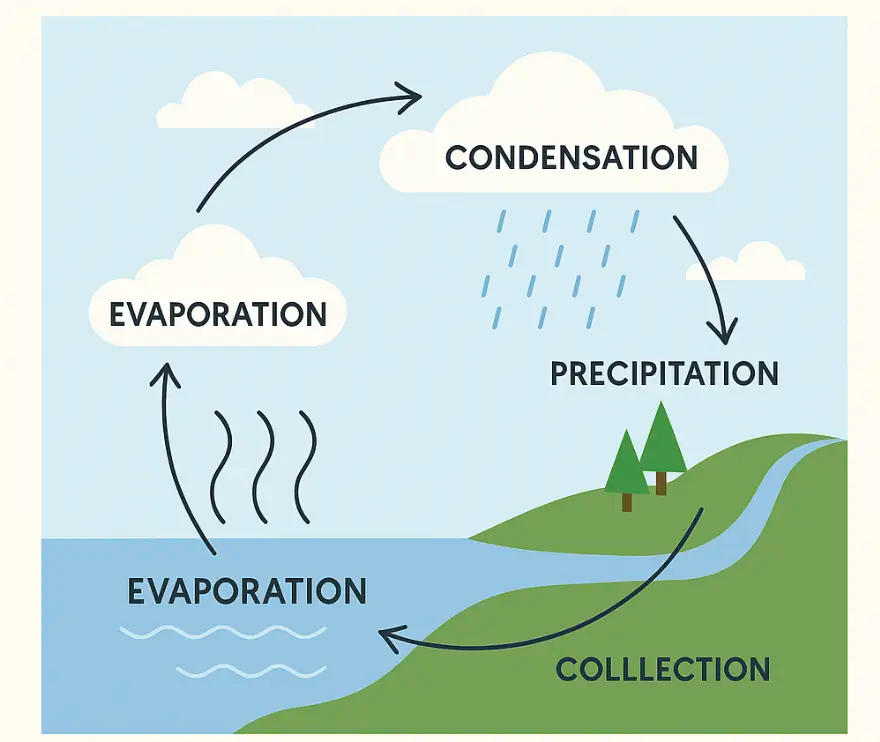
Look at the graph below. In 25 seconds, please speak into the microphone and describe in detail what the graph is showing. You will have 40 seconds to give your response.

30 community answers with AI feedback
30 community answers with AI feedback
SCORE 14/16

AI Feedback
AI Feedback
Content:
The response describes the main features of the water cycle accurately and identifies relationships, though it could expand further. Vocabulary is varied and used appropriately.
Oral Fluency:
The user demonstrated excellent fluency with a high words per minute rate and no disfluencies.
Pronunciation:
The pronunciation score is high, but there were some word accuracy issues, notably with 'goblets' and 'river banks'.
SCORE 14/16
AI Feedback
AI Feedback
Content:
The response accurately describes the main features of the water cycle and identifies relationships, although it lacks some detail in the explanation.
Oral Fluency:
The user demonstrates excellent fluency with a high words per minute rate and minimal disfluencies.
Pronunciation:
The pronunciation score is slightly lower due to some inaccuracies in word accuracy, but overall clarity is good.
SCORE 14/16
AI Feedback
AI Feedback
Content:
The response includes some accurate descriptions and basic relationships, but does not fully cover all main features of the image. Some inaccuracies are present, and vocabulary is somewhat repetitive.
Oral Fluency:
The oral fluency is highly proficient, with a speech rate of 167 words per minute, no disfluencies, and a low pause ratio.
Pronunciation:
The pronunciation is highly proficient with a high score of 99.8, indicating clear articulation and minimal errors.
SCORE 14/16
AI Feedback
AI Feedback
Content:
The response identifies the overall topic of the rain cycle and describes several key elements, including evaporation, condensation, precipitation, and collection. However, it lacks a clear explanation of relationships between these elements and misses some details, resulting in a mostly accurate but not fully comprehensive description.
Oral Fluency:
Speech is smooth and natural with a good pace, featuring only minor pauses.
Pronunciation:
Pronunciation is mostly clear with minor errors that do not significantly affect understanding.
SCORE 14/16
AI Feedback
AI Feedback
Content:
The overall topic of the water cycle is identified, and the user describes key elements such as evaporation, condensation, and precipitation. However, some relationships between these processes are not fully explained, which prevents a higher score.
Oral Fluency:
Speech is smooth and natural, with no noticeable hesitations or disfluencies.
Pronunciation:
Pronunciation is mostly clear with some minor errors that do not significantly affect understanding.
SCORE 14/16
AI Feedback
AI Feedback
Content:
The response accurately describes the water cycle and identifies its main features, allowing the listener to build an accurate mental picture, though it could expand on relationships for a more nuanced interpretation.
Oral Fluency:
The user demonstrates excellent fluency with a high rate of speech and minimal pauses, contributing to a smooth and coherent delivery.
Pronunciation:
The pronunciation is clear and mostly accurate, with a high rate of correct words and syllables, but there are minor errors that prevent a perfect score.
SCORE 14/16
AI Feedback
AI Feedback
Content:
The overall topic of the water cycle is identified, and several key elements are described, including evaporation, condensation, precipitation, and collection. However, some relationships and details are not fully articulated, which prevents a perfect score.
Oral Fluency:
Speech is smooth and natural with minimal pauses, maintaining a consistent rhythm.
Pronunciation:
Pronunciation is mostly clear with minor errors, making the speech understandable.
SCORE 14/16
AI Feedback
AI Feedback
Content:
The user clearly identifies the water cycle as the overall topic and describes most key elements correctly, including condensation, precipitation, collection, and evaporation. However, the explanation of relationships between these elements is somewhat limited, which prevents a higher score.
Oral Fluency:
The speech is smooth and natural with no hesitation, maintaining a good rhythm throughout.
Pronunciation:
Pronunciation is mostly clear with some minor errors, but overall understandable.
SCORE 14/16
AI Feedback
AI Feedback
Content:
The overall topic of the water cycle is clearly identified, and most key elements are described accurately. However, relationships between elements are not explicitly mentioned, which prevents a score of 6.
Oral Fluency:
Speech is smooth and natural, with a good pace and no noticeable disfluencies.
Pronunciation:
Pronunciation is mostly clear with some minor errors that do not significantly impact understanding.
SCORE 14/16
AI Feedback
AI Feedback
Content:
The response describes the main features of the water cycle accurately and identifies relationships, with a variety of expressions used appropriately.
Oral Fluency:
The speech is fluent with a good words per minute rate and no disfluencies, indicating a high level of oral fluency.
Pronunciation:
The pronunciation is generally clear, but there are some inaccuracies in word accuracy that prevent a perfect score.
How to approach it
- Name the image. Say what type of chart or picture it is and what it measures.
- Give the overview first. State the highest and lowest, or the main idea, before any detail.
- Group, do not list. Cover two or three key points. Never read every number.
- Close with one comparison. End on the biggest contrast or the main takeaway.
Model Answer
the image here describes about the hydrological cycle of the planet earth, which shows the evaporation of water through the sea or water bodies leading to condensation, which later turns into precipitation in the form of rainfall or snowfall, which is again collected in the on the earth surface in the form of lake spawns rivers, which later goes and joints in the seawater which in turn turns again to evaporated water on heating which then again turns into condensation completing the cycle of the hydrological moment.