Blogs
Blogs  Leap Digest
  Events
  About Us
 Trending News
Germany Study Visa: Streamlined Process for Indian Students in 2026
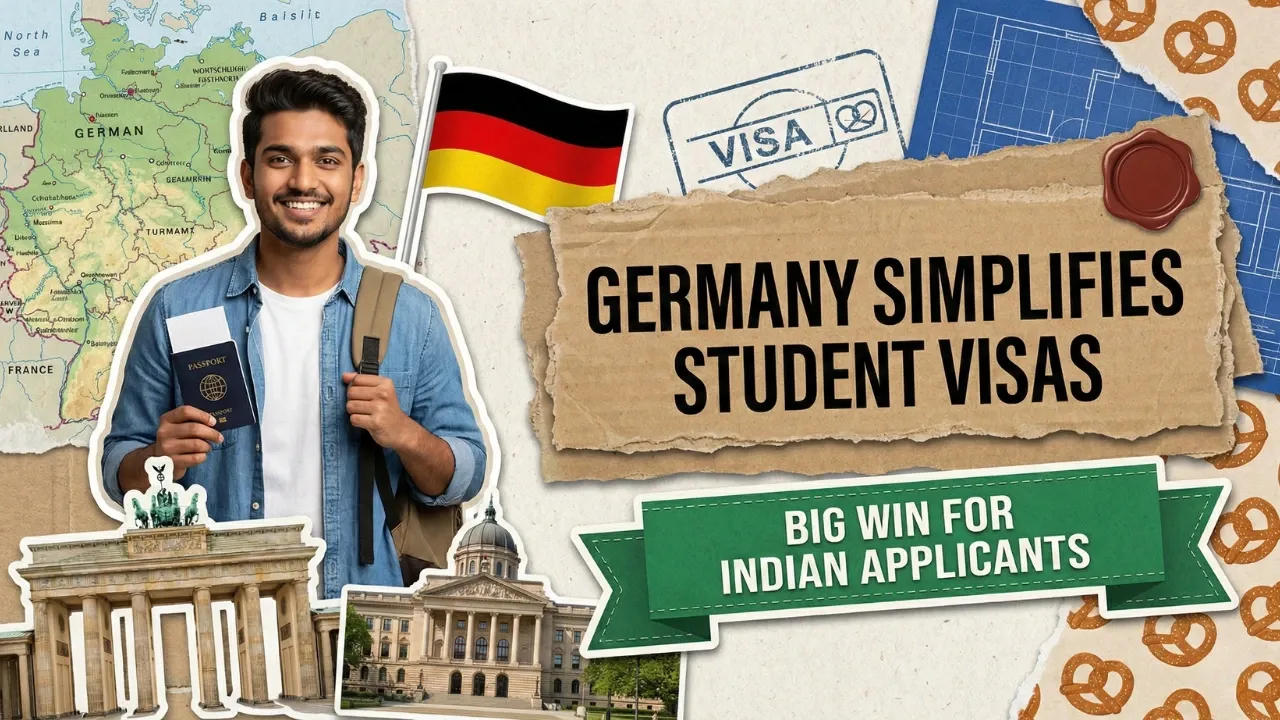
Germany has always been attractive for international education tuition-free public universities, a strong economy, and excellent research facilities. But even though the “studying in Germany” part has been an exciting segment of the plan, the visa process was a notorious bottleneck. Long waiting times, confusing requirements, manual paperwork, and unpredictable processing timelines made the entire experience stressful.
That's changed significantly. Recognizing the immense value of Indian talent in filling critical skills gaps, the German government has implemented several key measures to reduce bureaucratic hurdles and accelerate application timelines. The core of this streamlining lies in digitalization and mandatory upfront verification of academic credentials.
When your complete application reaches the German mission now, it's ready for faster processing. Let me walk you through what's actually changed and what it means for you.
The Digital Revolution: No More Waiting in Lines
The most notable change is the shift to a mandatory online application system via the Consular Services Portal at digital.diplo.de. This has genuinely revolutionized the initial application experience for Indian students. For Indian students, this means the Type D National Visa (long-term study) starts in the cloud, not in a queue.
Many students find the digital–physical hybrid process confusing. It’s important to note that digital submission does not mean a digital visa, it is a digital-first entry into a physical process. You can now complete the National Visa application and upload documents online from anywhere in India, eliminating the need to visit the embassy just to submit paperwork.
Digital submission has largely removed the manual appointment waitlist, ending the months-long scramble for slots. Availability is now more efficient and transparent.
The portal also enables a preliminary document review before your in-person appointment. You’re called for biometrics and the interview only after your file is complete, reducing rejections caused by minor errors or missing documents.
The Consular Services Portal (digital.diplo.de)
- The Edit: Bold the URL and specify the visa type.
- Revised: "The shift to the mandatory Consular Services Portal (digital.diplo.de) has replaced the antiquated manual booking system. For Indian students, this means the Type D National Visa (long-term study) starts in the cloud, not in a queue."
2. The End of the "Appointment Scramble"
- The Edit: Use data to drive the "Efficiency" point.
- Revised: "By migrating to digital queues, the German Missions in India have solved the 'midnight login' crisis. The portal now uses an automated allocation system. Once your digital file is uploaded, you are placed in a structured queue, ensuring that Genuine Students are prioritized over bulk-booking bots."
3. The "Pre-Check" Advantage (The Rejection Shield)
- The Edit: Frame this as a "Safety Net."
- Revised: "The portal’s Preliminary Document Review is your safety net. In the old system, a missing signature meant a rejected visa and a lost semester. Now, German consular officers review your digital uploads first. If a document is missing or incorrect, you receive a notification to fix it before you ever step foot in the Consulate for your interview."
The APS Certificate: Your First Major Hurdle
A crucial step that's now fully integrated into the process is the requirement for the Academic Evaluation Centre certificate, known as APS. This certificate is mandatory for almost all Indian applicants seeking a German student visa.
The APS process verifies the authenticity of your academic documents, marksheets, degrees, and transcripts before your visa application is formally submitted. This might seem like an extra step, but it actually accelerates your overall timeline.
Why the APS Matters
Here's why: since the German Embassy or Consulate receives your application with pre-verified credentials, a major part of their processing time is eliminated. They don't need to independently verify whether your Bachelor's degree is legitimate or your transcripts are authentic. That work is already done.
The Digital Token
You now receive a Digital APS certificate. This digital token is what unlocks the rest of the German visa portal. It is a digitally signed PDF that you upload during your online visa application, acting as the primary verification key for the German missions.
Timing and Fluctuations
The catch is timing. You must apply for the APS certificate 4-6 months before your university application deadlines. This is not something you can rush at the last minute. The 4-6 month window is correct, but we need to emphasize that APS processing times can fluctuate. In peak seasons, the "streamlined" process can still take 3 months. Securing this certificate is genuinely the first major step in your streamlined timeline to Germany.
The Application Checklist
The APS application is document-heavy. A checklist prevents the "minor errors" that cause month-long delays. Before you courier your physical file to New Delhi, ensure you have:
- Signed Application Form: Printed after your online registration.
- Fee Receipt: Proof of the ₹18,000 non-refundable payment.
- Aadhaar Card Copy: Specifically the one linked to your mobile number.
- Academic Records: Copies of all semester marksheets and your degree/provisional certificate.
- Language Proficiency: A copy of your IELTS/TOEFL or German language certificate.
The APS process involves document submission, verification, and often an interview where you discuss your academic background. It's thorough, but once you have it, your visa application becomes significantly smoother.
Actually Faster Processing Times
The combination of online submission and APS verification has led to noticeable improvement in overall visa processing duration, though times still fluctuate based on application volume and the specific consulate handling your case.
The standard processing time for a long-term National Visa used to be 8-12 weeks sometimes longer during peak seasons. Now, many complete applications submitted digitally with APS certificates are seeing decisions in 4-8 weeks. Some cases are even faster.
Students who've secured public German or EU scholarships like DAAD scholarships may benefit from priority processing, further accelerating their visa issuance. If you're a scholarship holder, make sure to highlight this prominently in your application.
Your Complete Document Checklist
The streamlining efforts rely heavily on you submitting a complete and accurate file while applying for a student visa in Germany. Missing even one document can delay everything. Here's what you absolutely need:
1. Valid Passport: Must be issued within the last 10 years with at least two blank pages. Make sure it's valid for the entire duration of your planned study.
2. Completed Online Application Form: Submitted via the Consular Services Portal. Fill this out carefully errors here can cause unnecessary delays.
3. University Admission Letter: Your Zulassungsbescheid from a recognized German university. This is your proof that you've been accepted.
4. APS Certificate: Mandatory for Indian students. Without this, your application won't be processed.
5. Proof of Financial Means: This is critical. You need confirmation of deposit in a German Blocked Account (Sperrkonto), currently requiring a minimum of €11,904 per year (€992 per month). This proves you can support yourself financially.
6. Health Insurance Certificate: Proof of valid travel health insurance covering your initial period, and commitment to full student health insurance upon arrival in Germany.
7. Academic Documents: Complete transcripts, degree certificates, a detailed CV in Europass format, and a thorough motivation letter explaining why you're pursuing this program and how it fits your career goals.
8. Language Proof: IELTS or TOEFL scores for English-taught programs, or Goethe, TestDaF, or DSH certificates for German-taught programs, as required by your university.
Each of these documents needs to be current, complete, and properly formatted. The German system values precision and thoroughness.
Important Change: No More Informal Appeals
Effective July 1, 2025, a major policy change has come into force: the informal remonstration process (an informal appeal to the German Embassy after a visa rejection) has been abolished.
If your visa is rejected, you can no longer submit an informal appeal to the German mission. Your options are limited to either filing a formal legal challenge through the administrative court (costly and time-consuming) or re-applying from scratch.
This makes initial application accuracy more critical than ever. You can no longer rely on appeal opportunities to fix mistakes, getting it right the first time is essential.
Strategic Timeline Planning
Given these changes, here's your realistic timeline for planning a German education:
Step 1: Start 12-15 months before your intended program starts. This gives you a buffer for every step.
Step 2: Begin APS application 10-12 months out. This process takes time, and you need the certificate before applying for admission at many universities.
Step 3: Apply to universities 8-10 months before the program starts. German university application deadlines are typically well in advance.
Step 4: Once you receive admission, immediately start your blocked account setup and visa application process. Don't delay even with streamlined processing, you want a maximum time buffer.
Step 4: Plan for 2-3 months for visa processing, though it might be faster. Build in contingency time for any unexpected requests for additional documentation.
The Bottom Line
The streamlined visa process reflects Germany’s commitment to attracting international students. Through digitalization and mandatory APS pre-verification, the system now offers a faster and more predictable pathway for Indian students.
Applicants no longer face severe backlogs or uncertain timelines. The process is more transparent, efficient, and reliable, provided you submit complete and accurate documentation.
Success now depends on early planning, clear understanding of requirements, and meticulous execution. Germany has built the infrastructure to welcome talented Indian students, the final step is applying strategically and precisely.
Your Next Action Steps
To turn this information into an admit letter, follow these three high-impact steps today:
- Check Your Timeline: Use a 12-month countdown. If you are targeting the Winter intake, your APS application should be filed by January.
- Verify Your Funds: Ensure your €11,904 is ready for the blocked account.
- Get Expert Eyes on Your SOP: Your first application must be perfect.
Need help with your university shortlist or APS? Book a free consultation with a Leap Scholar expert today and let us help you build a foolproof application strategy.

Kirti Singhal
Kirti is an experienced content writer with 4 years in the study abroad industry, dedicated to helping students navigate their journey to international education. With a deep understanding of global education systems and the application process, Kirti creates informative and inspiring content that empowers students to achieve their dreams of studying abroad.
Users also read

Vietnam Steps Into the Global Academic Spotlight at APAIE 2026: And Indian Students Should Pay Attention
Vietnam Steps Into the Global Academic Spotlight at APAIE 2026: And Indian Students Should Pay Attention
Indian Passport Fees Rise From July 1, 2026. Here Is What It Means If You Plan to Study Abroad.