Blogs
Blogs  Leap Digest
  Events
  About Us
 Student Reviews
Breaking from Family Tradition: How Priyanka Machani Built a Six-Year Career at Amazon in the UK

Priyanka Machani's journey from following a family tradition of studying in the US to building a six-year career at Amazon in the UK began with a decision to take a different path. While pursuing a master's abroad was familiar territory in her family, Priyanka chose the UK instead, opting for a Master's in Data Science and Analytics with a placement year at the University of Hertfordshire. One of the factors that influenced her decision was the newly introduced two-year post-study work visa, which gave her the opportunity to explore career options in the UK after graduation. Early in her career, she also chose an unpaid internship over a higher-paying part-time job because she valued the experience it could give her. That decision helped her build relevant industry experience, and over the years, she went on to establish a career at Amazon, where she has returned twice after working elsewhere. Today, she has six years of professional experience in the UK and also informally mentors other Indian students navigating their careers abroad.
For Priyanka, choosing the UK meant doing something different from what others had always expected of her. From making early career choices based on experience rather than immediate earnings to using LinkedIn to find opportunities throughout her professional journey, she has built her career largely on her own terms.
Priyanka's Journey at a Glance
- From: India
- Background: 6 years of professional experience in the UK
- Course: Master's in Data Science and Analytics with a placement year, University of Hertfordshire
- Decision: Chose the UK over the US, breaking from her family's usual study-abroad route
- Career Choice: Prioritised an unpaid internship over a higher-paying part-time job to gain relevant experience
- Now: Professional at Amazon, UK
- Impact: Informally mentors Indian students navigating their careers abroad
Here's Priyanka, in her own words.
Q. What made you choose the UK when everyone in your family had gone to the US?
Every single one of my aunts and uncles did their master's in the US. I didn't want to follow that same path. I wanted to prove to myself that I could do my studies somewhere entirely new, entirely on my own. I actually applied to Italy first, since education there is free, but I missed their admissions window and didn't get through. The UK became the next best option, and it turned out to be the right one. They'd just brought back the two-year post-study work visa, which was a big deal. Before that, you had only a month or two after graduating to find a job, or you had to leave. Two years gave me real time to upskill and actually look for good roles. not just take whatever came first. The pound's value and the strength of the UK's business and tech sectors were factors too, but the visa timeline was the deciding one.
Q. Why did you choose your specific university and course?
I chose the University of Hertfordshire because the course came with a placement year. I was a complete fresher straight out of my bachelor's in India with zero work experience, and I knew a master's alone wouldn't be enough to land a full-time role anywhere, including India. This particular course, a master's in Data Science and Analytics with placement, gave me a real shot at internships. What really sold me was one detail almost no other university offered: if you didn't secure a placement, you could return to university for another year and pick up two additional subjects instead of losing your visa status. That safety net made the decision easy.
Q. Did you consider other options, or was this your original plan?
I did a lot of research, genuinely a lot. I spoke to students on LinkedIn to understand what different universities and courses were actually like before deciding. I'm someone who always builds a backup plan, even when things are going well. My backup, in case I didn't land an internship, was to go back and pick up something like machine learning to strengthen my profile as a data scientist. As it turned out, I didn't need it. I got an internship at Amazon as a Business Analyst.
Q. What was your mindset once you actually landed in the UK?
I was scared, like most people are on day one, but I was determined not to let part-time work distract me from my studies. My plan was simple: study hard first, get the degree, then work hard and earn properly afterward. I capped myself at 20 hours of part-time work a week, just enough to cover my bills, since my family was already supporting my tuition. I spent the rest of my time on assignments, helping classmates, and being active as my course's student representative.
Q. What kind of part-time work did you do?
I worked night shifts as a receptionist at Travelodge, a well-known UK hotel chain, about 16 hours a week across two eight-hour shifts. Getting that job is actually a funny story. Most candidates for a night receptionist role show up fairly casually, but I wore a full blazer to the interview because it's a customer-facing job. I think that's genuinely what got me the offer; the interviewer said it showed I was serious. Nights were quiet enough that I could actually study during my shifts, so it worked well alongside my degree.
Q. You mentioned turning down more money for less. What happened there?
At one point I had two options in front of me: a part-time role paying £12 an hour or a data analyst internship paying just £4 an hour. I chose the internship without much hesitation. I even worked completely unpaid for three months at a proptech company called Unissu. purely for the exposure. It was a simple question: Do you want money now or the experience that gets you real money later? I chose later, every time.
Q. Why do you think studying abroad mattered so much to your family?
Honestly, for us it was less a dream and more an expectation. A master's degree is basically the minimum education bar in my family, and going abroad for it was just what you did. I know that's a less dramatic answer than people expect, but it's the truth.
Q. How did the job search actually play out once you graduated?
LinkedIn, entirely. I was applying constantly across LinkedIn and Indeed, tailoring my resume for every single role rather than mass-applying with one version. Eventually, a recruiter contacted me directly about an internship at Amazon. I genuinely thought it might be a prank at first. It wasn't. That internship ended up shaping the rest of my career.
Q. Did that internship convert into a full-time role right away?
Not immediately. It was during COVID, and Amazon had a hiring freeze at the time, so there was no headcount available. I started applying again and landed a Data Analyst role at Deloitte, literally finishing my internship on a Friday and starting at Deloitte the following Monday. I didn't enjoy the work culture there as much as I'd hoped. Not long after, a manager at Amazon who'd seen my earlier internship profile reached out asking if I'd interview again. I did, got the offer, and once again wrapped up on a Friday and started back at Amazon on Monday. I've never actually taken a career break in between any of it.
Q. What has this journey taught you about yourself?
More than anything, I learned about money management and genuine independence. Everything is harder in the beginning, cooking, budgeting, and balancing work and study, and it's very easy to get tempted into chasing money and losing focus on your degree. I had to make deliberate trade-offs, like the internship decision, and stick to them even when the immediate reward wasn't obvious.
Q. What's your take on work-life balance in the UK compared to India?
It's a real difference, not just something people say. People here work hard, but they don't treat work as something to worship. There's a clear line between work time and personal time that gets respected. I recently had an experience with a manager who expected me to join work calls during my vacation, which genuinely stunned me, since that kind of boundary-crossing just isn't the norm here. It made me appreciate even more how deliberately I now protect that line for myself.
Q. Have you noticed yourself changing in how you see India after years abroad?
I have, and it surprised me. I used to find it a little much when relatives visiting from the US would comment on things back in India: the noise, the traffic, all of it. Now I catch myself doing the exact same thing when I go back, things like the sound of car horns genuinely bother me now in a way they never used to. I don't think it's a rejection of where I'm from. You spend five or six years living a certain way, and your body just adjusts to it.
Q. How much did the whole move end up costing you?
The full master's, including the placement structure, came to just over £16,000, and I received a scholarship of around £2,000 against that. Once you factor in the exchange rate at the time, it actually worked out fairly close to what a master's in India might have cost, with only a small difference either way.
Q. If you moved back to India today, what would be non-negotiable for you?
Two things, honestly. First, I want the same kind of work-life balance I've gotten used to here, where people genuinely disconnect on their time off. Second, less judgment. I think people in India comment on almost everything, whether it's about traveling too much, not being married yet, or anything else. Here, people are far more focused on their own lives and let others live theirs. Those are the two things I'd genuinely miss.
Q. How does your family feel about everything now?
They're incredibly proud, more than I think they would have been if I'd taken the more familiar US route, since that's always had a family member's help behind it somewhere. I was the first in my family to build a life in the UK, and honestly, they doubted it at first. They assumed I'd eventually give up and come home. I'm glad I proved that wrong. My mother is especially proud, and I lost my father a while back, but completing my master's and settling into my life was actually his last wish for me. I hope, in my own way, I made him proud too.
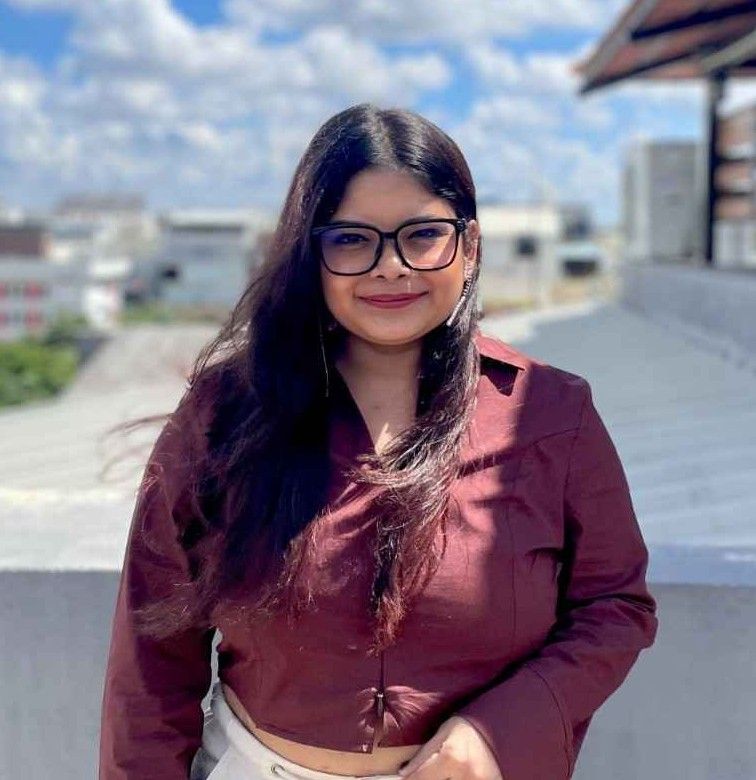
Kirti Singhal
Kirti is an experienced content writer with 4 years in the study abroad industry, dedicated to helping students navigate their journey to international education. With a deep understanding of global education systems and the application process, Kirti creates informative and inspiring content that empowers students to achieve their dreams of studying abroad.
Users also read

From a Small City in India to Bavaria: How Arjun Patil Built a Career and an MBA Sponsorship in Germany
Leap Scholar Review: My Father Wanted Me in the Family Business. I Chose a Masters in the UK Instead.

Leap Scholar Review: Going Back to School After Fifteen Years in the Industry