Blogs
Blogs  Leap Digest
  Events
  About Us
 Expert Insights
Mastering the Future: A Guide to AI and Robotics Courses in Japan (2026-2027)
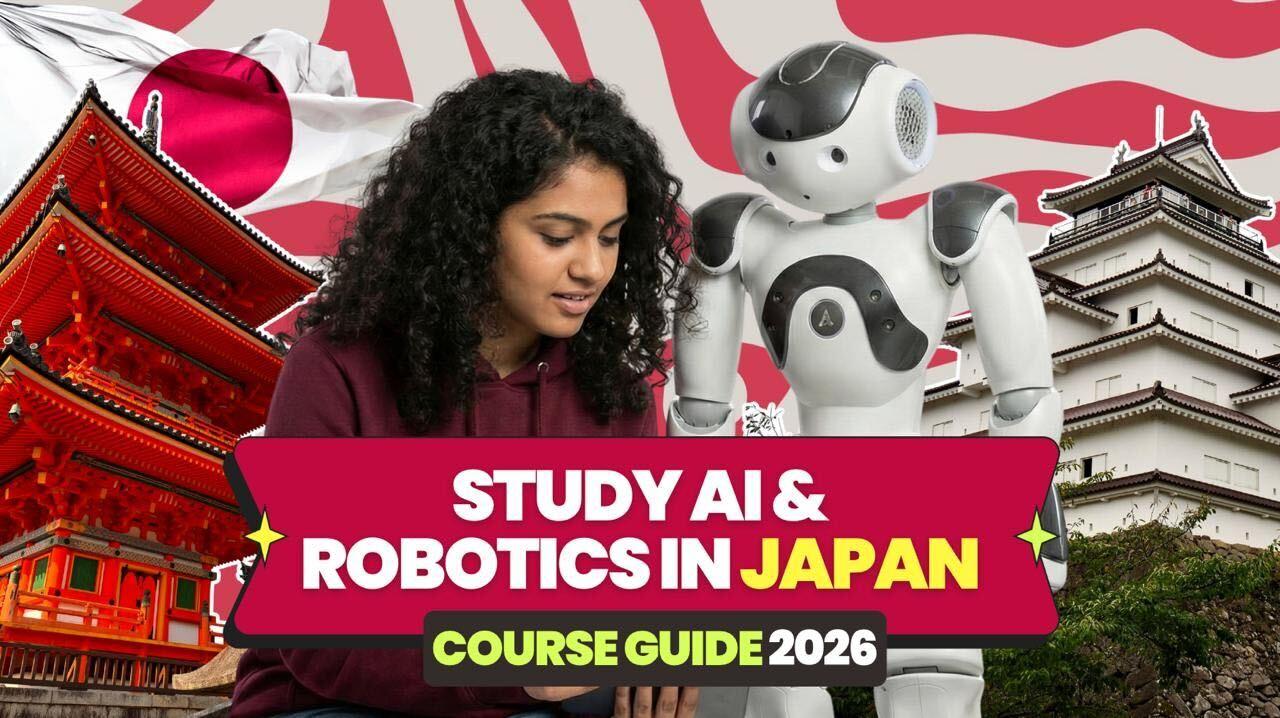
Japan has long been the global heartbeat of mechanical innovation. As we head into the 2026-2027 academic cycle, the nation is no longer just "building robots", it's redefining how Artificial Intelligence (AI) and Robotics integrate into human society. For Indian students and young professionals, Japan offers a unique ecosystem where the cost of education is surprisingly low, but the exposure to technology is unmatched.
Whether you're interested in humanoid robotics, autonomous vehicles, or machine learning for healthcare, Japan's "Society 5.0" initiative makes it the most practical laboratory in the world. This guide provides a roadmap for navigating this high-tech landscape, from choosing the right university to understanding the 2026-2027 financial outlook.
Here's what makes Japan exceptional for AI and Robotics in 2026:
- Affordability: Public university tuition remains stable at approximately ¥535,800 (~₹3.10 Lakhs) per year for 2026
- Global Leaders: The University of Tokyo and Tokyo Institute of Technology (now Institute of Science Tokyo) lead in global AI and Robotics rankings
- High Demand: Japan faces a massive labor shortage, creating a projected demand for thousands of AI and robotics specialists by 2027
- Visa Pathways: The "J-Find" visa now allows top-tier graduates to stay for up to 2 years to find a job
- Language: While English-taught programs are increasing, reaching the JLPT N2 level is the "golden ticket" for high-paying local careers
Why Japan is the AI & Robotics Hub for 2026-2027
For decades, the West was the go-to destination for tech. However, in 2026, the shift toward the East is undeniable. Japan's approach to AI is "physical", they focus on embedding intelligence into hardware. While Silicon Valley builds chatbots, Japan builds autonomous elderly-care assistants, smart-factory arms, and disaster-relief droids. That's not a criticism of either approach, it's just different, and it's incredibly valuable.
The current 2026-2027 scenario is heavily influenced by Japan's aging population. The government is aggressively funding AI research to solve labor shortages. This means as a student, your research isn't just theoretical, it's a solution to a real-world national crisis, often funded by industry giants like Fanuc, Sony, or Toyota. Your thesis could literally become a product.
Top Universities for AI & Robotics
Japan's education system is divided into National, Public, and Private universities. For tech enthusiasts, the National universities often hold the most prestige and research funding.
1. University of Tokyo (UTokyo): Known for its "International Graduate Program in Mechatronics," it remains the gold standard for robotics research. If you get in here, you're learning from the best.
2. Institute of Science Tokyo (formerly Tokyo Tech): Following its recent merger, this institution is a powerhouse for AI-driven engineering and sustainable robotics. The merger made it even stronger.
3. Kyoto University: Famous for its "Graduate School of Informatics," it focuses heavily on the "Intelligence" side of AI, machine learning, and data science. Less hardware, more algorithms.
4. Tohoku University: A world leader in materials science, which is critical for developing the next generation of lightweight, durable robot sensors. If you're interested in the physical components, this is your spot.
5. Waseda University (Private): Offers excellent English-taught programs and has deep ties with Tokyo's tech industry. Great for networking.
2026 Cost & Requirement Comparison
University Type | Avg. Annual Tuition (2026-27) | Est. Cost in INR (1 JPY = ₹0.58) | Admission Requirements |
| National Universities | ¥535,800 - ¥820,000 | ₹3.10 L - ₹4.75 L | GRE/GATE (Optional), TOEFL/IELTS, Strong SOP |
| Public Universities | ¥920,000 - ¥950,000 | ₹5.30 L - ₹5.50 L | TOEFL/IELTS, Entrance Exam |
| Private Universities | ¥1.1M - ¥1.6M | ₹6.40 L - ₹9.30 L | High School/UG Transcripts, Interview |
Note: Conversion rates are based on early 2026 projections. Many public universities offer tuition fee waivers for high-performing international students.
Look at those national university fees, ₹3.10 Lakhs for a year at one of the world's top robotics schools. That's less than many private colleges in India.
The Financial Roadmap: Scholarships and Costs
One of the biggest misconceptions is that Japan is "too expensive." In reality, tuition at a top Japanese national university is often 70% cheaper than at a mid-tier US university. That's a massive difference when you're calculating your total investment.
Major Scholarships to Target
- MEXT Scholarship: The "Holy Grail." It covers full tuition, round-trip airfare, and provides a monthly stipend of ¥144,000 (~₹83,500). This is the most competitive scholarship, but it's worth every hour you spend on the application.
- JASSO Scholarship: A smaller monthly stipend (approx. ¥48,000 / ~₹28,000) for students already accepted into Japanese universities. It helps, even if it doesn't cover everything.
- Panasonic Scholarship: Specifically targets Asian students in the field of Engineering and Robotics, offering ¥150,000 (~₹87,000) monthly. Panasonic wants to build the next generation of engineers, you could be one of them.
Top Employers and Salary Expectations
Leading firms are no longer just looking for "coders" but for "Robotics System Architects." They want people who understand both the hardware and the software.
- The Big Three: Fanuc (Industrial), Sony (Entertainment/AI), and Toyota (Autonomous Mobility) remain the top recruiters. These are household names with global reach.
- The AI Unicorns: Companies like Preferred Networks and ExaWizards are hiring heavily for Generative AI and Machine Learning roles. These startups are where the cutting-edge research happens.
- Projected Salaries: Entry-level robotics engineers in 2026-2027 can expect between ¥4.5 Million to ¥7 Million (~₹26.1 Lakhs to ₹40.6 Lakhs) annually. Senior AI Research roles can exceed ¥12 Million (~₹69.6 Lakhs). Those are real numbers that make the investment worth it.
Admissions and Visa Process for Indian Students
Applying for the 2026-2027 intake requires starting at least 9–12 months in advance. Most master's programs begin in October (Autumn intake) or April (Spring intake). Don't procrastinate on this.
Step-by-Step Navigation
1. Find a Supervisor: In Japan, especially for Masters and PhDs, you often need to find a professor whose research matches yours before you apply. This isn't optional, it's how the system works.
2. The COE (Certificate of Eligibility): Once the university accepts you, they apply for your COE from Japanese Immigration. This is the most crucial document for your visa. Without it, you're not going anywhere.
3. The Student Visa: With the COE, the visa process at the Japanese Embassy in India is straightforward and usually takes only 5–7 working days. It's one of the smoothest visa processes you'll encounter.
4. Language Prep: Even if your course is in English, start learning basic Japanese (N5 level). It makes daily life easier and shows "cultural intent" to the visa officers. Plus, grocery shopping becomes way less stressful.
Career Prospects: The "J-Find" Revolution
The career landscape for 2027 graduates looks incredibly promising. Japan has introduced the J-Find Visa, which allows graduates from top-ranked global universities to stay for up to two years specifically for job hunting. That's two full years to find the right fit, not a rushed three-month scramble.
Robotics engineers in Japan can expect starting salaries ranging from ¥4.5 Million to ¥7 Million (~₹26 Lakhs to ₹40 Lakhs) per year. If you specialize in AI and Machine Learning, salaries can go significantly higher, especially in "Gaishikei" (foreign) companies like Google Japan or Amazon Japan.
Conclusion
Studying AI and Robotics in Japan is not just an academic choice, it's a strategic career move. The combination of low tuition fees, high-tech research facilities, and a desperate need for skilled labor makes it the "hidden gem" of study-abroad destinations for 2026. While the language might seem like a hurdle, the rewards, from the high quality of life to the global prestige of a Japanese engineering degree, far outweigh the effort.
The future is being built in the labs of Tokyo and Kyoto today. With the right guidance and a bit of "Ganbatte" (doing your best), you can be a part of it.
Need help shortlisting the right university for your AI and Robotics dreams? Book a free consultation with a Leap Scholar expert today.

Kirti Singhal
Kirti is an experienced content writer with 4 years in the study abroad industry, dedicated to helping students navigate their journey to international education. With a deep understanding of global education systems and the application process, Kirti creates informative and inspiring content that empowers students to achieve their dreams of studying abroad.
Users also read

Top 10 Industries That Create the Most Billionaires in 2026: Guide for Indian Students

Stanford MBA Career Diversity: Industries, Salaries and What Indian Students Need to Know

Anthropic Academy: 16 Free AI Courses With Certificates in 2026 That Indian Students Cannot Afford to Ignore