
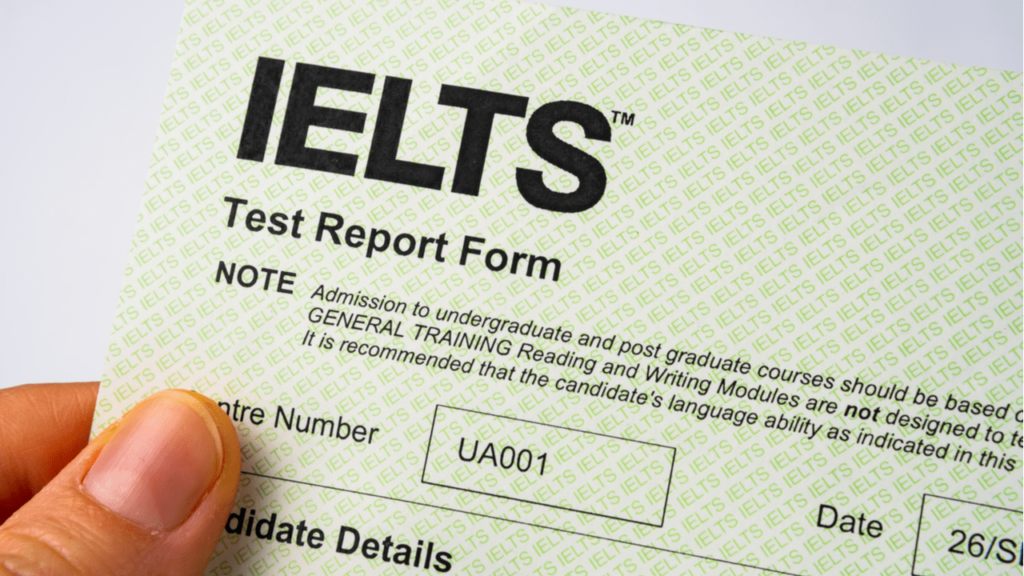
For any Indian aspiring to study or settle abroad, a high IELTS score is the first and most crucial step. While vocabulary, fluency, and comprehension are key, the one element that underpins them all is grammar. A strong command of English grammar is your secret weapon, directly impacting your scores in the Writing and Speaking sections and significantly boosting your performance in Reading and Listening.
This comprehensive guide, tailored for Indian test-takers in 2025, demystifies IELTS grammar. We will break down the exact topics you need to master, reveal common mistakes made by fellow Indians, and provide a strategic plan to help you achieve that coveted Band 8 or higher.
Why Mastering Grammar for IELTS is Crucial for a High Score?
In both the IELTS Writing and Speaking tests, your performance is partly assessed based on a criterion called “Grammatical Range and Accuracy.” This doesn’t just mean avoiding errors; it means demonstrating your ability to use a wide variety of sentence structures correctly and appropriately.
- For Writing: Proper grammar ensures your essay is clear, sophisticated, and easy for the examiner to follow. Using a mix of simple, compound, and complex sentences is essential for a high score.
- For Speaking: Correct grammar, used naturally in conversation, signals a high level of proficiency. It allows you to express your ideas precisely without causing confusion.
- For Reading and Listening: A solid understanding of grammar helps you decipher complex sentences, identify paraphrasing, and understand the precise meaning of questions and texts, preventing you from losing easy marks.
Think of grammar not as a set of restrictive rules, but as the toolkit that allows you to build powerful, precise, and impressive arguments.
The Core IELTS Grammar Syllabus for 2025: What to Focus On
There is no official “IELTS Grammar Syllabus,” but years of test analysis show that certain topics are more critical than others. Instead of trying to learn every obscure rule, focus your energy on mastering these core areas.

Excel in IELTS with India’s Top Online Coaching
Leap has helped more than 1 Lakh students achieve 7+ IELTS band.
IELTS Grammar Focus: Mastering Tenses (Past, Present & Future)
Your ability to use a variety of tenses accurately is fundamental. You must show the examiner you can move seamlessly between talking about the past, present, and future.
- Key Focus: Master the use of Present Simple (for facts and routines), Present Continuous (for ongoing actions), Past Simple (for finished actions), Present Perfect (for past actions with present relevance), and Future tenses (will/going to). For a band 7+, you should also be comfortable with Perfect Continuous tenses.
- IELTS Context: In Writing Task 1, you’ll use past tenses to describe trends in charts. In IELTS Speaking Part 2, you might need to narrate a past event, and in Part 3, you’ll likely discuss future possibilities.
Excel in IELTS with India’s Top Online Coaching
Leap has helped more than 1 Lakh students achieve 7+ IELTS band.
Advanced Grammar for IELTS: Using Simple, Compound & Complex Sentences
To score above Band 6, you must demonstrate variety in your sentence construction. Relying only on simple sentences will limit your score, no matter how error-free they are.
- Simple Sentence: The government invested in renewable energy. (One independent clause)
- Compound Sentence: The government invested in renewable energy, so carbon emissions decreased. (Two independent clauses joined by a coordinator like ‘so’, ‘and’, ‘but’)
- Complex Sentence: Because the government invested in renewable energy, which is a key policy for sustainable development, carbon emissions decreased significantly. (One independent and one or more dependent clauses)
Focus on learning to build complex sentences using relative clauses (who, which, that) and conditional sentences (if/unless clauses).
Key IELTS Grammar Rules: Punctuation, Articles, and Prepositions
These small elements can cause big problems. Punctuation errors can change the meaning of your sentence, while incorrect articles (a/an/the) and prepositions (in, on, at, for, from) are common red flags for examiners. Focus on the most common rules and the mistakes you personally tend to make.
Avoiding Errors in Grammar for IELTS: Subject-Verb Agreement
This is a non-negotiable rule of English. A singular subject must have a singular verb, and a plural subject must have a plural verb. It sounds simple, but errors often creep in with complex subjects.
- Incorrect: The main reason for these traffic jams are the number of cars.
- Correct: The main reason for these traffic jams is the number of cars.
Enhancing Your IELTS Grammar: Using Modals and Active/Passive Voice
Using modal verbs (like should, could, might, must) allows you to express opinions, suggestions, and possibilities with more sophistication. Similarly, knowing when to use the passive voice is crucial, especially for IELTS Writing Task 1 when describing a process or chart where the action is more important than the doer.
- Active Voice: The researchers conducted a survey.
- Passive Voice: A survey was conducted by the researchers. (More formal and academic)
How Your Grammar for IELTS is Assessed: A Section-by-Section Guide
Understanding where and how your grammar is assessed allows you to prepare strategically for each module of the test.
Grammar for IELTS Writing: Achieving Precision and Range
In the writing test, your grammatical prowess is on full display.
- Task 1 (Academic & GT): For academic candidates, describing graphs and charts requires the specific language of trends (e.g., increased sharply, remained stable) and comparisons. The passive voice is often essential when describing processes (e.g., the solution is then heated). For General Training, letter writing demands an appropriate tone and accurate sentence structures for requests, complaints, or explanations.
- Task 2: This is where you must showcase your grammatical range. You need to construct a well-reasoned argument using a variety of complex sentences and linking words (cohesive devices) to ensure your essay flows logically.
Grammar for IELTS Speaking: Combining Fluency with Accuracy
The Speaking test assesses your ability to use grammar accurately in real-time conversation.
- Natural Usage: The examiner wants to hear a natural application of tenses. For instance, Part 1 often involves present-tense questions about your life, Part 2 requires narrating a past event (past tenses), and Part 3 pushes you to speculate about the future (future forms and conditionals).
- Conversational Accuracy: While perfection isn’t expected, frequent errors that hinder communication will lower your score. Using contractions (e.g., I’m, it’s) is natural and appropriate in the speaking test.
Grammar for IELTS Reading & Listening: Understanding the Nuances
While you aren’t producing language, your grammatical knowledge is still being tested. In both sections, you’ll encounter sentence completion, summary completion, and matching tasks where understanding the grammatical structure of a sentence is key to finding the correct missing word or phrase. It also helps you identify paraphrases, where the same information is presented using different words and sentence structures.
Top 5 Grammar Mistakes for IELTS by Indian Students (and How to Fix Them)
Based on performance data and examiner feedback, here are the most common grammatical hurdles for Indian students.
1. Incorrect Use of Articles (a/an/the): The concept of definite and indefinite articles can be tricky.
- Wrong: Government should invest in the education.
- Right: The government should invest in education. (as a general concept)
2. Subject-Verb Agreement Errors: Mistakes often occur when a long phrase separates the subject and verb.
- Wrong: The box of old photographs were found in the attic.
- Right: The box of old photographs was found in the attic. (The subject is ‘box’, which is singular)
3. Tense Inconsistency: Shifting between past and present tenses without a logical reason.
- Wrong: I went to the park and I see many people there.
- Right: I went to the park and I saw many people there.
4. Wrong Preposition Usage: Using the wrong preposition of time, place, or for a specific phrase.
- Wrong: I am good in English.
- Right: I am good at English.
5. Run-on Sentences and Comma Splices: Joining two complete sentences with just a comma or no punctuation at all.
- Wrong: The class was over, we went to the canteen.
- Right: The class was over, so we went to the canteen. OR The class was over. We went to the canteen.
Your Step-by-Step Plan to Improve Your Grammar for IELTS
Improving your grammar requires consistent effort, not last-minute cramming. Follow this structured plan.
Step 1: Diagnose Your Common IELTS Grammar Errors
You can’t fix a problem until you know what it is. Take a few IELTS writing practice tests and have them reviewed by a qualified teacher. Alternatively, carefully analyse your own writing, looking for repeated errors. This will help you create a personalised “error checklist.”
Step 2: Daily Focused Practice to Master IELTS Grammar (The 30-Minute Daily Habit)
Dedicate just 30 minutes every day to grammar. Don’t try to study everything at once. Focus on one topic per day or every few days. For example, Monday could be for articles, Wednesday for the present perfect tense, and Friday for conditional sentences.
Step 3: Apply Your Grammar Knowledge in IELTS Practice Tests
Knowledge is useless without application. As you practice IELTS Writing tasks, actively try to use the grammar topic you studied that day. When practising speaking, record yourself and listen back, paying close attention to your grammatical accuracy. The goal is to make correct usage a habit.
Step 4: Create a Proofreading Checklist for IELTS Grammar
After writing any essay, spend the last 3-5 minutes proofreading with a specific checklist. This should be based on your common errors identified in Step 1. Your checklist might include:
- Have I checked subject-verb agreement in every sentence?
- Have I used articles (a/an/the) correctly?
- Is my tense usage consistent?
- Have I used a good mix of simple, compound, and complex sentences?
Best Resources to Learn Grammar for IELTS (2025-2026)
- Essential Books: The two most highly recommended books are “Cambridge Grammar for IELTS” by Diana Hopkins and “Essential Grammar in Use” by Raymond Murphy. The former is specifically tailored for IELTS, while the latter is a world-renowned general grammar reference.
- Reputable Websites & Apps: The official IDP and British Council websites offer excellent free resources. Websites like IELTS Liz and the blogs of ed-tech platforms like Magoosh and E2 Language provide clear explanations and practice exercises.
- Active Learning: Don’t just study rules. Read high-quality English material, such as editorials from newspapers like The Hindu or The Indian Express. Pay attention to how sentences are constructed. This will help you internalise grammatical patterns naturally.
Frequently Asked Questions
-
Q. Is it necessary to use very complex sentences to get a high score?
Ans. No. It is more important to use a variety of sentences correctly. A well-written essay will have a mix of simple, compound, and complex structures. Overly long and complicated sentences that contain errors will lower your score. Clarity is key.
-
Q. Can I use Hinglish or Indian English phrases in the Speaking test?
Ans. It is best to avoid them. The IELTS is a test of international English. While examiners are trained to understand different accents, using slang or phrases from regional languages can be seen as a limitation in your vocabulary and may cause confusion.
-
Q. How many grammar mistakes are acceptable for a Band 7?
Ans. For a Band 7 in Grammatical Range and Accuracy, you can still make “some” errors, but your sentences must be “frequently error-free.” This means that while a few mistakes are tolerated, they should not be systematic (the same mistake repeated over and over) or impede communication.
-
Q. Which is the best book for IELTS grammar for an Indian student?
Ans. While many books are good, “Cambridge Grammar for IELTS Student’s Book with Answers” is often considered the best starting point because it directly links grammar points to IELTS task types, providing contextually relevant practice.













Have Questions? Get Guidance to reach your Dream University
Connect with India's finest counsellors and biggest study abroad community.
Get Guidance