Blogs
Blogs  Leap Digest
  Events
  About Us
 Expert Insights
Navigating the Future: Postgraduate Trends in Business, Data Science, and AI (2026-2027)
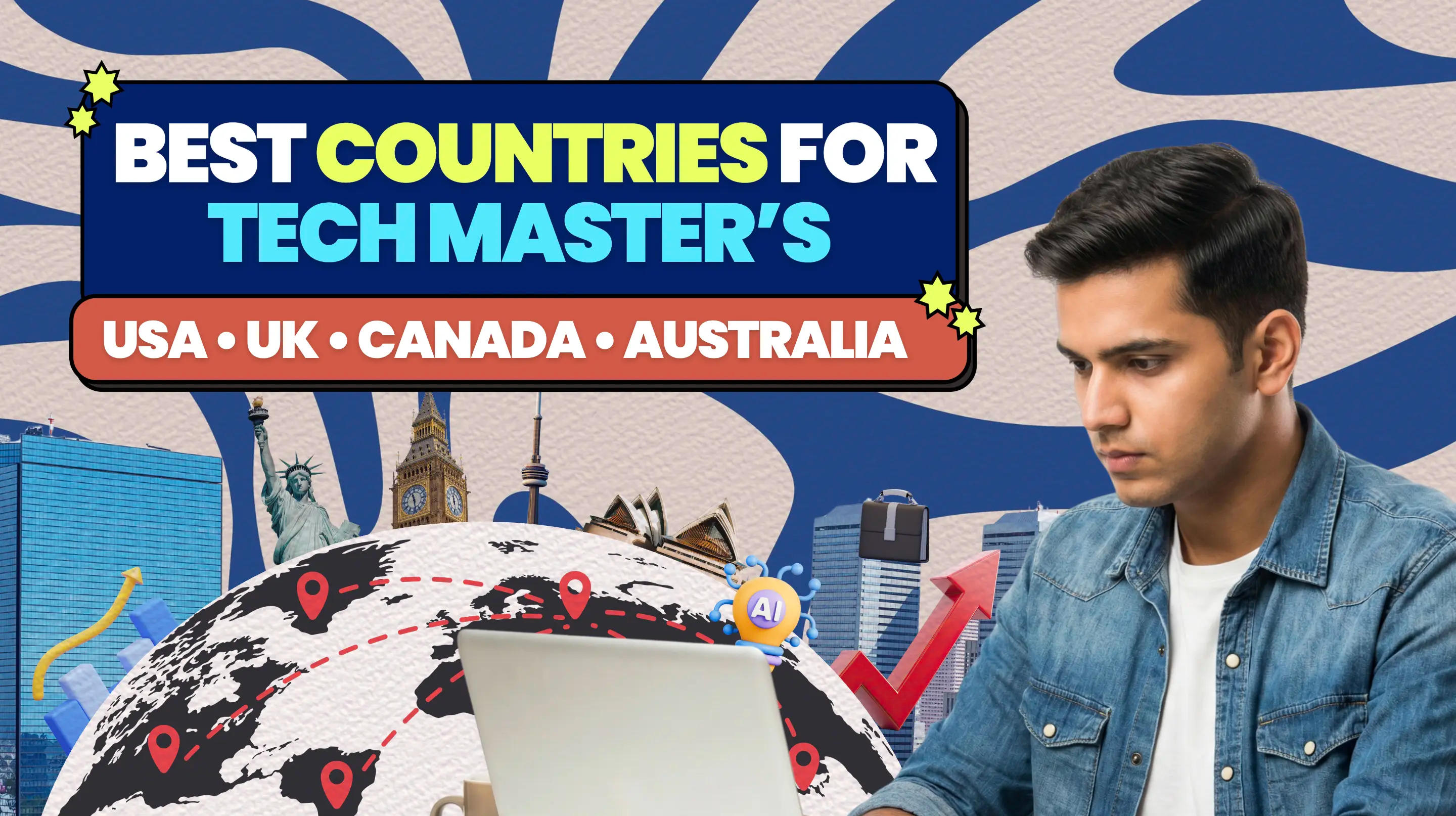
The dream of studying abroad has always been a significant milestone for Indian students. However, as we move into the 2026-2027 academic cycle, the landscape is shifting from "just getting a degree" to "acquiring future-proof mastery." With the global economy increasingly revolving around intelligent automation and data-driven leadership, postgraduate courses in Business, Data Science, and AI have become the gold standard for career resilience.
This guide provides a clear roadmap for those planning to apply this year, focusing on updated costs, visa changes, and the strategic value of these high-demand fields.
Here's what's defining the 2026-2027 landscape:
- Integrated Degrees: 2026 sees a massive rise in "Hybrid Masters", MBAs with AI specializations or Data Science degrees with Business Management modules
- Stricter Visa Norms: Major hubs like the UK and Australia have increased visa fees and financial requirements (e.g., Australia's visa fee is now AUD 2,000 [₹1,19,057])
- STEM is King: Data Science and AI remain the most reliable pathways for securing Post-Study Work (PSW) permits in the USA and Canada
- ROI Focus: Students are moving toward countries like Germany and Ireland for lower tuition fees and high employment rates in tech
The New Trio: Business, Data, and AI
The silos between technical and managerial roles are disappearing. In the current 2026 scenario, a pure business degree without data literacy is considered incomplete, while a technical AI degree without business acumen can limit your journey to the C-suite. The market wants people who can do both.
1. Artificial Intelligence (AI) & Machine Learning
AI is no longer a niche elective, it's the core of modern postgraduate engineering and computer science. Universities are now offering specialized tracks in Generative AI, Ethics in AI, and Robotics. Global demand for AI engineers is projected to grow by 34% by 2027, making this the most lucrative field for new graduates. If you can build an AI model and explain why it matters to non-technical stakeholders, you're golden.
2. Data Science & Business Analytics
Data has become the new oil, but only for those who know how to refine it. Modern courses focus on real-time data processing and predictive modeling. Indian professionals are particularly gravitating toward "Business Analytics," which bridges the gap between complex coding and boardroom decision-making. You're not just crunching numbers, you're telling the story behind them.
3. Modern Business Administration (MBA)
The MBA has evolved. In 2026, top B-schools have integrated "Tech-Management" into their core curriculum. Students are no longer just learning marketing and finance, they're learning how to manage AI-driven teams and navigate digital transformation. If your MBA program doesn't include data literacy, it's outdated.
Comparing the "Big Four" Destinations (2026 Data)
Choosing the right country involves balancing tuition, living costs, and post-study opportunities. Below is a snapshot of what to expect in the 2026-2027 session:
Country | Popular Program | Avg. Tuition Fee (Annual) | Avg. Living Cost (Annual) | PSW / Work Visa |
| USA | MS Data Science | $45,000 - $65,000 (₹38.5L - ₹55.6L) | $15,000 - $20,000 (₹12.8L - ₹17.1L) | 3 Years (STEM OPT) |
| UK | MSc AI & Business | £22,000 - £35,000 (₹24.1L - ₹38.4L) | £12,000 - £15,000 (₹13.1L - ₹16.4L) | 2 Years (Graduate Route) |
| Canada | MS Data Analytics | CAD 30,000 - 45,000 (₹19.1L - ₹28.7L) | CAD 20,635 (₹13.1L) | Up to 3 Years |
| Australia | Master of IT (AI) | AUD 38,000 - 52,000 (₹21.4L - ₹29.3L) | AUD 29,710 (₹16.7L) | 2 - 4 Years |
Note: Currency Conversion (Feb 2026); 1 USD ≈ ₹90.65 | 1 GBP ≈ ₹123.70 | 1 CAD ≈ ₹66.59 | 1 AUD ≈ ₹64.22.
(Calculations are based on early 2026 market averages; please check live rates at the time of your remittance.)
The USA remains expensive but offers the longest work visa runway. Canada and Australia provide better affordability with solid post-study options.
Essential Requirements for 2026 Applications
The application process has become more competitive. Universities are looking for "Genuine Students" who have a clear career trajectory, not just anyone trying to get into any program.
1. Academic Background: For Data Science and AI, a strong foundation in Mathematics, Statistics, or Computer Science is mandatory. For Business courses, a diverse background is welcomed, but a basic understanding of data tools (like Excel or SQL) is preferred. You don't need to be a coding genius for an MBA, but you should be comfortable with data.
2. English Proficiency: IELTS requirements have tightened. Most top-tier programs now demand a minimum overall band of 7.0, with no section below 6.5. That 6.5 in Writing? It's not optional anymore.
3. Standardized Tests: While some universities are "GRE optional," having a score of 315+ remains a massive advantage for scholarship eligibility in the USA. If you're aiming for funding, take the GRE seriously.
4. Financial Proof: In 2026, the UK and Australia increased the "Proof of Funds" requirement. Students must now show they have at least £1,136 (₹1.24L) per month for living expenses in the UK (outside London). That's roughly ₹15 Lakhs for a year, plan accordingly.
Overcoming the Hurdles: Visas and Finances
It's no secret that 2026 has brought some challenges, such as Australia raising its visa fee to AUD 2,000 (₹1,19,057) and the UK removing the right for most taught-master's students to bring dependents. These changes feel restrictive, but they're also making the applicant pool more serious.
However, the long-term value of a global degree remains high. The Return on Investment (ROI) for an AI or Data Science graduate is exceptional, with starting salaries in the USA often exceeding $95,000 (₹81.3L). That's in your first year out of school.
To manage costs, students should look into regional universities (e.g., in Perth, Australia or Calgary, Canada) where living expenses are significantly lower than in major metros. You still get the same degree quality, just without the Sydney or Toronto price tag.
Career Outlook for 2027 Graduates
By the time a student graduating in 2027 enters the workforce, they'll find a job market hungry for specialized talent. Here are the roles that are exploding right now:
- AI Product Manager: Bridging the gap between engineering and user experience. This is where technical skills meet business strategy.
- Chief Data Officer (CDO): A rising C-suite role focusing on data governance and strategy. Companies are creating entire departments around this.
- Sustainability Consultant: Using data to help companies meet new 2030 climate goals. Data science isn't just for tech companies anymore.
- ML Ops Engineer: Managing the infrastructure that keeps AI models running. Less glamorous than building the models, but just as critical and well-paid.
Conclusion: You Are the Future
The road to studying abroad in 2026-2027 requires more planning than it did five years ago, but the rewards are also greater. By choosing a postgraduate path in Business, Data Science, or AI, you're not just earning a degree, you're gaining the tools to lead in a world that's becoming more automated every day.
The hurdles like visa fees and higher entry requirements are simply part of the journey toward a high-impact global career. With the right mentorship and a clear strategy, these goals are well within reach.
Struggling to choose the right university for your goals? Book a free consultation with a Leap Scholar expert today.

Kirti Singhal
Kirti is an experienced content writer with 4 years in the study abroad industry, dedicated to helping students navigate their journey to international education. With a deep understanding of global education systems and the application process, Kirti creates informative and inspiring content that empowers students to achieve their dreams of studying abroad.
Users also read

Top 10 Industries That Create the Most Billionaires in 2026: Guide for Indian Students
Stanford MBA Career Diversity: Industries, Salaries and What Indian Students Need to Know

Anthropic Academy: 16 Free AI Courses With Certificates in 2026 That Indian Students Cannot Afford to Ignore