Blogs
Blogs  Leap Digest
  Events
  About Us
 Trending News
Get Paid to Live and Research in Singapore: The Wang Gungwu Visiting Fellows Programme 2027
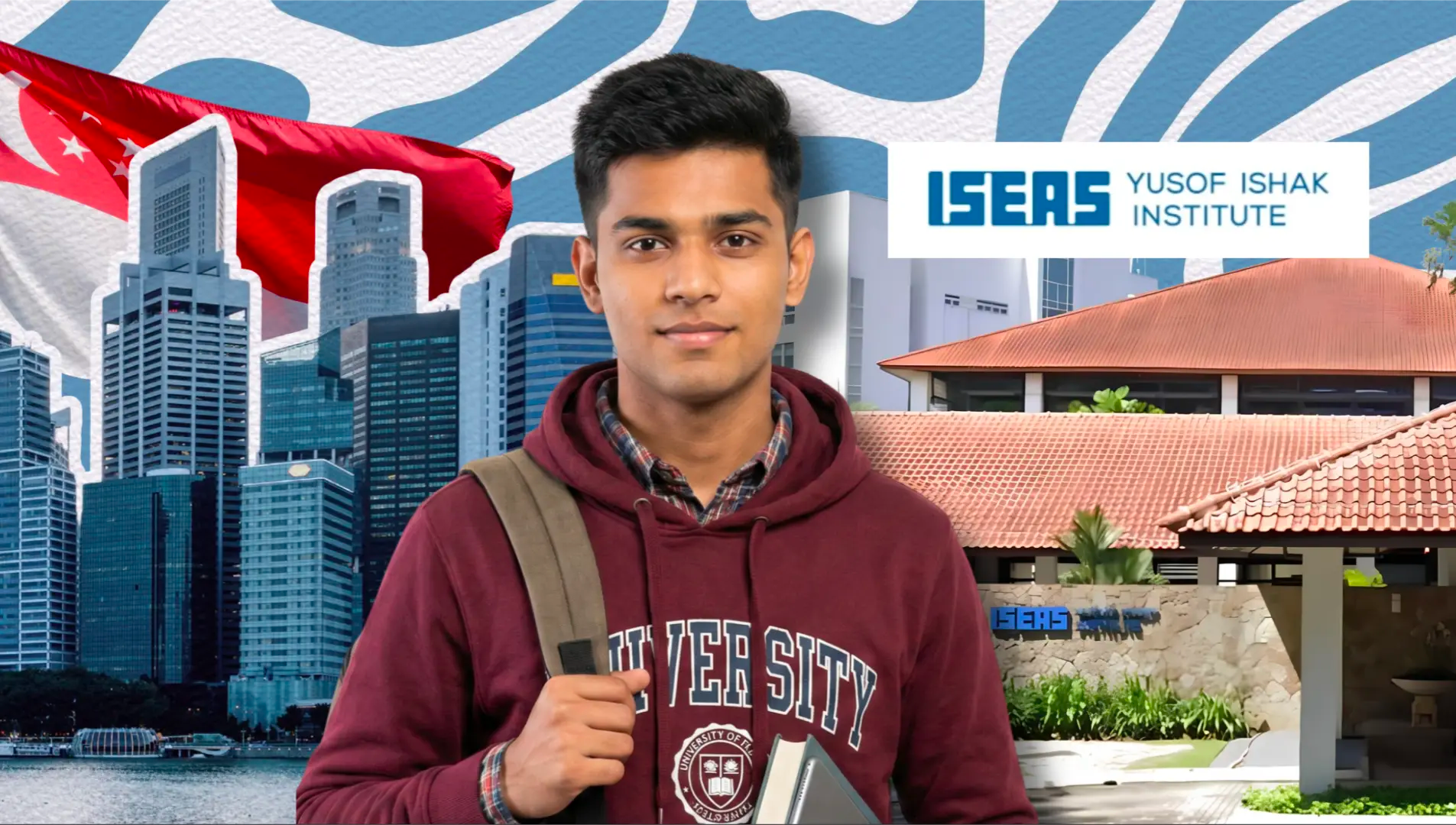
Let’s be honest. If you are a post-doc researcher or a mid-career policy professional in India, you are probably exhausted by the endless grind of looking for funding that doesn’t treat you like an underpaid intern. You want a prestigious name on your CV, solid networking, and a budget that actually lets you live comfortably in a global hub.
Well, look toward Singapore.
The Wang Gungwu Visiting Fellows Programme 2027 at the ISEAS Yusof Ishak Institute is officially open for applications. It is a fully funded residential fellowship lasting anywhere from 2 to 6 months that lets you dive deep into global geopolitics right from the heart of Southeast Asia.
Let’s break down how you can secure this gig.
What is the Vibe of This Fellowship?
Named in honor of Professor Wang Gungwu (an absolute legend in Southeast Asian historical and geopolitical scholarship), this programme is run by ISEAS, one of the most influential think tanks in the Asia-Pacific region.
They aren't looking for dusty, purely theoretical library research. They want policy-relevant research on how big-power plays are actively shaping Southeast Asia. If your brain naturally ticks around global trade, digital propaganda, or maritime security, this is your playground.
The 5 Hot Research Arenas
To get selected, your research proposal needs to cleanly hit one of these five pillars:
- The US-China Clash: Developments in US-China relations and how they ripple across Southeast Asia.
- Asia-Pacific Flashpoints: Security issues like the South China Sea conflicts and China-ASEAN diplomatic relations.
- Mega Economic Pacts: Tracking the real-world progress of initiatives like the Belt and Road Initiative (BRI) and the Regional Comprehensive Economic Partnership (RCEP).
- The Dragon's Shadow: The rise of China and its direct socio-economic impact on local Southeast Asian communities.
- Digital Warfare & Tech Overlords: How major countries use digital media, algorithms, and technology to alter perceptions and wield soft power in Southeast Asian countries.
How Long Is the Fellowship?
The programme offers flexibility in terms of duration.
Successful applicants can spend:
- Minimum: 2 months
- Maximum: 6 months
at ISEAS in Singapore.
Unlike some fellowships that allow remote participation, fellows are expected to reside at ISEAS for the duration of the programme.
This means you will be working directly within the institute's research environment, interacting with scholars, policy experts, and visiting researchers throughout your stay.
Who Can Apply?
The eligibility requirements are relatively broad compared to many academic fellowships.
Postdoctoral Researchers
Researchers who have completed a PhD and are pursuing advanced academic work are encouraged to apply.
Mid-Career Policy Makers
This is where the programme becomes particularly interesting. Applicants do not necessarily need a PhD.
Mid-career professionals working in:
- Government
- Public policy
- International relations
- Strategic affairs
- Regional development
can apply if they can demonstrate:
- Significant professional experience
- Strong research interests
- Relevant expertise in the fellowship's focus areas
Benefits
- The Monthly Stipend: You receive a fixed monthly stipend that safely factors in Singapore’s cost of living.
- The Housing Subsidy: Rent in Singapore can be scary, but a dedicated housing subsidy is neatly baked right into your monthly stipend.
- Zero Travel Costs: The institute covers your round-trip economy airfare from India to Singapore.
- VVIP Infrastructure: You get your own dedicated office space, computer setups, high-end IT services, and unrestricted access to the famous ISEAS Library.
- Access to Senior Scholars: Where possible, you will be invited to a private meeting with Professor Wang Gungwu himself to talk strategy.
Application Deadline
Applications for the 2027 intake must be submitted by: 4 August 2026
Late applications will not be considered.
What Do They Expect From You? (The Outputs)
This is a residential fellowship, meaning you have to be physically based at the ISEAS campus in Singapore for the entire duration (2 to 6 months). In return for the stipend, you are expected to deliver a few key things:
- Get Published: Write pieces for the highly-read ISEAS Perspective and ISEAS Fulcrum digital platforms.
- Take the Mic: Host an in-house seminar at the institute presenting your findings to regional experts, diplomats, and fellow scholars.
- Alumni Network: You get plugged into an elite lifelong network of regional scholars.
Step-by-Step Application Guide
1. The Paperwork
You need to submit your application via the official FormSG Portal. Make sure your research proposal details your methodology, timeline, and precisely why you need to be in residence at ISEAS.
2. The Letter of Recommendation Hack
You need two referees. They must email their recommendation letters directly to development@iseas.edu.sg. Here is the catch: they MUST use this exact subject line format, or it risks getting lost in the inbox:
Application for ISEAS Wang Gungwu Visiting Fellows Programme 2027 - [Reference Letter for First Name and Last Name of Applicant]
Final Thoughts
Most funded fellowships focus either on academic research or policy engagement. The Wang Gungwu Visiting Fellows Programme sits comfortably in the middle.
It offers researchers the chance to spend several months in Singapore examining some of the most important questions shaping Asia's future, while also engaging directly with scholars, policy experts, and regional institutions.
For Indian researchers working on geopolitics, international relations, economic cooperation, digital governance, or Southeast Asian studies, it represents a rare opportunity to conduct policy-relevant research from one of Asia's leading intellectual centres.
And unlike many well-known fellowships that attract thousands of applicants globally, this remains relatively under the radar among Indian researchers.
Sometimes those are the opportunities worth paying the closest attention to.

Kirti Singhal
Kirti is an experienced content writer with 4 years in the study abroad industry, dedicated to helping students navigate their journey to international education. With a deep understanding of global education systems and the application process, Kirti creates informative and inspiring content that empowers students to achieve their dreams of studying abroad.
Users also read
Vietnam Steps Into the Global Academic Spotlight at APAIE 2026: And Indian Students Should Pay Attention
Vietnam Steps Into the Global Academic Spotlight at APAIE 2026: And Indian Students Should Pay Attention

Indian Passport Fees Rise From July 1, 2026. Here Is What It Means If You Plan to Study Abroad.