Blogs
Blogs  Leap Digest
  Events
  About Us
 Trending News
MPIA Summer Internship 2026: A Step-by-Step Guide for Indian Students
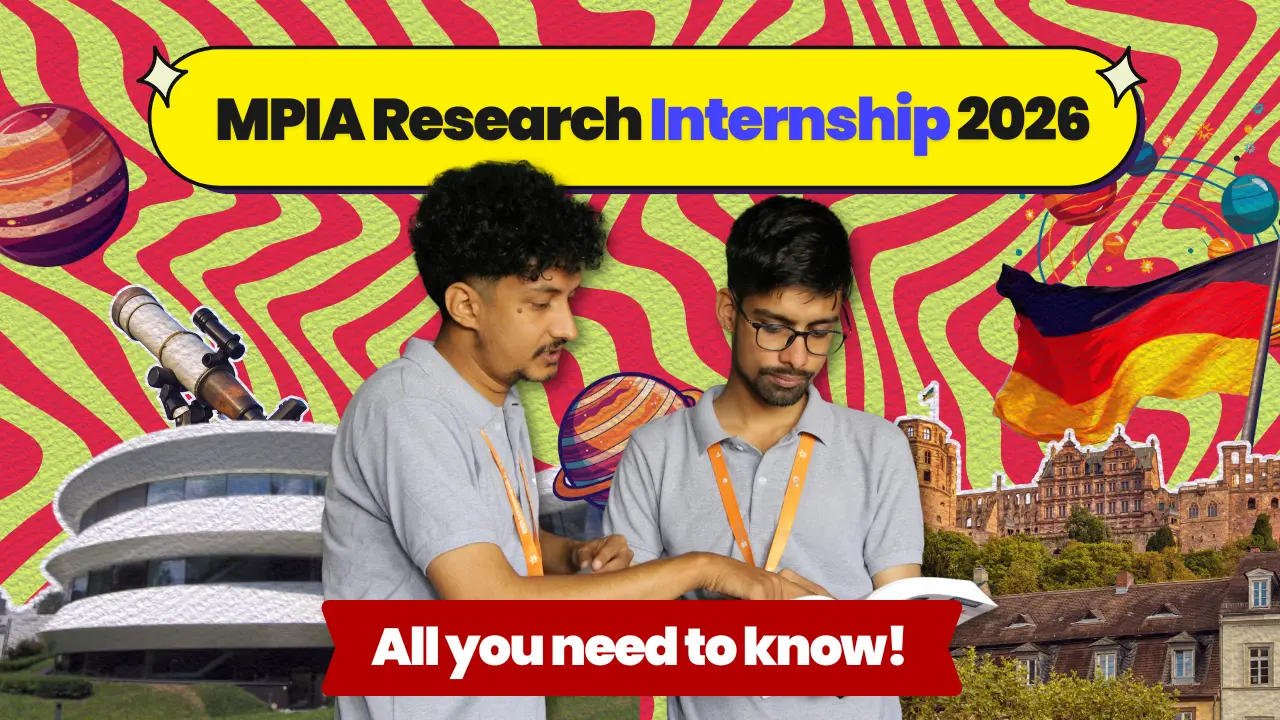
Studying abroad is often framed as a major challenge: the exams, the visa, the finances. But let's reframe that. It’s not just a challenge; it’s a launchpad. And for ambitious Indian students looking to make a mark in the universe of science, the Max Planck Institute for Astronomy (MPIA) in Heidelberg, Germany, offers arguably the best trajectory.
Here's what makes this internship different from typical summer programs: it's not just a resume line. MPIA puts you on actual research projects contributing to real discoveries in exoplanet exploration, star formation, and cosmology. You work alongside world-renowned scientists, often resulting in publications or strong recommendation letters that open doors to top PhD programs globally.
And it's fully funded. Monthly stipend of approximately €1,000 (₹1,07,000) net, travel costs covered, help finding accommodation. For three months during the summer, you're a working researcher at one of the world's leading astronomy institutes.
The catch? It's highly competitive. For the 2026-2027 cycle, strategic planning matters more than luck. Here's exactly what you need to know.
What MPIA Actually Offers
1. Research Focus: Cutting-edge projects in astronomy, astrophysics, and cosmic physics. Current areas include:
- Exoplanet exploration using powerful telescopes
- Star and planet formation in cosmic nurseries
- Cosmology and large-scale universe structure
- Early galaxy evolution
2. Duration: Typically three months during summer (May-September)
3. Funding: Fully funded with a competitive monthly stipend (~€1,000 net), social benefits, and covered travel costs from India to Germany
Location: Heidelberg, Germany, a university city with a strong scientific community and a reasonable cost of living
Why This Matters For Your Career
For Indian students targeting Master's or PhD programs in the US, UK, or Canada, MPIA internship experience carries significant weight.
You're not doing simulations on your laptop, you're working with real telescope data, contributing to ongoing research, and collaborating with scientists whose papers you've probably read in your coursework. The recommendation letter from an MPIA researcher carries more weight than most academic references.
More importantly, you'll know whether research is actually what you want. Three months of real research work clarifies your career direction better than years of coursework.
Eligibility Requirements for MPIA
1. Academic Status:
- Enrolled in Bachelor's or Master's program
- Bachelor's students must have completed a minimum of four semesters (two full years) by the internship start
- Students already in PhD programs or who've completed a Master's before the start date are generally not eligible
2. Language: English proficiency sufficient. All research conducted in English.
3. Academic Standing: The MPIA doesn't set a minimum CGPA, but strong academics are essential given the fierce competition. You'll need to convert your grades in Physics, Maths, and Programming using their Transcript Form. While excellent marks get your application noticed, it's your genuine motivation and research potential that ultimately secure your spot.
The Critical Timeline
Based on established patterns, here's what to expect:
For 2027 Summer Internship:
- Application Opens: Early-Mid December 2026
- Application Deadline: January 15, 2027
- Internship Period: May-September 2027
- Official Website Link: https://apply.cis.mpg.de/register/internship (Use this link to access the official MPIA Online Application System).
Mark January 15 in your calendar now. This deadline is strict.
What Actually Makes Applications Stand Out
Almost every applicant has excellent grades. You need to differentiate based on research background and motivation.
1. Demonstrate Research Initiative
Even without formal research experience, show initiative:
- Relevant projects in coursework
- Independent data analysis projects
- Participation in coding competitions (especially data-related)
- Technical skills like Python or C++ for data handling
- Any astronomy-related projects, even small ones
Example: "I analyzed light curves from TESS data to identify potential exoplanet transits" is much stronger than "I took an astronomy course."
2. The Letter of Motivation (Critical)
This document determines your success. Here's what works:
Don't: Summarize your CV or write generic statements about passion for astronomy
Do: Research specific MPIA scientists and projects. Connect your background to their work specifically.
Weak: "I am passionate about astronomy and want to learn from world-class researchers."
Strong: "My project classifying transient objects in SDSS data directly prepares me to contribute to Dr. [Name]'s work on early galaxy evolution at MPIA. Specifically, I'm interested in applying machine learning techniques to [specific research question]."
The difference is specificity. You must demonstrate you've researched MPIA's current projects and understand how you'd contribute.
3. Strong Recommendation Letter
Choose a professor who knows your work ethic and technical abilities, not just your grades. Give them plenty of notice (at least one month) and provide your CV and Letter of Motivation draft so they can write a specific, strong recommendation highlighting your research suitability.
How to Prepare Now
If You're Applying for 2027:
- Present- October 2026: Build relevant technical skills. Learn Python for data analysis. Take advanced physics or astronomy courses. Start any independent projects that demonstrate research initiative.
- November 2026: Research MPIA scientists thoroughly. Read recent papers from groups you're interested in. Understand their current projects and methodologies.
- December 2026: Draft your Letter of Motivation. Get feedback from professors. Request recommendation letters early.
- Early January 2027: Submit application well before deadline. Technical issues happen, don't wait until January 14.
Beyond MPIA: Other Max Planck Opportunities
Max Planck Society operates over 80 institutes across Germany covering all major scientific fields. If astronomy isn't your primary interest, other options exist:
Institute | Focus | Typical Stipend | Location | Application Deadline |
| MPIA | Astronomy/Cosmic Physics | ~€1,000/month | Heidelberg | January 15 |
| MPI Infection Biology | Infection Biology | ~€1,400/month | Berlin | Late November |
| Max Planck School MtL | Matter to Life (interdisciplinary) | Travel & living covered | Various locations | October 1 |
Check official institute websites; early deadlines are strict and vary by program.
Funding Your Dream: The Budget in Heidelberg
Living in Germany for three months with €1,000/month stipend is genuinely manageable. Heidelberg is more affordable than cities like Munich or Frankfurt.
Typical monthly costs in Heidelberg:
- Shared accommodation: €400-500
- Food: €200-250
- Transport: €50-80 (or free with semester ticket if arranged through the university)
- Miscellaneous: €100-150
The stipend covers this comfortably, allowing you to focus entirely on research without financial stress.
The Research ROI: What You Gain Post-MPIA
Strong performance at MPIA opens doors:
- Direct PhD opportunities at Max Planck Institutes
- Strong applications to top US/UK PhD programs
- Network connections with leading researchers
- Potential co-authorship on publications
- Clear understanding of whether research careers suit you
Many MPIA interns continue to graduate programs at MIT, Caltech, Cambridge, and other top institutions, with MPIA experience significantly strengthening their applications.
The Bottom Line
The MPIA Summer Internship is competitive but achievable for well-prepared students. It's not about being the top student in India; it's about demonstrating genuine research interest, relevant technical skills, and a clear understanding of how your background connects to specific MPIA projects.
Start preparing early. Research thoroughly. Write a Letter of Motivation that shows you understand MPIA's work specifically, not just generic enthusiasm for astronomy. Secure strong recommendations from professors who know your research capabilities.
The application process is rigorous, but for students serious about research careers in astronomy or astrophysics, this internship can be the defining experience that shapes your entire trajectory.
Need Help With Your MPIA Application?
Struggling to identify which MPIA research groups match your background? Not sure how to structure your Letter of Motivation for German research applications? Need to understand what makes recommendations strong for competitive internships?
Get expert guidance from Leap Scholar counsellors who understand international research applications. We can help you research MPIA scientists and current projects, structure your Letter of Motivation to demonstrate specific fit, identify your strongest research-related experiences, and prepare for the competitive application process.
The January 2027 deadline approaches faster than you think. Start your preparation now.

Kirti Singhal
Kirti is an experienced content writer with 4 years in the study abroad industry, dedicated to helping students navigate their journey to international education. With a deep understanding of global education systems and the application process, Kirti creates informative and inspiring content that empowers students to achieve their dreams of studying abroad.
Users also read

Vietnam Steps Into the Global Academic Spotlight at APAIE 2026: And Indian Students Should Pay Attention
Vietnam Steps Into the Global Academic Spotlight at APAIE 2026: And Indian Students Should Pay Attention

Indian Passport Fees Rise From July 1, 2026. Here Is What It Means If You Plan to Study Abroad.