Blogs
Blogs  Leap Digest
  Events
  About Us
 Trending News
DIHAD & LUISS University Hybrid Master's Program (2026-2027)
Employers in the humanitarian sector increasingly want candidates with formal, advanced qualifications, not just field experience.
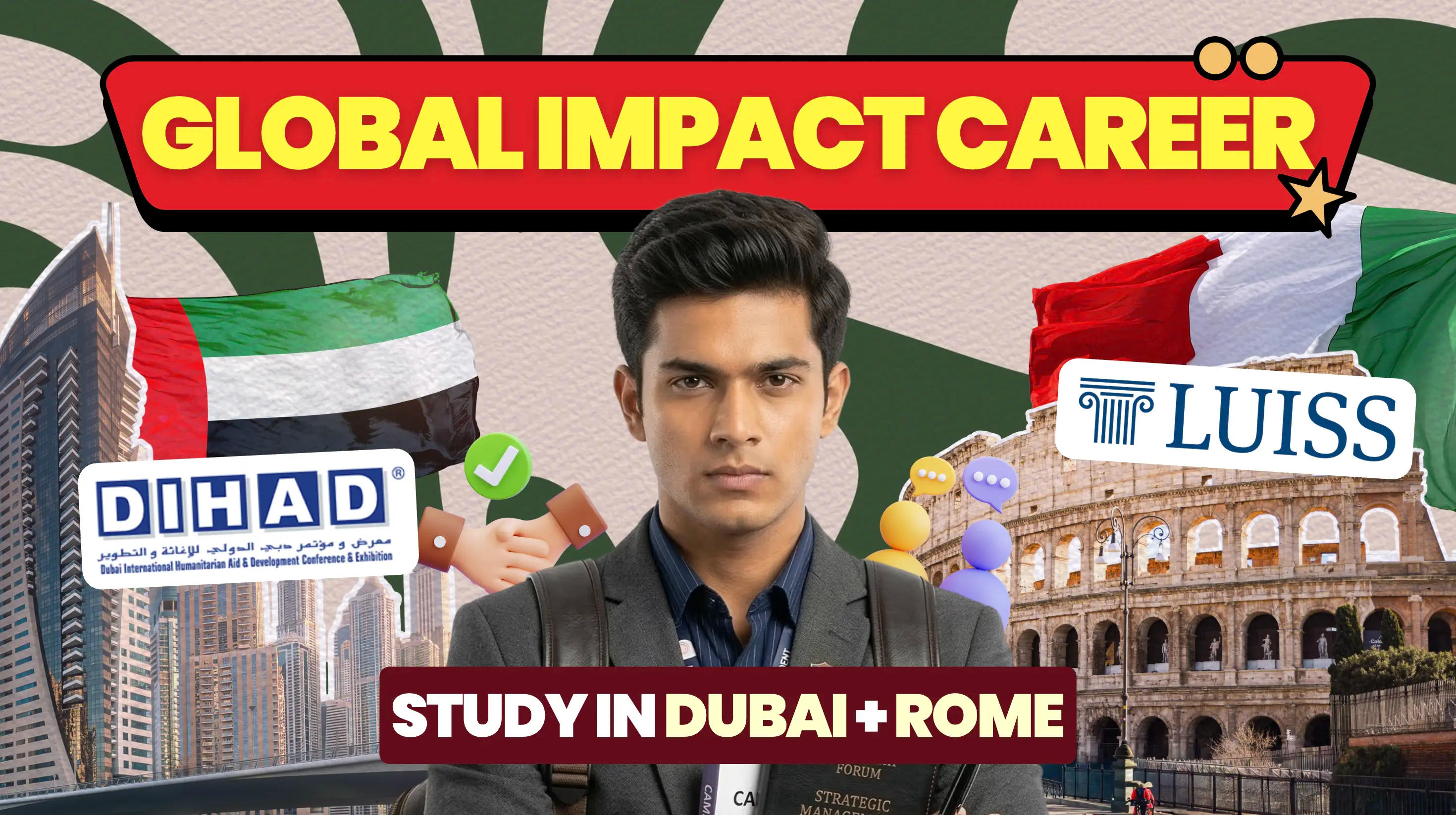
The Dubai International Humanitarian Aid and Development (DIHAD) Humanitarian College, in partnership with Italy's prestigious LUISS University, has stepped into this gap. Launching their hybrid postgraduate programs for the 2026-2027 academic year, they're offering a bridge between the analytical rigor of European social sciences and the operational powerhouse of the UAE's humanitarian hub.
As of 17 March 2026, the doors are open for the next generation.
The 2026 Landscape: Why This Program Matters
According to the Global Humanitarian Overview 2026, over 239 million people worldwide are in urgent need of assistance. However, the humanitarian sector is facing a job quality deficit. Organizations are no longer looking for just extra hands; they're looking for strategists who can navigate International Humanitarian Law (IHL), manage digital aid via blockchain, and design sustainable climate-resilient policies.
The DIHAD-LUISS partnership specifically addresses the realities of 2026. LUISS University (ranked 25th globally for Politics) provides the diplomatic statecraft foundations, while DIHAD provides the field-tested logistics and innovation framework.
Financial Snapshot (March 2026 Rates)
Navigating international education requires a clear-eyed look at the numbers. Below are the primary costs for the 2026-2027 intake, converted as of 17 March, 2026, at 1 EUR = 106.28 INR.
Expense Category | Cost in EUR | Cost in INR (at 106.28) |
| Total Tuition Fee | €18,000 | ₹19,13,040 |
| First Installment (Due April 22) | €4,700 | ₹4,99,516 |
| Monthly Living (Rome - Shared) | ~€900 – €1,350 | ₹95,652 – ₹1,43,478 |
| Monthly Living (Dubai - Shared) | ~€1,250 – €1,800 | ₹1,32,850 – ₹1,91,304 |
| Visa & Admin Fees | €250 | ₹26,570 |
(Source: Official fees page of DIHAD/LUISS program)
That ₹19 lakh tuition is spread over 16 months, and you're only paying Dubai or Rome living costs during your physical residency periods, not the full duration.
Curriculum Deep-Dive: 9 Modules for a New Era
The Master in Sustainable Humanitarian Action runs over 18 months across 9 modules, split between online learning, Rome, and Dubai. The program uses a "B-Learning" (Blended Learning) model, which allows working professionals to stay in India for the majority of the program.
Module 1 & 2: Foundations and Diplomacy (Online)
The first phase focuses on the "International Humanitarian System." You'll study the politics of neutrality and humanitarian architecture. This is followed by Humanitarian Diplomacy, where you learn the art of negotiation and conflict resolution, essential for anyone aiming for a role in the UN or the Red Cross.
Module 3: International Humanitarian Law (Online)
This module covers compliance, ethics, and moral responsibility. Understanding IHL is the difference between an aid worker and a high-level consultant. That distinction is relevant for your salary and your role.
Module 4 & 5: Leadership and Operations (Hybrid/Rome)
This is where the program gets physical. Students have the option to attend intensive sessions in Rome.
- Humanitarian Leadership: Focuses on emotional intelligence and high-stakes decision-making
- Strategic Operations: Covers sustainable logistics and "The Aid Economy." You'll learn how to move supplies through global hubs like Dubai's International Humanitarian City (IHC)
Module 7: Digital Transformation (Physical - Dubai)
Hosted in Dubai, this module is arguably the most forward-looking part of the course. It covers:
- Blockchain for Aid: Ensuring transparency in financial distributions
- Data for Impact: Using satellite imagery and AI to predict climate disasters
- Human-Centered Design: Building solutions that respect the dignity of the recipients
Admissions & Deadlines for 2026-2027
If you're reading this post in mid-March 2026, the window is currently open, but the deadlines are hard and non-extendable.
March 31, 2026: Final call for the main application round for Extra-EU (Indian) students.
April 22, 2026: Deadline to pay the enrollment deposit of €4,700 (₹4,99,516). Typically, missing this date leads to the waitlist receiving the seat.
May 2026: Attendance at the DIHAD Conference (Dubai) is recommended for all incoming students to begin networking with the 125+ global organizations that partner with the college.
November 9, 2026: Final date to submit graduation proof (for those currently in their final semester).
Indian Applicant Checklist:
- Academic: Bachelor's degree in Social Sciences, Law, or Management (preferred)
- Language: IELTS 6.0 or TOEFL 80
- Experience: 2 years of professional work in an NGO/CSR role OR 2,000 certified volunteer hours
Career Trajectories: The "DIHAD Oath"
Graduating from this program isn't just about the certificate. Graduates conclude the 16 months by taking the DIHAD Humanitarian Oath, a commitment to serve humanity with integrity. But what does the job market look like for 2027?
Because of the LUISS connection, you gain access to the LUISS Career Center, which connects students with:
- United Nations Agencies: (UNHCR, WFP, UNICEF) specifically in strategic planning roles
- International NGOs: (Doctors Without Borders, Oxfam) for field director positions
- Corporate CSR Departments: Large multinational firms in India and the UAE are increasingly hiring "Sustainability Experts" to manage their social impact portfolios
- Governmental Bodies: Ministry of External Affairs or Disaster Management Authorities
The Hybrid Model: Is It Worth It?
A full-time Master's in Europe can cost upwards of ₹40–50 Lakhs when you factor in 18 months of rent and food in cities like Rome.
By choosing the DIHAD-LUISS Hybrid Model, you're essentially hacking the system. You pay for the high-value modules and the prestige of the degree, but you only pay for European/UAE living expenses during the short physical residency periods. For the rest of the time, you can stay in India, keep your job, and manage your expenses locally.
Return on Investment (ROI): Graduates often see a salary jump of almost 40–60% when moving from local NGO roles to international consultancy positions. In the humanitarian world, your network is your net worth, and this program puts you in the same room as UN ambassadors and global CEOs.
Conclusion
Applications for the 2026-2027 cohort are now open. The enrollment deposit deadline is April 22, 2026.
Ready to lead the future of humanitarian action? Talk to a Leap Scholar expert today to start your application and secure your spot in the 2026-2027 cohort.
Kirti Singhal
Kirti is an experienced content writer with 4 years in the study abroad industry, dedicated to helping students navigate their journey to international education. With a deep understanding of global education systems and the application process, Kirti creates informative and inspiring content that empowers students to achieve their dreams of studying abroad.
Users also read
Vietnam Steps Into the Global Academic Spotlight at APAIE 2026: And Indian Students Should Pay Attention
Vietnam Steps Into the Global Academic Spotlight at APAIE 2026: And Indian Students Should Pay Attention
Indian Passport Fees Rise From July 1, 2026. Here Is What It Means If You Plan to Study Abroad.