Blogs
Blogs  Leap Digest
  Events
  About Us
 Expert Insights
Shaping the Future: Global Engineering University Rankings for 2026
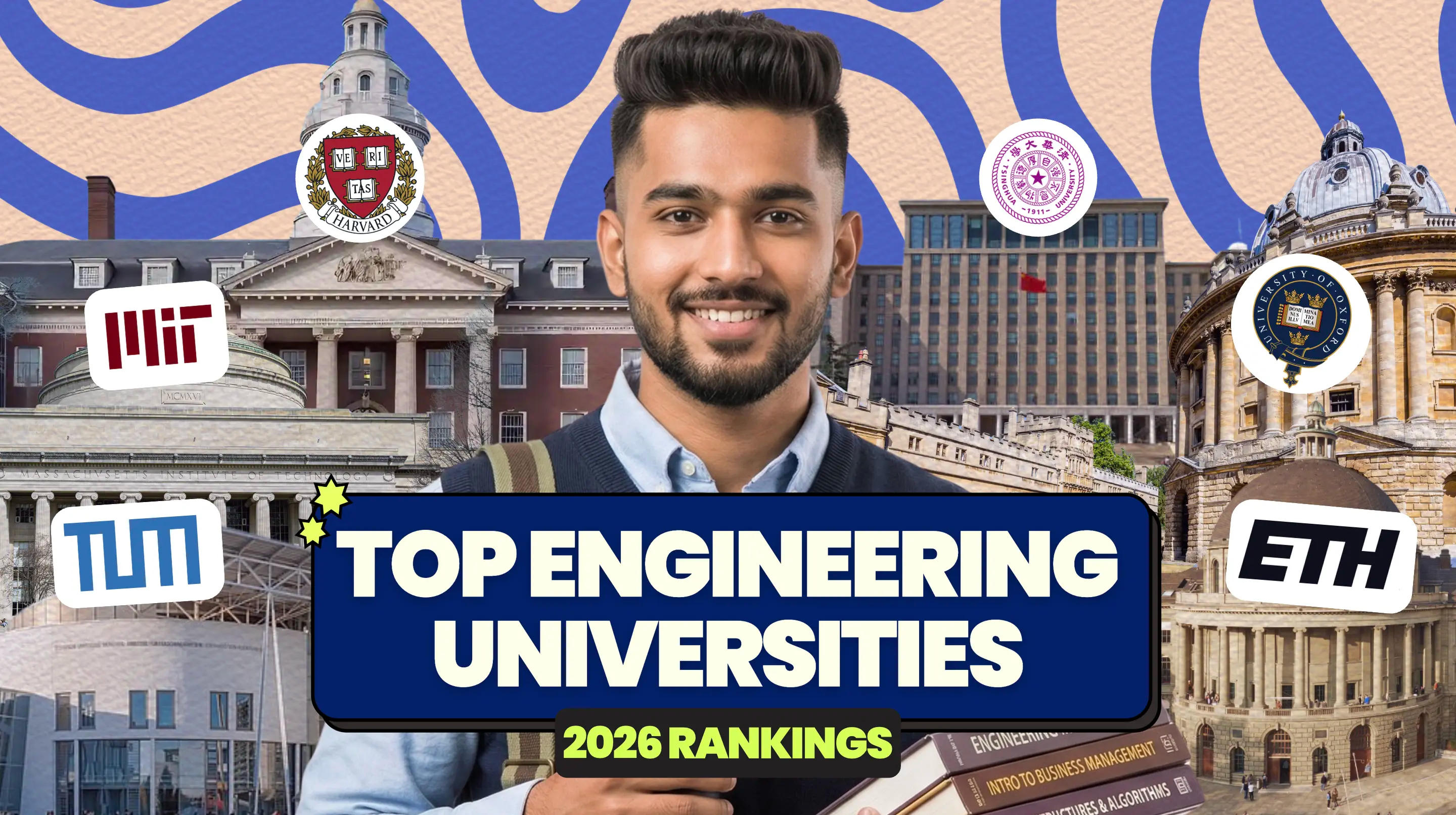
The world of engineering is moving at a breakneck pace. From the rise of generative AI to the urgent transition toward sustainable energy, the "engineer of 2026" is expected to be more than just a problem solver, they're expected to be visionaries. For Indian students and young professionals, choosing the right launchpad for this career is a monumental decision.
As we navigate through early March 2026, the focus has shifted entirely to the final application windows for the Fall 2026 intake and the upcoming Spring 2027 cycle. Global university rankings have evolved to reflect these new priorities, rewarding institutions that bridge the gap between technical theory and industrial application. This guide breaks down the current landscape of global engineering rankings, university profiles, costs, and the critical deadlines remaining for the 2026-2027 academic year.
Top Engineering Universities: 2026 Profiles
According to the latest 2026 data from major ranking bodies like Times Higher Education (THE) and QS, the hierarchy of engineering excellence remains competitive. Here's a closer look at the world's leading institutions.
1. Harvard University (USA) - Global Rank #1 (THE Engineering)
Harvard has officially secured the top spot for engineering in 2026. Long known for its liberal arts prestige, the John A. Paulson School of Engineering and Applied Sciences (SEAS) has become a powerhouse for interdisciplinary research. In 2026, Harvard is the place to be for students interested in the intersection of Bioengineering and Robotics. Its labs are currently at the forefront of "Soft Robotics" and sustainable infrastructure. Yes, Harvard, not just MIT, is leading engineering now.
2. Massachusetts Institute of Technology (MIT) - Global Rank #1 (QS Overall)
MIT remains the undisputed king of technical innovation. Founded in 1861, its mission has always been to advance knowledge in science and technology. For the 2026-2027 cycle, MIT continues to lead in Aerospace Engineering and Artificial Intelligence. With over 65 research centers and a student-to-faculty ratio of just 3:1, it offers an intensity of research that's hard to match anywhere else in the world. That 3:1 ratio means you're not competing with 200 other students for your professor's attention.
3. University of Oxford (UK) - Global Rank #2 (THE Overall)
Oxford is not just one of the oldest universities in the world, it's also one of the most future-forward. Its Department of Engineering Science is unique because it teaches "General Engineering" for the first two years, ensuring students have a broad base before specializing. For 2026, it's ranked exceptionally high for its Research Environment and international outlook, making it a top choice for those aiming for high-impact academic careers. That broad foundation matters when technologies shift every few years.
4. ETH Zurich (Switzerland) - Global Rank #7 (QS)
Commonly referred to as the "MIT of Europe," ETH Zurich is the top-ranked university in continental Europe. It's world-renowned for its contributions to Mechanical and Electrical Engineering. Interestingly, ETH Zurich is one of the world's leading universities for Sustainability in 2026, ranking #2 globally in that specific metric. For students looking for world-class quality at a fraction of the cost of US schools, ETH is the premier choice. We're talking ₹1.5-2 Lakhs per year versus ₹50+ Lakhs.
5. National University of Singapore (NUS) - Global Rank #10 (THE Engineering)
NUS has consistently held its place in the global top 10. For Indian students, NUS offers a familiar cultural environment combined with Western-style academic rigor. It's particularly famous for its Civil and Chemical Engineering programs. In 2026, it's recognized for its strong industry links, often helping students transition directly into the booming tech sectors of Southeast Asia. Plus, Singapore's proximity to India means flights home aren't prohibitively expensive.
Comparing the Best: Rankings, Costs, and Scores
When choosing a university, rankings are only one piece of the puzzle. You also need to consider the financial commitment and entry barriers. Below is a comparison for the 2026-2027 cycle.
University | Engineering Rank (2026) | Avg. Annual Tuition (approx.) | Target IELTS/TOEFL | Notable Specialization |
| Harvard (USA) | #1 | ₹55,00,000 - ₹65,00,000 ($66k - $78k) | 7.5 / 100+ | Bioengineering & Robotics |
| Univ. of Oxford (UK) | #2 | ₹42,00,000 - ₹50,00,000 (£38k - £45k) | 7.5 / 110+ | Civil & Energy Systems |
| MIT (USA) | #3 | ₹52,00,000 - ₹60,00,000 ($62k - $72k) | 7.5 / 100+ | Aerospace & AI |
| ETH Zurich (CH) | #11 | ₹1,50,000 - ₹2,00,000 (CHF 1.5k - 2k) | 7.0 / 100+ | Mechanical Engineering |
| Tsinghua (China) | #13 | ₹4,50,000 - ₹6,00,000 (CNY 40k - 50k) | 6.5 / 90+ | Electrical Engineering |
| TU Munich (GER) | #19 | ₹0 - ₹5,00,000 (€0 - €5.5k)* | 6.5 / 88+ | Automotive & AI |
Note: While many German public universities remain tuition-free, some states have introduced nominal fees for non-EU students as of 2025/2026.
Look at that ETH Zurich row, top 11 globally for less than ₹2 Lakhs per year. That's not a typo.
Deadlines: March 2026 Onwards
It's currently late February 2026. If you're still looking to secure a seat for the 2026-2027 academic year, here are the critical deadlines you need to track:
March 15, 2026: Final priority deadline for many US Master's programs (e.g., Boston University, USC). This is often the last date to be considered for department-level scholarships. That's less than three weeks away, act now.
March 31, 2026: A major cut-off for high-ranked technical programs in the Netherlands (like TU Delft) and several specialized programs at the Technical University of Munich (TUM).
May 1 – July 15, 2026: The primary application window for German Public Universities (Winter Intake). July 15th is the absolute final deadline for most engineering programs starting in October 2026.
July 2026: If you're aiming for Australia's Semester 2 (July intake), applications are generally closed throughout March and April to allow for visa processing.
Preparing for Spring 2027
If you feel you need more time, the Spring 2027 (January start) cycle is your next target.
September 1, 2026: Regular decision deadlines begin for top US schools like UT Austin for the Spring semester.
October 15, 2026: Deadline for several Canadian engineering diplomas and specialized Master's programs.
Why Engineering in 2026 Looks Different
The curriculum for 2026 is shifting away from traditional silos. You'll find that the highest-ranked universities are now offering "Hybrid Engineering" degrees. For example, it's no longer enough to study Mechanical Engineering in isolation, top programs now integrate Data Science and Sustainability into the core modules. That's not optional anymore; that's the new standard.
Furthermore, employability metrics have become a massive factor in the 2026 rankings. Universities like Imperial College London and Georgia Tech (USA) have surged in "Industry Income" scores because of their direct pipelines into the green energy and semiconductor industries. When you look at these rankings, don't just look at prestige, look at the Employer Reputation score, as this often dictates how quickly you'll land a job after graduation.
Overcoming the Cost Barrier
It's no secret that studying at a top-10 global university is an investment. However, the ROI (Return on Investment) for engineering remains among the highest of any field. In 2026, starting salaries for engineering graduates in the US and UK are projected to remain robust due to the global shortage of skilled technical talent.
To manage the costs, look for specialized scholarships. For instance, many German universities offer low-cost education, but you must account for the mandatory Blocked Account (approx. ₹11 Lakhs / €11,900) for visa purposes. In the US, secondary scholarship rounds often occur in late March for students who've already submitted their applications. Don't assume all scholarships are gone, many universities have rolling funds.
Final Thoughts: Your Journey Starts Now
Rankings are a helpful compass, but they shouldn't be your only map. Whether you dream of the historic labs of Oxford or the high-tech hubs of Singapore, the most important factor is finding a program that aligns with your specific niche.
The 2026-2027 cycle is in full swing. With several major deadlines still ahead in March and July, and the Spring 2027 window opening soon, your opportunity to study abroad is still very much alive. You have the ambition, now it's just about taking the first step.
Need help shortlisting the right university based on your profile? Book a free consultation with a Leap Scholar expert today.

Kirti Singhal
Kirti is an experienced content writer with 4 years in the study abroad industry, dedicated to helping students navigate their journey to international education. With a deep understanding of global education systems and the application process, Kirti creates informative and inspiring content that empowers students to achieve their dreams of studying abroad.
Users also read

Top 10 Industries That Create the Most Billionaires in 2026: Guide for Indian Students

Stanford MBA Career Diversity: Industries, Salaries and What Indian Students Need to Know

Anthropic Academy: 16 Free AI Courses With Certificates in 2026 That Indian Students Cannot Afford to Ignore