

Are you finding it challenging to secure a LOR for your Master’s?
Don’t worry; keep reading.
When writing an effective LOR for masters, it is essential to understand the document’s purpose. The letter should highlight your strengths, achievements, and potential for success in the chosen course. It should be written by someone who knows you well, such as a professor, mentor, or previous employer. When asking someone to write your LOR, ensure they have a favourable view of your work and can provide specific examples to support their claims. Refer to the above LOR sample as a foundational reference to help structure your own recommendations effectively.
When you ask someone to write your LOR, you must provide them with all the necessary information. This includes details about the course you’re applying for and the submission deadline. By doing so, you’re helping them write a more tailored and effective LOR, which can significantly boost your application.
This blog will teach us more about the Letter of Recommendation for Master’s and who you should ask for it.

Choose your dream country
 UK
UK
 USA
USA
 Germany
 Australia
 Ireland
 Canada
 UAE
UAE
 France
 Sweden
 Italy
Italy
 Other
Other
When do you want to study abroad?
What's your highest level of education?
Have you completed Class 12th?
What was your Class 12 CGPA/percentage?
Are you a student or a parent/guardian?
What do you want to study?
Select your current city
How Leap will help you

Personalised University Shortlist

Express Applications with Quicker Admits

End-to-End Application Support
What is the importance of a Letter of Recommendation for Masters?
A Letter of Recommendation (LOR) is an essential component of the application process for Masters programs. The document provides information about the applicant’s academic or professional journey, character, and potential to succeed in the program. The LOR carries significant weight in the admission decision-making process, providing valuable insights into the applicant’s abilities and potential to contribute to the program.
The LOR validates the applicant’s academic and professional achievements and provides the admissions committee with an objective assessment of the applicant’s abilities. It also helps you distinguish yourself from other candidates, especially if the LOR comes from a reputable source, such as a professor or employer.
Importance of Letters of Recommendation for Masters Programs
Letters of Recommendation (LORs) are critical in master’s program applications as they provide an external, credible evaluation of an applicant’s academic, professional, and personal qualities.
Let us understand what is the importance of a letter of recommendation:
- Credibility and Endorsement: Letters of recommendation offer valuable external validation of your qualifications and potential. Professors, supervisors, or mentors can vouch for your academic abilities, work ethic, and suitability for the program.
- In-Depth Perspective: Recommenders can provide insights beyond your transcript or resume. They can speak to your strengths, growth trajectory, and contributions in a classroom or professional setting.
- Complementing Your Application: Letters of recommendation offer a more personal and qualitative dimension to your application. They help admissions committees get a well-rounded picture of who you are as a student and individual.
- Demonstrate Supportive Network: Strong letters from respected figures suggest you have established positive relationships and possess qualities valued within academia or your field.
- Competitive Advantage: In competitive programs, exceptional letters can differentiate you from other qualified applicants. A compelling recommendation can significantly enhance your application’s overall strength.
Overall, a well-written LOR can significantly affect the admission decision, so it’s essential to choose recommenders carefully and provide them with the necessary information and guidance. This includes giving them your academic transcripts, CV, and any other relevant documentation to ensure they have a comprehensive view of your qualifications.
A Letter of Recommendation (LOR) for a master’s application typically follows a formal structure that highlights the applicant’s strengths, achievements, and potential for success in graduate studies.
Below is an overview of the LOR for masters format:
A Letter of Recommendation (LOR) for a master's application typically follows a formal structure that highlights the applicant’s strengths, achievements, and potential for success in graduate studies.
- Introduction (1 Paragraph):
- Briefly introduce yourself (name, title, affiliation).
- State your relationship with the student (e.g., professor, supervisor) and how long you’ve known them.
- Mention the program they’re applying to (optional).
- Body (2-3 Paragraphs):
- Academic Strengths: Highlight the student’s academic achievements and qualities relevant to the program. Use specific examples from coursework, projects, or research experiences.
- (Example) “I had the pleasure of teaching [student name] in my [course name] class. They consistently impressed me with their [positive academic quality] and [another positive quality]. For instance, [student name]’s [specific example] demonstrated their ability to [relevant skill].”
- Qualities and Skills: Discuss the students’ personal qualities and professional skills that would benefit them in the program and future careers.
- (Example) “[Student name] is a strong academic performer and a highly motivated and resourceful individual. During their internship at [company name], they [specific example] showcasing their [relevant skill].”
- Academic Strengths: Highlight the student’s academic achievements and qualities relevant to the program. Use specific examples from coursework, projects, or research experiences.
- Conclusion (1 Paragraph):
- Summarise your key points and express your strong recommendation for the student’s admission.
- Offer to provide further information if needed (optional).
Additional Tips:
- Maintain a professional tone but avoid overly formal language.
- Use clear and concise sentences.
- Feel free to personalise the language to reflect your relationship with the student.
- Proofread the letter carefully for any errors.
- Use official letterhead from your institution if applicable.
- Sign and date the letter.
Using this format and incorporating a conversational tone, you can write a compelling letter of recommendation that effectively advocates for your student’s potential in a Master’s program.
Types of Letter of Recommendation
There are two primary types of Letters of Recommendation: Academic LOR and Professional LOR.
An Academic LOR is written by a professor or academic advisor and focuses on a student’s academic achievements, research projects, and academic background.
A Professional LOR, on the other hand, is written by a past employer or supervisor and highlights a student’s professional skills, work ethic, and achievements in a professional setting.
Both types of LORs are essential for a comprehensive application, as they provide a complete picture of a student’s abilities and potential.
Sample 1 for LOR for Masters
Here is a sample LOR for masters by a professor:
| Dear Admissions Team, I am pleased to write this Letter of Recommendation for XXX, who has been a student at our institution for the past three years. I have worked closely with her and observed her academic performance and work ethic during this time. From the very beginning, XXX has shown a strong inclination towards research and has consistently demonstrated her ability to think critically and analyse complex academic problems. She has always been proactive in her approach and has shown a genuine interest in learning new things. One of the most impressive aspects of XXX’s academic profile is her ability to work collaboratively with her peers and instructors. She is an excellent team player and has always been willing to go the extra mile to achieve team goals. Her ability to communicate effectively and articulate her ideas has been an asset to her team. During her academic tenure, XXX has taken several courses across multiple disciplines, including history, political science, and economics. Her performance in these courses has been exemplary, and she has consistently demonstrated her ability to apply theoretical concepts to real-world problems. I have had the opportunity to work with XXX on several research projects, and I can confidently say that she has a natural flair for research. Her research work has been thoughtful and well-structured, and she has consistently demonstrated a good understanding of the research question and the methodology required to answer it. In conclusion, I wholeheartedly recommend XXX for admission to the Masters program. She has all the qualities of an excellent student, including academic excellence, strong work ethic, and a passion for learning. Please feel free to contact me if you require any further information. Sincerely, Recommender’s Full Name Designation-Department Institution, City Contact No- Email ID- |
Sample 2 for LOR for Masters
Here is a letter of recommendation for a masters.
| To Whom It May Concern, I am writing this letter of recommendation for [Applicant’s Name], who was employed at [Company Name] as a [Job Title] from [Employment Start Date] to [Employment End Date]. I enjoyed working closely with [Applicant’s Name] during this time and can attest to their exceptional work ethic, skills, and abilities. As an employee, [Applicant’s Name] consistently demonstrated a strong commitment to their work, paying meticulous attention to detail and delivering high-quality results. They were proactive in identifying opportunities for process improvements and always willing to take on new challenges. [Applicant’s Name] was an integral team member, and their contributions were instrumental in our success. [Applicant’s Name] holds a Bachelor’s degree in [Degree Name] from [University Name]. Throughout their studies, they exhibited a passion for their field of study, demonstrating a deep understanding of the subject matter and a keen ability to apply their knowledge in practical settings. Based on my experience working with [Applicant’s Name], I do not doubt they would excel in a Master’s program. They possess a unique combination of academic knowledge, practical skills, and a strong work ethic, making them a valuable addition to any program. I highly recommend [Applicant’s Name] for admission to the Master’s program they are applying for. I am confident they will continue to impress with their dedication, hard work, and ability to deliver exceptional results. Please feel free to contact me if you require any further information. Sincerely, [Your Name] [Your Title] [Company Name] |
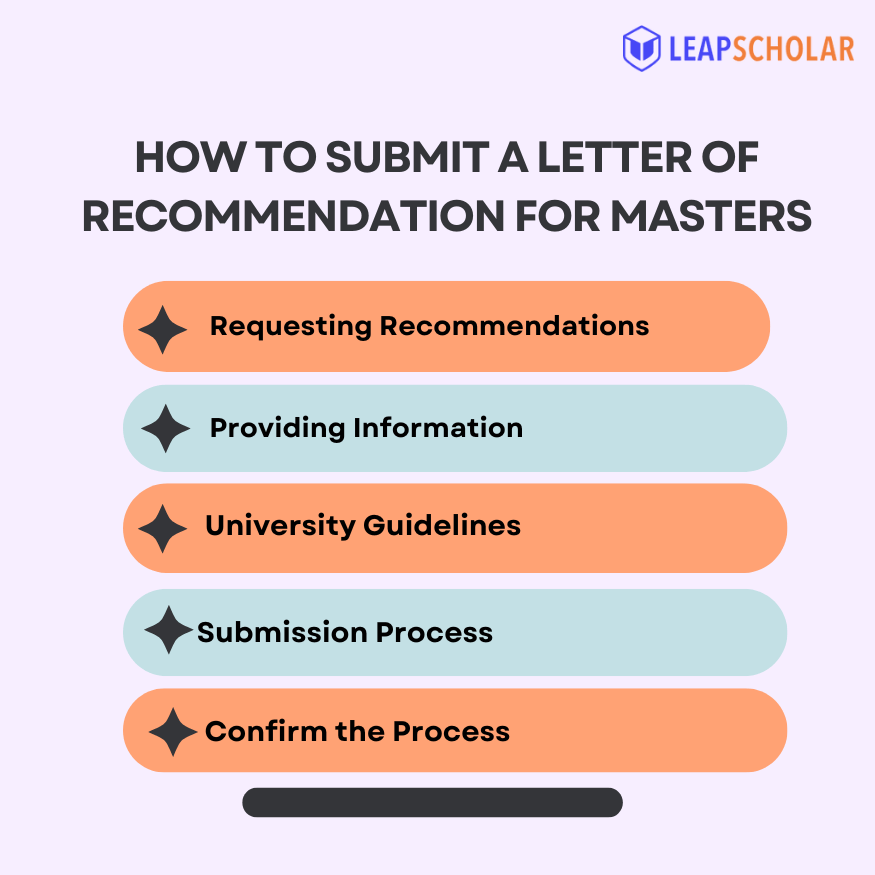
How to Submit a LOR for Masters?
Submitting a letter of recommendation for a master’s application is a critical part of the admissions process, as it provides insight into the applicant’s academic abilities, professional potential, and character from a credible source.
Let’s get an overview:
1. Requesting Recommendations:
- Identify Recommenders: Choose professors, supervisors, or mentors who know you well academically or professionally and can speak to your potential in the Master’s program.
- Seek Consent: Contact your chosen recommenders and politely ask if they’d be willing to write a Letter of Recommendation (LOR) for your Master’s program application.
2. Providing Information:
- Share Program Details: Once a recommender agrees, inform them about your academic background, the specific Master’s program you’re applying to, and the application deadline.
- Highlight Achievements: Briefly highlight your academic achievements, relevant skills, and experiences that would be valuable for the program. This can help your recommender write a more focused and impactful letter.
- Mention Specifics: If your profile has aspects you’d like them to emphasise, please mention them gently.
- Provide Contact Details: Ensure you provide accurate contact details of your recommenders. Universities may use this information to verify the authenticity of the letters and the credibility of the claims made.
3. University Guidelines:
- Check University Requirements: Some universities may have specific guidelines for LORs, such as a preferred format or submission process. If such guidelines exist, inform your recommenders and provide them with any relevant documents.
- Verification Process: Be aware that universities verify recommendation letters by contacting recommenders. This process helps confirm the validity of the information in the letters, emphasising the importance of honesty in the application process.
4. Submission Process:
- Understand Submission Options: Different universities may have different submission methods for LOR - Some universities require recommenders to submit directly via an online portal.
- One way to submit a letter of recommendation is through an online form provided by the university. The recommender will be given a login portal to answer specific questions about the candidate.
- Another method is email, where the recommender directly sends the recommendation letter to the university’s official email ID.
- The most common method is for the recommender to print, sign, and seal the recommendation letter. The student can then collect the letter and send it to the university by post, along with their personal information and application details.
- Confirm the Process: Double-check the submission process for each university you’re applying to and ensure your recommenders and you are aware of the correct method.
Who should you ask for a Letter of Recommendation?
If you plan to pursue a master’s program at an international university, you must understand that universities look beyond just your grades. They are interested in your past experiences, personal character, skills, and qualities. This is where a letter of recommendation comes into play.
The person you choose to ask for a letter of recommendation depends on
- the university
- program you are applying for
Some universities have specific requirements for recommenders, typically professors, professional mentors, or past employers. The letter should focus on your academic skills and achievements if a professor is required. On the other hand, if a past employer is required, the recommendation should highlight specific skills relevant to your master’s program. Providing relevant details such as your resume, specific achievements, and future goals to your recommenders can enhance the LOR and make it more personalised.
Selecting the right person to write your letter of recommendation is a critical part of the application process for a Master’s program. Providing the university with a well-crafted letter highlighting your qualities and accomplishments will increase your chances of acceptance.
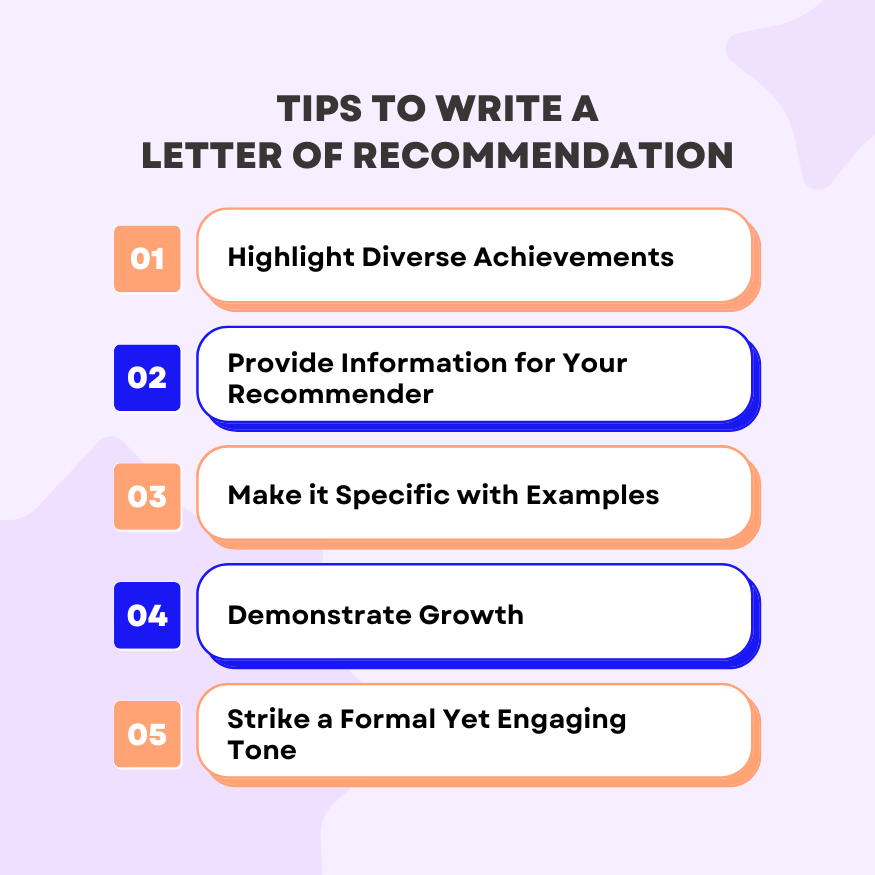
Tips to Write a Letter of Recommendation for Masters
Here are some tips to ensure your recommendation letters for a Master’s program showcase your strengths and increase your chances of admission:
1. Highlight Diverse Achievements:
- Aim for a well-rounded picture. If you have multiple letters, request each recommender to focus on a specific area. For example, one professor can speak to your research skills, while another can emphasise your leadership in a club activity.
- Highlight 'analytical skills' with specific examples. Illustrate your ability to conduct research and solve complex problems.
- Highlight 'communication skills' with specific examples. Showcase your ability to effectively articulate ideas and collaborate within teams.
2. Provide Information for Your Recommender:
- Don’t underestimate the power of details. Equip your recommender with a comprehensive CV, transcripts mentioning your GPA and achievements, a list of extracurricular activities, and the letter submission deadline.
3. Make it Specific with Examples:
- Vague statements hold little weight. Encourage your recommender to include specific anecdotes or instances that illustrate your qualities. A concrete example of a research project showcases your skills more effectively than simply saying you’re a good researcher.
4. Demonstrate Growth:
- Stand out from the crowd. A letter that solely praises your existing strengths might seem generic. Request your recommender to highlight how you’ve improved over time, capitalising on your strengths while tackling weaknesses. This portrays a well-rounded and dynamic applicant.
5. Strike a Formal Yet Engaging Tone:
- Maintain professionalism while avoiding dryness. Admission committees appreciate personalised yet formal language. A compelling letter should showcase you as an individual, avoiding clichés. Each letter should be unique in content while adhering to the overall format.
 Bonus Tip
 Bonus Tip
Choose your recommenders wisely. Select individuals who can genuinely professionally endorse your academic and professional achievements.
Common Mistakes to Avoid While Writing a LOR for Masters
When it comes to Letters of Recommendation, there are several common mistakes to avoid.
- One of the most significant mistakes is submitting the same LOR for multiple programs, as this can give the impression that the student is not genuinely interested in the specific program.
- Another mistake is not providing the recommender with all the necessary details, such as the program’s requirements and the student’s research work.
- Additionally, students should avoid asking for an LOR from someone with whom they do not have a professional relationship, as this can result in a weak and ineffective LOR.
By avoiding these common mistakes, students can ensure that their LOR is well-written, effective, and helps them stand out in the application process.
It’s also essential to follow the specific LOR guidelines provided by the university and to submit the LOR in the required format, such as the LOR format specified by the university.
Furthermore, students should make sure that their LOR highlights their relevant skills, such as programming languages, and provides specific examples of their research projects and academic achievements.
Who should you ask for a Letter of Recommendation?
If you plan to pursue a master’s program at an international university, you must understand that universities look beyond just your grades. They are interested in your past experiences, personal character, skills, and qualities. This is where a letter of recommendation comes into play.
The person you choose to ask for a letter of recommendation depends on
- the university
- program you are applying for
Some universities have specific requirements for recommenders, typically professors, professional mentors, or past employers. The letter should focus on your academic skills and achievements if a professor is required. On the other hand, if a past employer is required, the recommendation should highlight specific skills relevant to your master’s program.
Selecting the right person to write your letter of recommendation is a critical part of the application process for a Master’s program. Providing the university with a well-crafted letter highlighting your qualities and accomplishments will increase your chances of acceptance.
Final Thoughts
In this blog, we learned more about the requirements and tips for a Letter of Recommendation for master’s programs. A well-written Letter of Recommendation (LOR) can be important for admission to a Master’s program. It is a formal document that provides valuable insights into your academic and professional achievements, character, and potential to succeed in the program. A compelling LOR can distinguish you from other applicants and give you a competitive edge in admission decision-making.
To ensure a strong LOR, carefully select your recommenders, provide them with all the necessary information and guidance, and maintain a professional yet engaging tone. Additionally, highlight your diverse achievements, provide specific examples, demonstrate growth, and strike a balance between personalisation and formality. Lastly, follow the university’s submission guidelines and double-check the process to avoid errors or confusion.
By following these tips and guidelines, you can ensure that your LOR effectively advocates for your potential in a Master’s program and significantly boosts your chances of admission.
Also Read
- Statement of Purpose (SOP) Sample For Canada
- Letter of Recommendation (LOR) Samples
- Statement of Purpose: Sample, Format
Frequently Asked Questions
-
Q. How do I write a letter of recommendation for masters degree?
Ans. To write a letter of recommendation for a master’s degree, start by introducing yourself and your relationship with the applicant. Then, highlight the applicant’s academic achievements, skills, and personal qualities that make them suitable for the program. It is important to structure the LOR properly when you write the LOR, including an introduction, academic abilities, technical skills, personal qualities, research experience, comparisons to peers, specific anecdotes, suitability for the program, and a conclusion. Finally, provide a positive overall assessment and recommend the applicant for admission to the master’s program.
-
Q. How to get a letter of recommendation for Masters in India?
Ans. To get a letter of recommendation for a master’s program in India, start by identifying potential recommenders who know you well, such as professors, supervisors, or mentors. Then, approach them politely, explain your purpose, and provide them with a copy of your resume and motivation letter. Finally, follow up with a thank-you note and keep them informed of your progress.
-
Q. What is the importance of a LOR for masters?
Ans. A letter of recommendation is important for a master’s degree application because it provides an independent assessment of the applicant’s academic and personal qualities. It also helps the admission committee to evaluate the applicant’s potential for success in the program. A strong letter of recommendation can make a positive impact on the admission decision.
-
Q. What are the tips for writing a letter of recommendation?
Ans. To write a strong letter of recommendation, start by reviewing the applicant’s resume, transcripts, and motivation letter. Then, focus on highlighting their academic and personal strengths, achievements, and potential for success in the program. Use specific examples and avoid vague or generic statements. Finally, proofread the letter for grammar and spelling errors and provide your contact information for follow-up.
-
Q. How many letters of recommendation are typically required for a master’s program?
Ans. Most master’s programs require 2-3 letters of recommendation. Each letter should come from individuals who can provide insights into your academic or professional qualifications. Reviewing specific program guidelines is crucial, as some may require more or fewer letters. Ensure that your recommenders are well-acquainted with your work and can offer a detailed and positive assessment of your potential for the program.
-
Q. Can a letter of recommendation be written by someone who is not a professor or supervisor?
Ans. Yes, a letter of recommendation can be written by someone who knows you well and can vouch for your skills, such as a mentor, advisor, or colleague. However, most graduate programs prefer recommendations from professors or supervisors because they provide an authoritative assessment of your academic or professional abilities. Always check the program’s guidelines to ensure you select appropriate recommenders.
-
Q. What should I do if my recommender asks me to draft the LOR for Masters?
Ans. If your recommender asks you to draft the letter, give them an outline of your key achievements, skills, and qualities. Focus on details that align with the program you’re applying to. However, ensure that the recommender personalises and finalises the letter to maintain authenticity. This approach allows them to reflect their perspective while ensuring all relevant points are included in the LOR.
-
Q. How far in advance should I request a letter of recommendation?
Ans. You should request a letter of recommendation at least 4-6 weeks before the application deadline. This gives your recommender ample time to write a thoughtful letter. It’s important to approach them early, provide necessary information about your application, and follow up as the deadline approaches to ensure timely submission. A rushed LOR might not reflect your qualifications accurately.
-
Q. Can I use the same letter of recommendation for multiple programs?
Ans. Yes, you can use the same letter of recommendation for multiple programs if it addresses general qualities such as your academic potential or professional achievements. However, customising the letter for each program can make it more relevant, especially if the programs have different focuses or requirements. Ensure the content remains appropriate for all applications by aligning the recommender’s feedback with the programs’ expectations.
-
Q. Should a letter of recommendation be written on official letterhead?
Ans. Yes, a letter of recommendation should be written on official letterhead. This adds credibility to the letter, especially from academic institutions or professional organisations. Recommenders should use their work letterhead to formalise their endorsement. The letterhead also assures the admissions committee of the authenticity of the recommendation, making it an essential component of the LOR’s presentation.
-
Q. What happens if my recommender submits the letter after the deadline?
Ans. Late submissions can negatively affect your application, as some programs may not accept materials after the deadline. It’s essential to remind your recommender before the submission date. If a letter is late, contact the admissions office to explain the situation, but be aware that not all universities grant extensions. Ensuring timely submissions is critical to avoid complications in the application process.















Have Questions? Get Guidance to reach your Dream University
Connect with India's finest counsellors and biggest study abroad community.
Get Guidance