
Quick Read
- Public universities charge zero tuition; only Rs.17,000-Rs.44,000 in semester fees.
- RWTH Aachen ranks #25 worldwide in QS’s 2026 Mechanical Engineering subject ranking.
- Indian graduates start at Rs.52L-Rs.66L a year, with an 18-month job-search visa.
- dMAT becomes mandatory in your APS file from Summer Semester 2027 onward.
What Indian students are saying right now: Mechanical Engineering (M.Tech) in Germany: best universities and programs, r/germany
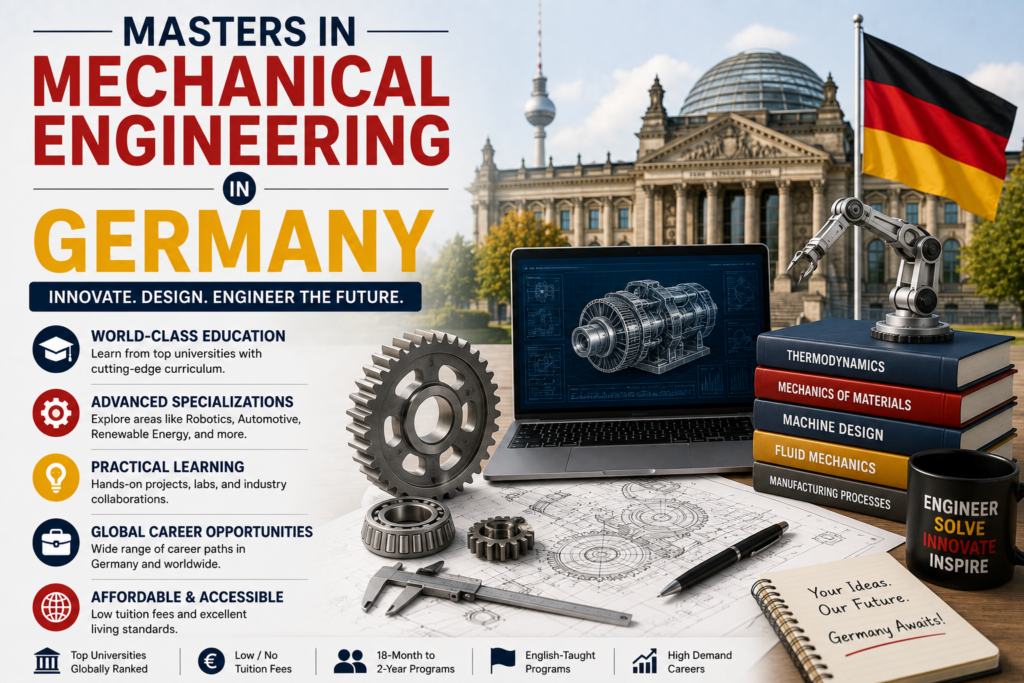
Why a Masters in Mechanical Engineering in Germany Still Works in 2027-28
A masters in mechanical engineering in Germany puts you inside the same supply chain as Bosch, Siemens, BMW, and ZF, not adjacent to it.
Three things set it apart from a UK or US mechanical engineering masters:
- Near-zero tuition: Most public universities outside Bavaria and Baden-Württemberg charge only a semester fee, not tuition, regardless of your nationality. In practice, that means a full two-year degree at RWTH Aachen, TU Berlin, TU Darmstadt, or TU Dresden costs roughly Rs.70,000-Rs.80,000 in semester fees for the entire program, compared to Rs.20L-Rs.40L in mandatory tuition alone for a one-year UK MSc.
- A consecutive-degree structure: Your program must build directly on your bachelor’s, so admissions committees look at your subject credits, not just your overall percentage.
- An 18-month stay-back window: Non-EU graduates get up to 18 months under Section 20 of the Residence Act to search for a job in any field while they find a role that matches their qualification.
Have a question specific to your profile? See what our counselors say on Germany universities and admissions before you shortlist.
Counselor insight: The students who get the best offers aren’t the ones with the highest CGPA. They’re the ones who picked a specialization (EV powertrains, additive manufacturing, or robotics) before applying and chose a university known for it.
Top Universities for a Masters in Mechanical Engineering in Germany
| University | QS Subject Rank 2026 (Mech./Aero./Mfg. Engineering) | Best Known For | Semester Fee (Rs. / EUR) |
| Technical University of Munich (TUM) | #19 | Aerospace, bio-mechanics, automotive | Rs.4.4L-Rs.6.6L (€4,000-€6,000) tuition + Rs.9,350-Rs.16,500 (€85-€150) semester fee |
| RWTH Aachen University | #25 | Robotics, production engineering, metallurgy | Rs.0 tuition + Rs.35,200 semester fee (€320) |
| Karlsruhe Institute of Technology (KIT) | #32 | Mechatronics, energy systems | Rs.1.65L (€1,500) tuition + Rs.19,800-Rs.22,000 (€180-€200) semester fee |
| Technical University of Berlin | #42 | Sustainable systems, automotive systems | Rs.0 tuition + Rs.39,600 semester fee (€360) |
| University of Stuttgart | #68 | Automotive engineering, vehicle design | Rs.1.65L (€1,500) tuition + Rs.22,000 (€200) semester fee |
| Technical University of Darmstadt | #113 | Mechatronics, future automotive systems | Rs.0 tuition + Rs.38,500 semester fee (€350) |
| Technical University of Dresden | #109 | Lightweight construction, materials | Rs.0 tuition + Rs.37,180 semester fee (€338) |
Counselor insight: TUM’s fee schedule surprises most applicants who assume “German public university” automatically means free. It doesn’t, in Bavaria and TUM’s own application deadline (typically end of May) closes earlier than the July 15 deadline that RWTH Aachen, KIT, TU Berlin, Stuttgart, and TU Darmstadt use through Uni-Assist. If zero tuition and the later deadline are both important to you, RWTH Aachen, TU Berlin, TU Darmstadt, and TU Dresden are the safer options.
Explore the full list of public universities in Germany if TU9 doesn’t fit your CGPA or budget.
Specializations to Choose Before You Apply
- Automotive and powertrain engineering: Stuttgart, TU Darmstadt, RWTH Aachen, feeding into Mercedes-Benz, Porsche, and Bosch.
- Robotics and automation: RWTH Aachen and TUM, with dedicated labs and KUKA partnerships.
- Energy systems and green hydrogen: KIT and TU Dresden have expanded since the launch of Germany’s hydrogen strategy.
- Mechatronics: KIT, TU Darmstadt, TU Berlin, useful for EV or robotics roles.
- Mechanical engineering and management: A dual-focus MSc for a technical role with a path into product management.
Counselor insight: If your final-year project touched EVs, batteries, or automation, lead with it in your SOP. A specific project reference will stick in the reader’s mind more than a generic “passionate about engineering” line.
Eligibility and Documents Checklist for Masters in Mechanical Engineering in Germany
| Requirement | What It Means | India-Specific Detail |
| Bachelor’s degree | 4-year B.E./B.Tech in Mechanical Engineering, Mechatronics, or Production | 3-year B.Tech holders usually need a bridge course or one qualifying year |
| Minimum CGPA | 8.0+ for TU9 universities; 7.0+ for other public universities | Calculated via the Bavarian/Modified Bavarian Formula, not your raw CGPA |
| Subject credits | Core credits in Engineering Mathematics, Thermodynamics, Mechanics | Some universities publish a minimum ECTS-equivalent credit list; check first |
| APS Certificate | Mandatory document verification for Indian applicants | Fee: Rs.18,000, non-refundable; apply 4-6 months before your deadline through APS India |
| dMAT (if applicable) | Mandatory only for Summer 2027 intake onward if your bachelor’s is in Engineering (or Commerce/Business/Economics) | Separate €150 fee to g.a.s.t.; does not replace APS. See the dedicated section below. |
| English proficiency | IELTS 6.5-7.0 or TOEFL 90+ | Some Universities of Applied Sciences accept Duolingo; confirm with each university |
| GRE | Not mandatory for most programs; some TUM and RWTH Aachen courses recommend it for weaker profiles | A 315+ score helps if your CGPA is below the TU9 cutoff |
| German language | Not required for English-taught programs | Basic A1-A2 German meaningfully helps with Werkstudent jobs and daily life; it is not an admission requirement |
| Application documents | SOP, 2 LORs, updated CV (Europass format) | LORs from professors who taught your core subjects carry more weight |
Applications for most TU9 universities run through Uni-Assist, a centralized platform that pre-checks your documents before forwarding them to each university; a few universities, including TUM, use their portals instead.
Missed this window? Check the Summer Intake in Germany guide for the January 15 deadline instead.
dMAT: What Engineering Applicants Must Know for Summer 2027 and Beyond
This requirement is the biggest change since the last admission cycle, and it applies directly to you. From the Summer Semester 2027 intake onward, Indian master’s applicants whose bachelor’s degree is in Engineering (including Mechanical Engineering), Commerce, Business, or Economics must submit a Digital Master Test (dMAT) score as part of their APS documentation.
- Who it applies to: Engineering, Commerce/Accounting/Finance/Economics, and Business/Management bachelor’s holders applying from Summer Semester 2027 onward. Check the full exemption list if your degree title is ambiguous.
- Who is exempt: Winter Semester 2026/27 applicants; students whose APS registration and documents were already submitted before June 29, 2026; students on confirmed exchange, double-degree, or university partnership programs.
- What it costs: A separate €150 fee paid to g.a.s.t. (the organization behind TestAS and TestDaF), on top of your Rs.18,000 APS fee. See the full fee breakdown before budgeting.
- What it doesn’t do: It does not replace APS document verification, and a low score does not automatically fail your APS application.
- Format: A general academic module (cognitive skills) plus a subject module testing knowledge from your undergraduate stream.
Counselor insight: If you’re undecided between Summer 2027 and Winter 2027, consider how much time you’ll need to prepare for the dMAT. Both intakes require it since Summer 2027 is the cutoff, so Winter 2027 requires it; Summer 2027 is the last intake for it.
Take the free Leapscholar’s dMAT mock test here
Cost of a Masters in Mechanical Engineering in Germany
| Expense Category | Monthly Cost (EUR) | Monthly Cost (INR, approx.) | Mentor Tip |
| Rent (shared flat/WG) | €350-€650 | Rs.38,500-Rs.71,500 | Munich and Stuttgart run 30-40% higher than Berlin or Dresden |
| Food and groceries | €180-€250 | Rs.19,800-Rs.27,500 | Aldi and Lidl are the standard student grocery runs. |
| Health insurance | €110-€125 | Rs.12,100-Rs.13,750 | Mandatory for visa and university enrolment |
| Transport | €0-€50 | Rs.0-Rs.5,500 | Often bundled into your semester fee as a “Semester ticket” |
| Total monthly budget | €640-€1,075 | Rs.70,400-Rs.1,18,250 | Actual spend depends on which city you’re placed in |
For your visa, Germany requires a blocked account of €11,904/year (about Rs.13.09 lakh), which pays out €992/month (about Rs.1.09 lakh) once activated. This figure is tied to the BAföG rate and has held steady since September 2024, expected to carry into 2027; reconfirm the exact figure with your consulate closer to your appointment.
See what our counselors say about Germany’s cost and living if your budget is tight.
Counselor insight: Students often forget the Rs.15,000-Rs.25,000 in one-time setup costs, blocked account provider fees, health insurance activation, and Anmeldung paperwork. Budget for these expenses separately.
For a full city-by-city breakdown, see our Cost of MS in Germany budget guide.
Scholarships for a Masters in Mechanical Engineering in Germany
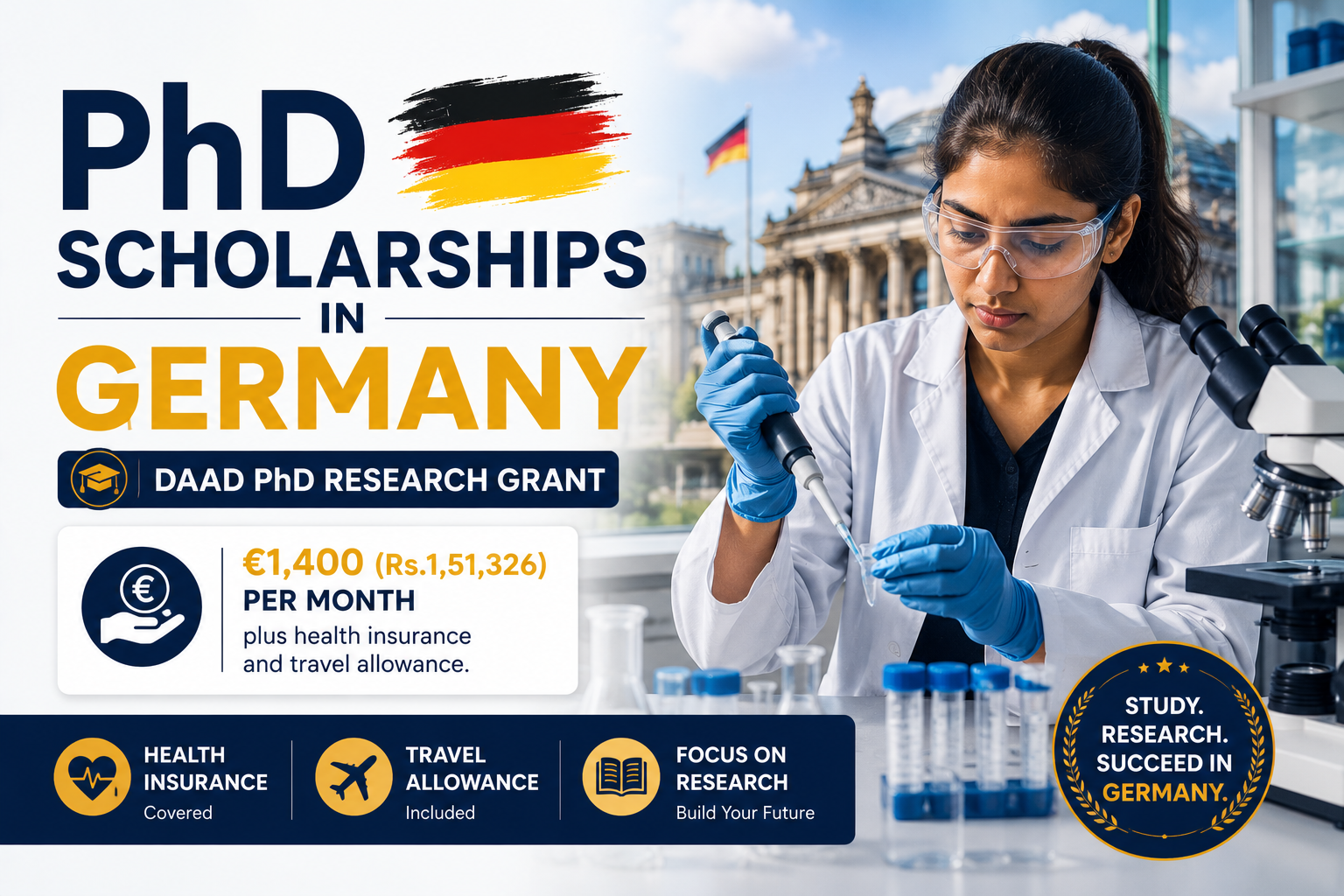
- DAAD Scholarship: €992/month (about Rs.1.09 lakh), plus travel expenses and health insurance, for the duration of your program.
- Deutschlandstipendium: €300/month (about Rs.33,000), open to students at any German university regardless of nationality.
- Erasmus Mundus: Covers most or all costs for joint mechanical engineering masters spread across two or more European universities.
- University and foundation grants: TU9 universities and political foundations (Heinrich Böll, Friedrich Ebert) occasionally run engineering-specific grants.
Counselor insight: DAAD reviewers weigh relevant internship experience heavily. Mention a measurable outcome from your internship (a process improved, a defect rate reduced), not just the company’s name.
Check your eligibility on the DAAD Scholarship Germany guide for Indian students.
Salary by Specialization After a Masters in Mechanical Engineering
Not all mechanical engineering specializations pay the same. Robotics and automotive roles consistently outpace general manufacturing and production roles at both entry and mid-level.
| Specialization | Entry-Level Salary (0-2 yrs) | Mid-Level Salary (3-5 yrs) |
|---|---|---|
| Robotics & Automation | Rs.57.2L-Rs.66L (€52,000-€60,000) | Rs.74.8L-Rs.90.2L (€68,000-€82,000) |
| Automotive Engineering | Rs.55L-Rs.63.8L (€50,000-€58,000) | Rs.71.5L-Rs.85.8L (€65,000-€78,000) |
| Aerospace Engineering | Rs.55L-Rs.63.8L (€50,000-€58,000) | Rs.72.6L-Rs.88L (€66,000-€80,000) |
| Energy & Sustainability | Rs.52.8L-Rs.60.5L (€48,000-€55,000) | Rs.66L-Rs.81.4L (€60,000-€74,000) |
| Manufacturing / Production | Rs.51.7L-Rs.58.3L (€47,000-€53,000) | Rs.63.8L-Rs.77L (€58,000-€70,000) |
Source: jobvector and StepStone Germany salary-report data 2026 indicate that general mechanical engineering roles have an entry-level average of €50,000-€55,000, with a range of €45,500-€72,000, adjusted directionally by specialization based on reported industry pay gaps. These are indicative ranges, not specialization specific published figures; verify against BA Entgeltatlas or a current Glassdoor Germany pull before publishing exact numbers.
Most students convert into a full-time offer before their visa expires through Werkstudent (working student) contracts, which usually require 15-20 hours a week during your thesis semester.
Counselor insight: Don’t wait for your final semester to job hunt. Start applying to Werkstudent roles the moment your second semester ends; most conversions to full-time trace back to an internship or Werkstudent stint that started 9-12 months before graduation.
Post-Study Work Visa, EU Blue Card, and PR After a Masters in Mechanical Engineering
After your masters, Germany gives you a structured, multi-step path from graduation to long-term residence.
| Stage | Details |
|---|---|
| Job Seeker Visa (Section 20) | 18 months from your final result date to find a relevant job; you can work any job, full-time, while searching |
| EU Blue Card (shortage occupation, incl. mechanical engineering) | Minimum gross salary: Rs.50.5L/year (€45,934.20) as of 2026; also applies to recent graduates within 3 years of their degree, regardless of role |
| EU Blue Card (general threshold) | Rs.55.8L/year (€50,700) for roles outside the shortage list |
| Permanent Residency (PR) | 21 months with Blue Card + B1 German; 27 months with A1 German (§18c(2) AufenthG, reformed 1 March 2024 (the older “33 months” figure some sites still show is pre-reform and no longer current) |
| Standard Skilled Worker route | PR in around 3 years (36 months) with continuous pension contributions; no Blue Card required |
| Citizenship | Eligible after 5 years of legal residence; reducible to 3 years with C1 German or exceptional professional integration |
Blue Card salary thresholds are revised every January, so recheck the current figure with your employer’s HR before signing an offer letter.
Get PR in 21 months with the EU Blue Card, no lottery. Read more about it in our complete Software Engineering in Germany guide.
Read more about the Post-Study Work Visa Germany process and long-term settlement in our Germany PR requirements guide.
Germany vs. USA, UK, and Canada for a Mechanical Engineering Masters
| Factor | Germany | USA | UK | Canada |
|---|---|---|---|---|
| Total tuition (masters) | Rs.0-Rs.12L | Rs.50L-Rs.85L | Rs.20L-Rs.40L | Rs.25L-Rs.45L |
| Typical duration | 2 years | 1.5-2 years | 1 year | 1.5-2 years |
| Post-study stay-back | 18 months | Up to 3 years on STEM OPT (policy-dependent) | 2 years (Graduate Route) | Up to 3 years (PGWP, policy-dependent) |
| PR pathway | 21-27 months via EU Blue Card | Employer-sponsored, H-1B lottery-dependent | Points-based, longer timeline | Express Entry, policy has tightened recently |
Visa and immigration rules in the USA, UK, and Canada change often; treat this as a directional comparison and verify current policy for any country you’re seriously considering before you commit.
Application Timeline: Winter 2027 and Summer 2028 Intakes
| Intake | Typical Application Window | Typical Deadline | dMAT Required? |
|---|---|---|---|
| Summer Semester 2027 (April 2027 start) | September 2026 – November/December 2026 | January 15, 2027 (Uni-Assist universities) | Yes, if your degree is in Engineering |
| Winter Semester 2027/28 (October 2027 start) main intake | March 2027 – June/July 2027 | July 15, 2027 (Uni-Assist universities); TUM’s own deadline typically closes end of May 2027 | Yes, if your degree is in Engineering |
| Summer Semester 2028 (April 2028 start) fallback | September 2027 – November/December 2027 | January 15, 2028 (Uni-Assist universities) | Yes |
These dates repeat the same pattern each year but aren’t officially confirmed this far in advance; reconfirm with each university’s own admissions page 3-4 months before you plan to apply.
Working backward from a July 2027 deadline: start your APS application by February-March 2027 and register for dMAT (if applicable) as soon as registration opens since seats fill up before peak deadline months.
What to Do When Things Go Wrong
- Missed the July 15 deadline: Apply for the January 15 Summer Semester deadline, or target universities with later or rolling Winter admissions.
- CGPA below 7.0: Universities of Applied Sciences have more flexible cutoffs. A strong GRE score, internship, or well-written SOP can offset a lower CGPA.
- APS certificate delayed: Processing can take 6-8 weeks during peak season (March-May). Contact your target university directly; many accept a conditional offer with the APS certificate to follow.
- Visa refused: The usual causes are an incomplete blocked account confirmation or a mismatch between your admission letter and visa file. Reapply with all documents cross-checked, and consult an education counselor before resubmitting.
Read the complete Germany study visa guide for Indian students before you submit your file.
Is a Masters in Mechanical Engineering in Germany Worth It?
Three takeaways to act on:
- Pick your specialization before your university. Automotive, robotics, mechatronics, and energy systems lead to different companies and starting salaries.
- Start your APS certificate and dMAT prep by December of the year before your intake. APS delays and dMAT registration windows are the two most common reasons students miss deadlines in 2027-28.
- Germany costs less than the alternatives. Your total spend here, including tuition and 2 years of living, works out to roughly Rs. 18L-30L. A one-year UK MSc alone costs Rs.23L-42L in tuition before you add a single month of living expenses.
Ready to start your masters in mechanical engineering in Germany application? Book a free session with a LeapScholar counselor and get your profile reviewed.
Frequently Asked Questions About a Masters in Mechanical Engineering in Germany
-
Is Germany a good country to study Mechanical Engineering?
Yes. Germany’s automotive, robotics, and manufacturing companies (Bosch, Siemens, BMW, ZF) recruit directly from TU9 universities. Near-zero public tuition and an 18-month post-study work visa keep the return on investment strong even after the addition of the dMAT requirement.
-
How much of a CGPA is required for a Master’s in Germany?
Most public universities expect 7.0+ on your Indian scale. TU9 universities like TUM and RWTH Aachen expect 8.0+, calculated using the Bavarian or Modified Bavarian Formula, not your raw CGPA.
-
Which specialization is best for a Masters in Mechanical Engineering in Germany?
It depends on your goal: automotive and powertrain at Stuttgart or RWTH Aachen, robotics and automation at TUM or RWTH Aachen, and energy systems or mechatronics at KIT or TU Dresden.
-
Do I need IELTS for a masters in Germany?
Yes, for most English-taught programs. IELTS 6.5-7.0 or TOEFL 90+ is standard, though some Universities of Applied Sciences also accept Duolingo scores. Always confirm with the specific university.
-
Is a Masters in Mechanical Engineering in Germany taught in English?
Yes, most TU9 universities and several Universities of Applied Sciences teach it fully in English. German isn’t mandatory for admission, though basic German (A2/B1) helps with internships and daily life.
-
Are there private universities for a Masters in Mechanical Engineering in Germany?
Yes, Germany has private universities that offer Masters in Mechanical Engineering. But most Indian students take the tuition-free public route (RWTH Aachen, TU Berlin, TU Darmstadt, and TU Dresden). Private universities have more flexible admissions and smaller cohorts at a higher price.
-
What is the salary after a Masters in Mechanical Engineering in Germany?
Graduate and junior engineers earn Rs.51.7L-Rs.66L a year, depending on specialization (jobvector/StepStone Germany 2026 data, indicative). With 3-5 years of experience, the pay scale rises to Rs.63.8L-Rs.90.2L. Robotics and automotive roles tend to pay more; general manufacturing and production roles tend to pay less.
-
How much does a Masters in Mechanical Engineering in Germany cost?
Rs.0 tuition at most public universities; Rs.4.4L-Rs.6.6L per semester at TUM specifically; Rs.70,400-Rs.1,18,250 a month for living expenses; and a one-time blocked account contribution of about Rs.13.09 lakh.
-
Do I need to take the dMAT for a Masters in Mechanical Engineering in Germany?
If you’re applying from the Summer Semester 2027 intake onward and your bachelor’s is in Engineering, yes. Winter Semester 2026/27 applicants and students who completed their APS registration before June 29, 2026, are exempt.








Have Questions? Get Guidance to reach your Dream University
Connect with India's finest counsellors and biggest study abroad community.
Get Guidance