
Quick Read
- Germany’s top renewable energy master’s programs run at TUM Straubing, Kassel, and Stuttgart.
- Most public universities charge no tuition, only a semester contribution.
- A German blocked account requires Rs.12,96,100 (€11,904) as of 2026.
- DAAD scholarships pay Rs.1,08,009 (€992) monthly to master’s students.
- Graduates can apply for an 18-month post-study job seeker visa.
- 60% of Indian students in Germany are already enrolled in engineering programs.
Top Universities and Courses for a Masters in Renewable Energy in Germany
| Program | University | Track | Tuition/Semester Fee |
|---|---|---|---|
| M.Sc. Sustainable Energy and Processes | TUM Campus Straubing | Engineering | Bavaria charges non-EU tuition on select TUM programs; confirm on TUM’s official fee page before applying |
| M.Sc. Sustainable Management and Technology | TUM Campus Straubing | Management | Same as above |
| M.Sc. Renewable Energy and Energy Efficiency | University of Kassel | Engineering | Semester contribution only, no tuition |
| M.Sc. Sustainable Energy Engineering | Technische Universität Berlin | Engineering | Semester contribution only, no tuition |
| M.Sc. Environmental and Renewable Energy Management | University of Oldenburg | Management | Semester contribution only, no tuition |
| M.Sc. Energy Engineering | University of Stuttgart | Engineering | Baden-Württemberg charges non-EU tuition of roughly Rs.1,63,320 (€1,500) per semester |
For a wider shortlist beyond renewable energy specifically, cross-check against LeapScholar’s guide to the best universities in Germany for a master’s.

Choose your dream country
 UK
UK
 USA
USA
 Germany
 Australia
 Ireland
 Canada
 UAE
UAE
 France
 Sweden
 Italy
Italy
 Other
Other
When do you want to study abroad?
What's your highest level of education?
Have you completed Class 12th?
What was your Class 12 CGPA/percentage?
Are you a student or a parent/guardian?
What do you want to study?
Select your current city
How Leap will help you

Personalised University Shortlist

Express Applications with Quicker Admits

End-to-End Application Support
Counselor insight: TUM does not publish an official acceptance rate for any program, including Straubing's energy tracks. If you're applying to TUM specifically, read LeapScholar's TU Munich acceptance rate breakdown before you anchor your expectations to any number you find online.
Masters in Renewable Energy in Germany Cost: Fees, Living Expenses and Blocked Account
| Cost head | Amount (EUR) | Amount (INR) |
|---|---|---|
| Semester contribution (most public universities) | €150–350 | Rs.16,332–38,108 |
| Bavaria/Baden-Württemberg non-EU tuition (select programs) | €1,500–6,000 | Rs.1,63,320–6,53,280 |
| Blocked account (annual, mandatory) | €11,904 | Rs.12,96,100 |
| Blocked account (monthly release) | €992 | Rs.1,08,009 |
| Living costs, affordable cities (Leipzig, Magdeburg, Dresden) | €600–900/month | Rs.65,328–97,992/month |
| Living costs, expensive cities (Munich, Frankfurt) | €1,000–1,400/month | Rs.1,08,880–1,52,432/month |
| Visa application fee | €75 | Rs.8,166 |
The blocked account figure is set by the Bundesverwaltungsamt using Germany's BAföG cost-of-living baseline, and the Federal Foreign Office adopts the same figure as the visa proof-of-funds threshold. Read LeapScholar's full blocked account breakdown for provider comparisons and the exact transfer process.
On what that monthly cap is doing: a Master's graduate in Management from SRH Heidelberg and contributor to LeapScholar's Germany guide, Pooja Kale, explains, "A blocked account is a mandatory account where incoming international students deposit one year's worth of living expenses prior to arriving in Germany. It serves as financial proof for visa approval, releasing a fixed monthly amount to cover living costs."
Counselor insight: Rs.1,08,009 a month covers 60-70% of real costs in Munich but nearly all of it in Leipzig or Dresden. Check LeapScholar's cost of living guide for Indian students before you shortlist a city, not after you've already picked a university.
Eligibility for Masters in Renewable Energy in Germany: Which Background Fits Which Program
Match your profile against these three scenarios before you shortlist:
Scenario 1: You are a final-year B.Tech. electrical/mechanical student graduating in 2027. You fit the engineering-track programs directly (TUM Straubing, Kassel, TU Berlin, Stuttgart). Target a CGPA of 7.0+ (converted German scale 2.5 or better). Because engineering is a dMAT-affected field, if you're applying for the summer 2027 intake or later, you'll need a dMAT scorecard as part of your APS documentation, alongside any GRE score your specific program requires.
Scenario 2: You have a B.E. in mechanical engineering with 2 years of industry work experience. Work experience strengthens management-track applications (Oldenburg's REM, TUM's Sustainable Management and Technology) more than it strengthens pure engineering tracks. Lead your SOP with project experience in energy systems, not just your degree.
Scenario 3: Your undergraduate degree is in environmental science or a non-core engineering field. You are eligible for management-track and policy-focused programs, but core engineering programs may ask for supplementary coursework in thermodynamics or energy systems. Confirm this university by university before applying.
That experience pays off past the admissions stage. Our survey of LeapScholar students found prior work experience showed a stronger link to post-graduation salary than German proficiency or field of study did.
Counselor insight: If your program doesn't explicitly list a GRE requirement, don't submit a weak score "to look thorough." A German admissions committee reads an unrequested weak score as inconsistent with the rest of your file, not as extra effort.
For students without an IELTS score, read LeapScholar's guide to studying in Germany without IELTS to check if the MOI (Medium of Instruction) route applies to you. For test prep itself, see LeapScholar's IELTS, TOEFL, and GRE resources and LeapScholar's dMAT vs GRE comparison if your target program asks for both.
Documents You Need for Your Masters in Renewable Energy Germany Application
| Document | India-Specific Detail |
|---|---|
| Academic transcripts | Get consolidated marksheets (all semesters/years) attested, not just the provisional certificate |
| APS Certificate | Mandatory for Indian applicants; costs Rs.18,000, takes 3-5 weeks; apply 4-6 months before your deadline |
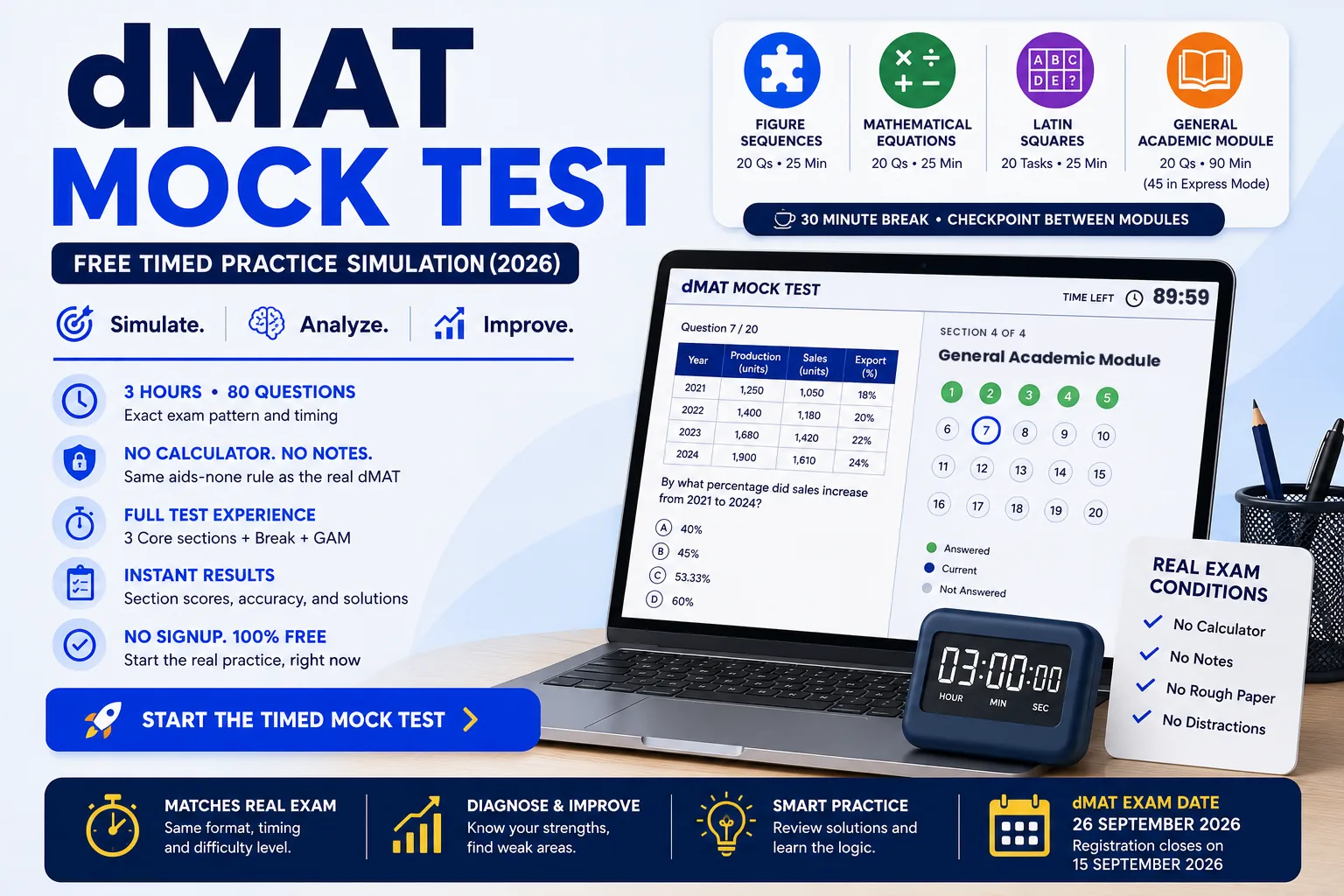
| dMAT scorecard (if applicable) | Required only if your undergraduate field is Engineering, Commerce, Finance, Economics, or business/management and you're applying for the summer 2027 intake or later |
| Language proficiency | IELTS 6.5+ for English-taught programs; TestDaF Level 4 or Goethe C1 if the program requires German |
| SOP | Name your specific renewable energy specialisation and university, not a generic "why Germany" essay |
| Letters of Recommendation | 2 from professors or employers who can speak to technical or research ability |
| CV | Use the Europass format, standard across German university portals |
| Proof of financial resources | Blocked account statement of Rs.12,96,100 (€11,904), or a DAAD/scholarship confirmation letter |
| Health insurance | Valid coverage for visa purposes, arranged before your visa appointment |
Applicants who filed before the system settled waited far longer than that. Recalling his own timeline, a Master's student in Operational Excellence at Hof University of Applied Sciences and a contributor to LeapScholar's Germany guide, Mahendra Wagh, says: "The student visa took about a month to process. The APS certificate took around 3 months, as the system was newly introduced at the time, though the timeline has since improved to a few weeks."
For the SOP specifically, see LeapScholar's SOP for Germany guide, and for the full visa document checklist, LeapScholar's Germany study visa guide.
The dMAT Requirement for Renewable Energy Applicants
Since most renewable energy master's programs sit on the engineering track, the dMAT applies to most applicants here for Summer 2027 intake onward, as part of APS verification. It runs independently of any GRE requirement your specific program lists.
If you're coming from Scenario 3 (environmental science or a non-core engineering background), don't assume you're automatically exempt; check the exemption criteria against your exact degree title, since some environmental and applied-science fields fall in a grey zone. Once you've confirmed your status, register for the dMAT alongside your APS application rather than after it, since the two now run in parallel.
Scholarships for Masters in Renewable Energy in Germany: DAAD and Beyond
| Scholarship | Provider | Coverage |
|---|---|---|
| DAAD Study Scholarship | German Government | Rs.1,08,009 (€992)/month, travel allowance, insurance |
| Deutschlandstipendium | German Government + private co-funders | €300/month (Rs.32,664) |
| Women's Academic Excellence Scholarship | ESMT Berlin | Up to €10,000 (Rs.10,88,800) |
| Erasmus+ | European Union | Travel, visa costs, living allowance for eligible mobility programs |
DAAD's EPOS program pays monthly stipends of 992 euros for graduates, confirmed directly on DAAD's official scholarship database. For the full funding picture beyond DAAD, see LeapScholar's complete guide to Germany scholarships for Indian students.
On whether a stipend at that level genuinely covers a life in Germany, a Master's graduate in Management from SRH Heidelberg and contributor to LeapScholar's Germany guide, Pooja Kale, reports: "The monthly stipend was sufficient to cover my rent, health insurance, and basic monthly living expenses without needing financial support from my family."
Counselor insight: A full scholarship can replace your blocked account requirement entirely, but the embassy decides this case by case. Don't skip opening a blocked account until your scholarship confirmation letter is in hand.
Planning Timeline: Masters in Renewable Energy in Germany for the 2027-28 Intake
| Month (2026-27) | Action |
|---|---|
| August–September 2026 | Shortlist programs, start APS registration, register for dMAT if your field is affected |
| October–December 2026 | Take IELTS/TOEFL, request LORs (before Indian exam season starts) |
| January–March 2027 | Submit Winter 2027 applications via Uni-Assist or university portals |
| April–June 2027 | Fund your blocked account as soon as you have an admission letter |
| June–July 2027 | Book your VFS visa appointment, arrange health insurance |
| August–September 2027 | Travel, activate blocked account in Germany, complete university enrollment |
Check LeapScholar's intake and deadline guide for Germany for university-specific cutoffs, since individual programs can close 4-6 weeks earlier than the general window above.
Counselor insight: Most Indian professors are unreachable for LOR requests during exam season (March-May) and summer vacation (June). Request your LORs in January or February if you're targeting the Winter intake.
What to Do If Your Masters in Renewable Energy Germany Application Gets Stuck
- Missed the Winter 2027 deadline? Target Summer 2028 instead, but note that fewer renewable energy programs open for summer intake. Confirm program-specific availability before committing to this path.
- IELTS score below requirement? Retake it or check if your university accepts an MOI certificate instead, if your Bachelor's was fully English-medium.
- APS delayed past your deadline? Apply for the certificate immediately using your provisional degree certificate. Universities generally accept a pending APS application for provisional admission, finalised once the certificate arrives.
- Low or no GRE score for a program that requires it? A weak, unrequested score can hurt more than no score. If the program mandates GRE, retake it rather than submitting a low score you can't explain.
- Visa appointment delayed? Book your VFS slot the moment your blocked account is funded. Delays compound if you wait for every document to be "perfect" first.
If the visa is refused rather than delayed, the recovery route has narrowed. The remonstration procedure, a free administrative appeal previously available after a refusal, was abolished worldwide from 1 July 2025. Your only remaining recourse is a fresh application with the deficiency corrected — paying the fee again and queuing for a new appointment — or an action before the Verwaltungsgericht Berlin, which requires German legal representation and is slow and expensive.
Jobs and Salary After a Masters in Renewable Energy in Germany
| Role | Average Annual Salary (INR) |
|---|---|
| Renewable Energy Consultant | Rs.48-65 lakh |
| Solar Design Engineer | Rs.44-61 lakh |
| Wind Energy Engineer | Rs.46-63 lakh |
| Energy Analyst | Rs.39-57 lakh |
| Sustainability Manager | Rs.51-70 lakh |
Graduates from German master's programs earn average starting salaries of EUR 45,000-65,000, which converts to roughly Rs.48.99 lakh to Rs.70.77 lakh annually at the exchange rate used in this article.
After graduation, you can apply for an 18-month job seeker residence permit under Section 20 of the Residence Act. This permit lets you work any job while searching for qualified employment in your field. Once you secure a role, the EU Blue Card salary threshold for recent graduates is EUR 45,934.20 annually as of 2026 (roughly Rs.50.01 lakh), lower than the general Blue Card threshold of EUR 50,700 (roughly Rs.55.20 lakh).
How graduates get into those roles is as worth planning as the bands themselves. Our survey found 56% of LeapScholar respondents who held a Werkstudent or part-time role said it led directly to a full-time offer — the strongest single finding in the survey. Describing how he engineered that, a Mechanical Engineering graduate working in Germany since 2019 and contributor to LeapScholar's Germany guide, Mriganka Das, says he "leveraged Werkstudent positions during university and completed a Master's thesis within an industrial company rather than an academic lab, to gain practical engineering experience and build local professional connections."
Counselor insight: Renewable energy engineers sit on Germany's official skilled-worker shortage occupation list, which is why the lower Blue Card threshold applies to most fresh graduates in this field. Confirm your specific occupation code against the current list before assuming this applies to your role.
Why a Masters in Renewable Energy in Germany Makes Sense for Indian Engineers
Indian students in Germany have more than doubled over the past five years, and India has now overtaken China to become Germany's single largest international student group, with 59,419 Indian students enrolled in the 2024-25 academic year. 60% of them are already in engineering programs, which is exactly the background most renewable energy master's programs expect.
Germany backs this with real infrastructure. In 2024, 59% of Germany's electricity came from renewable sources: wind, solar, biomass, and hydropower combined, and the country had over 100 GW of installed photovoltaic capacity and 75 GW of wind capacity as of.
The demand extends beyond the generation side. Germany's Federal Employment Agency identifies over 160 occupations with qualified-worker bottlenecks going into 2026. Looking at where that leads for engineers, a Dipl.-Kfm. and contributor to LeapScholar's Germany guide, Prof. Dr. Stefan Gröner, argues: "In particular, the famous German 'Mittelstand,' the country's 'hidden champions' that are often market leaders in highly specialized manufacturing solutions, is now entering the era of intelligent production systems. For young engineers who cultivate technical excellence, self-leadership, entrepreneurial thinking, and a human-centered approach to AI, Germany offers more than just jobs; it offers the opportunity to help shape the future of the industry itself."
Counselor insight: Most students assume "renewable energy" is a single degree type. It isn't. German universities split this field into two distinct tracks: engineering-heavy programs (process engineering, energy systems) and management-heavy programs (energy policy, sustainability management). Applying to the wrong track for your undergraduate background is the single most common rejection reason we see.
3 Takeaways on Masters in Renewable Energy in Germany
- Confirm whether your target program is engineering-track or management-track before you shortlist, since your undergraduate background fits one far better than the other.
- Fund your blocked account the moment you receive an admission letter, not the week before your visa appointment.
- If your undergraduate field is engineering and you're targeting summer 2027 or later, register for the dMAT alongside your APS application; don't assume GRE alone covers you.
Verified by: LeapScholar's Germany counseling team, with hands-on experience guiding Indian students through APS certification, DAAD applications, and German student visa processes.
Have questions about your masters in renewable energy in Germany plan? Book a free session with a LeapScholar counselor.
Frequently Asked Questions About Masters in Renewable Energy in Germany
-
What happens if my APS certificate is delayed for my Germany application?
Apply for the APS certificate immediately using your provisional degree certificate rather than waiting for your final marksheet. Most German universities accept a pending APS application for provisional admission and finalise it once the certificate arrives, so a delay doesn't automatically cost you the intake.
-
Do I need the GRE for a masters in renewable energy in Germany?
It depends on the specific program. Some universities require GRE for competitive engineering tracks, while others don't ask for it at all. If your undergraduate field is engineering and you're applying for summer 2027 or later, you'll separately need a dMAT scorecard for your APS documentation, regardless of whether the university itself asks for GRE.
-
What is the average salary after a masters in renewable energy in Germany?
Graduates typically start between Rs.48.99 lakh and Rs.70.77 lakh annually (€45,000-65,000), varying by specialisation and city, with roles like Sustainability Manager and Renewable Energy Consultant at the higher end.
-
Are renewable energy engineers in demand in Germany right now?
Renewable energy engineering sits on Germany's official skilled-worker shortage occupation list, which is also why recent graduates in this field qualify for a lower EU Blue Card salary threshold than the general applicant pool.
-
Can I do a masters in renewable energy in Germany without German language skills?
Most renewable energy master's programs in Germany are taught fully in English, requiring only IELTS 6.5+ or an equivalent TOEFL score. German proficiency helps with daily life and internship access but usually isn't an admission requirement for these programs.
-
What is the DAAD scholarship amount for renewable energy programs in Germany?
DAAD's Study Scholarship pays master's students a monthly stipend of Rs.1,08,009 (€992), plus travel allowance and insurance coverage, confirmed directly on DAAD's official scholarship database.
-
Is masters in renewable energy in Germany free for Indian students?
Most public universities charge no tuition, only a semester contribution of Rs.16,332 to Rs.38,108 (€150-350). Exceptions exist: TUM's Bavaria campuses and Baden-Württemberg universities like Stuttgart can charge non-EU tuition on top of the semester fee, so confirm this on the specific program page before applying.
-
Which universities offer a masters in renewable energy in Germany?
Top options include TUM Campus Straubing (Sustainable Energy and Processes), University of Kassel (Renewable Energy and Energy Efficiency), TU Berlin (Sustainable Energy Engineering), University of Oldenburg (Environmental and Renewable Energy Management), and University of Stuttgart (Energy Engineering).
-
Is a masters in renewable energy in Germany good for Indian students?
Germany combines tuition-free public universities with a renewable energy sector that already sources over half its electricity from renewables. For Indian engineering graduates, a masters in renewable energy in Germany also lands you in a country where 60% of the Indian student population is already in engineering fields, giving you a large existing peer network.








Have Questions? Get Guidance to reach your Dream University
Connect with India's finest counsellors and biggest study abroad community.
Get Guidance