
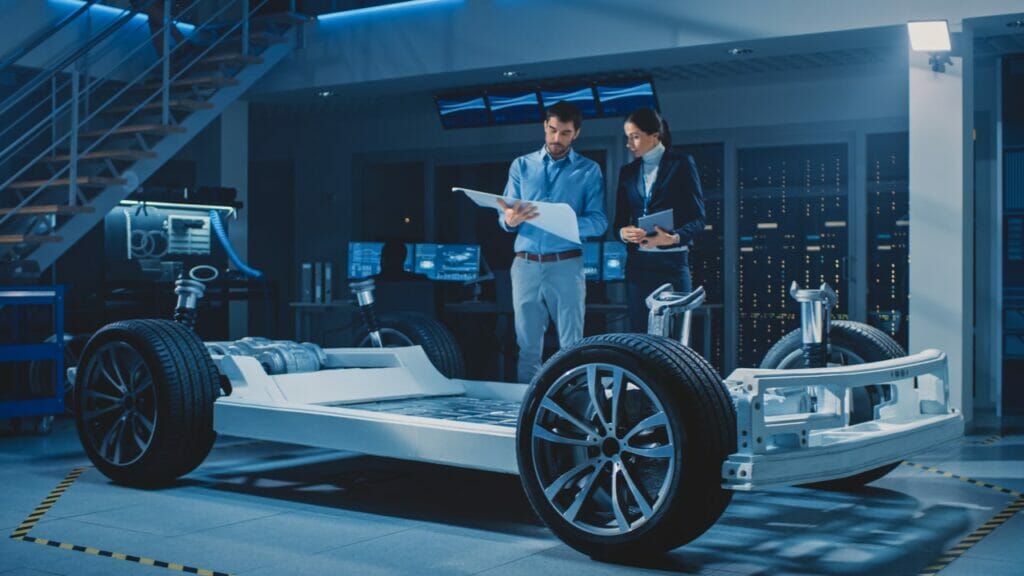
For ambitious Indian engineering graduates, Canada has rapidly emerged as a top destination for postgraduate studies. The nation’s world-class universities, welcoming immigration policies, and a high-tech automotive industry undergoing an electric revolution present an unparalleled opportunity. If you’re dreaming of designing the next generation of electric vehicles or autonomous systems, a Master’s in Automotive Engineering from Canada could be your launchpad to a global career.
This comprehensive guide for the 2025-2026 academic year provides a clear roadmap for Indian students. We will cover everything from the top universities and their specialisations to admission requirements, detailed costs in Indian Rupees (INR), and the exciting career prospects that await you after graduation.
Top 10 Universities for Master’s in Automotive Engineering in Canada
While many universities offer Mechanical Engineering with an automotive focus, several institutions stand out for their dedicated automotive programs and cutting-edge research facilities.
| University Name | QS World Ranking 2026 | Average Annual Tuition Fee (CAD/INR) |
|---|---|---|
| McGill University | #27 | CAD 28,500 (~₹17,91,830) |
| University of Toronto | #29 | CAD 62,250 (~₹39,13,740) |
| University of British Columbia | #40 | CAD 26,400 (~₹16,59,800) |
| University of Alberta | #94 | CAD 18,900 (~₹17,47,822) |
| University of Waterloo | #119 | CAD 27,800 (~₹17,47,822) |
| McMaster University | #173 | CAD 22,500 (~₹14,14,605) |
| Queen’s University | #191 | CAD 19,800 (~₹12,44,850) |
| Dalhousie University | #283 | CAD 20,100 (~₹12,63,712) |
| University of Windsor | #546 | CAD 21,500 (~₹13,51,732) |
| Ontario Tech University | #401-450 | CAD 24,800 (~₹17,47,822) |

Choose your dream country
 UK
UK
 USA
USA
 Germany
 Australia
 Ireland
 Canada
 UAE
UAE
 France
 Sweden
 Italy
Italy
 Other
Other
When do you want to study abroad?
What's your highest level of education?
Have you completed Class 12th?
What was your Class 12 CGPA/percentage?
Are you a student or a parent/guardian?
What do you want to study?
Select your current city
How Leap will help you

Personalised University Shortlist

Express Applications with Quicker Admits

End-to-End Application Support
Core Subjects and Specialisations to Expect
Your curriculum will be a blend of advanced mechanical engineering principles and specialised automotive topics. You can expect to study subjects such as:
- Vehicle Dynamics and Control Systems
- Internal Combustion Engines and Alternative Fuels
- Electric and Hybrid Powertrain Design
- Automotive Materials and Manufacturing
- Vehicle Aerodynamics and Thermal Management
- Mechatronics and Vehicular Electronics
- Autonomous Vehicle Systems
Admission Requirements for Indian Students (2026 Intake)
The requirements are competitive. Planning your application well in advance is crucial.
Academic & GPA Requirements
You will need a four-year Bachelor of Engineering (B.E.) or Bachelor of Technology (B.Tech) degree in Mechanical, Automotive, Electrical, or a closely related field from a recognised institution. Most universities require a minimum GPA of 3.0 on a 4.0 scale, which translates to a First Class or approximately 73-76% in the Indian grading system.
English Language Proficiency
As an Indian student, you must prove your English proficiency. The most common tests and typical minimum scores are:
- IELTS: Overall score of 6.5, with no band less than 6.0. Some top universities may require a 7.0.
- TOEFL iBT: Overall score of 88-100, with specific minimums for each section.
Key Application Documents
Your application package is your chance to make a strong impression. Ensure you have:
- Statement of Purpose (SOP): A well-crafted essay detailing your academic background, career goals, and reasons for choosing this specific program and university.
- Letters of Recommendation (LORs): Typically, two to three academic or professional references.
- Updated CV/Résumé: Highlighting your projects, internships, and any relevant work experience.
- Official Transcripts: From all post-secondary institutions attended.
Understanding the Costs: Tuition and Living Expenses in INR (2025-2026)
Budgeting is a critical part of your application process.
Average Tuition Fees
For a master's program in Automotive Engineering, annual tuition fees for international students generally range from CAD 20,000 to CAD 40,000. This converts to approximately ₹12.5 Lakhs to ₹25 Lakhs per year, depending on the university and the current exchange rate.
Cost of Living & GIC Requirement
To get a Canadian study permit, you must prove you have sufficient funds for your living expenses. For 2025, the Canadian government requires students to have a Guaranteed Investment Certificate (GIC) of CAD 20,635 (approximately ₹12.9 Lakhs). This amount covers your first year's living expenses, and you receive it in instalments after arriving in Canada.
Your total first-year cost will be the sum of your tuition and the GIC amount, plus flights and visa fees.
Scholarships for Indian Students in Automotive Engineering
Several scholarships can help offset the costs. Look into options like the Ontario Graduate Scholarship (OGS) if you are applying to universities in Ontario, and individual university entrance scholarships. Researching and applying for these early is key.
Career Prospects & Salary After Graduation in Canada
The career outlook is bright. Graduates are in high demand in roles such as:
- Design and Development Engineer (EV/AV)
- Vehicle Dynamics Engineer
- Powertrain Systems Engineer
- Automotive Research Scientist
- Manufacturing Process Engineer
With the industry's shift to electrification, skills in battery technology, power electronics, and software development are particularly valuable. A recent graduate with a master's degree can expect a starting salary ranging from CAD 70,000 to CAD 90,000 per year (approximately ₹44 Lakhs to ₹56 Lakhs).
Your Roadmap to a Canadian Degree: A Step-by-Step Guide
- Research (12-18 months prior): Shortlist universities and programs. Note their specific deadlines and requirements.
- Prepare for Tests (9-12 months prior): Take the IELTS/TOEFL and GRE (if required).
- Application (8-10 months prior): Prepare your SOP, LORs, and submit your applications.
- Receive Offer Letter (4-6 months prior): Once you receive an offer, you can begin the visa process.
- Apply for Study Permit (3-4 months prior): Pay your tuition deposit, purchase your GIC, and apply for your study permit through the Student Direct Stream (SDS) for faster processing from India.
- Pre-departure (1-2 months prior): Book flights and arrange accommodation.
Why Pursue a Master’s in Automotive Engineering in Canada in 2026?
Choosing Canada for your master's is a strategic decision. The country's automotive sector is not just mature; it's at the forefront of innovation, particularly in Ontario's "Automotive Alley."
- Focus on Future Technologies: Canadian universities are heavily invested in research on Electric Vehicles (EVs), Connected Cars, and Autonomous Driving. You won't just be studying theory; you'll be contributing to the future of mobility.
- High Return on Investment: While the initial investment is significant, the earning potential is high. Combined with a clear path to post-graduation work and potential permanent residency, the ROI is excellent.
- Post-Graduation Work Permit (PGWP): Upon completing your master's, you are eligible for a PGWP, allowing you to work in Canada for up to three years. This is invaluable for gaining Canadian work experience and is a major stepping stone for immigration.
- Quality of Life and Diversity: Canada consistently ranks among the best countries for quality of life. Its multicultural cities offer a safe and welcoming environment for Indian students.
Frequently Asked Questions (FAQs)
-
Q. Is a GRE score required for a Master's in Automotive Engineering in Canada?
Ans. Most Canadian universities do not require a GRE score for MEng programs. However, for research-based MASc programs, a strong GRE score can significantly strengthen your application. Always check the specific requirements of your target university.
-
Q. Can I work part-time while studying in Canada?
Ans. Yes, your Canadian study permit allows you to work up to 20 hours per week during academic sessions and full-time during scheduled breaks, which can help cover your living expenses.
-
Q. What is the difference between an MASc and an MEng degree?
Ans. An MEng (Master of Engineering) is typically a course-based professional program designed to prepare you for industry work. An MASc (Master of Applied Science) is a research-based program that requires a thesis and is a better pathway if you intend to pursue a PhD.







Have Questions? Get Guidance to reach your Dream University
Connect with India's finest counsellors and biggest study abroad community.
Get Guidance