Blogs
Blogs  Leap Digest
  Events
  About Us
 Trending News
Russia Offers 300 Fully Funded Scholarships to Indian Students, No Entrance Exam, 2026-27
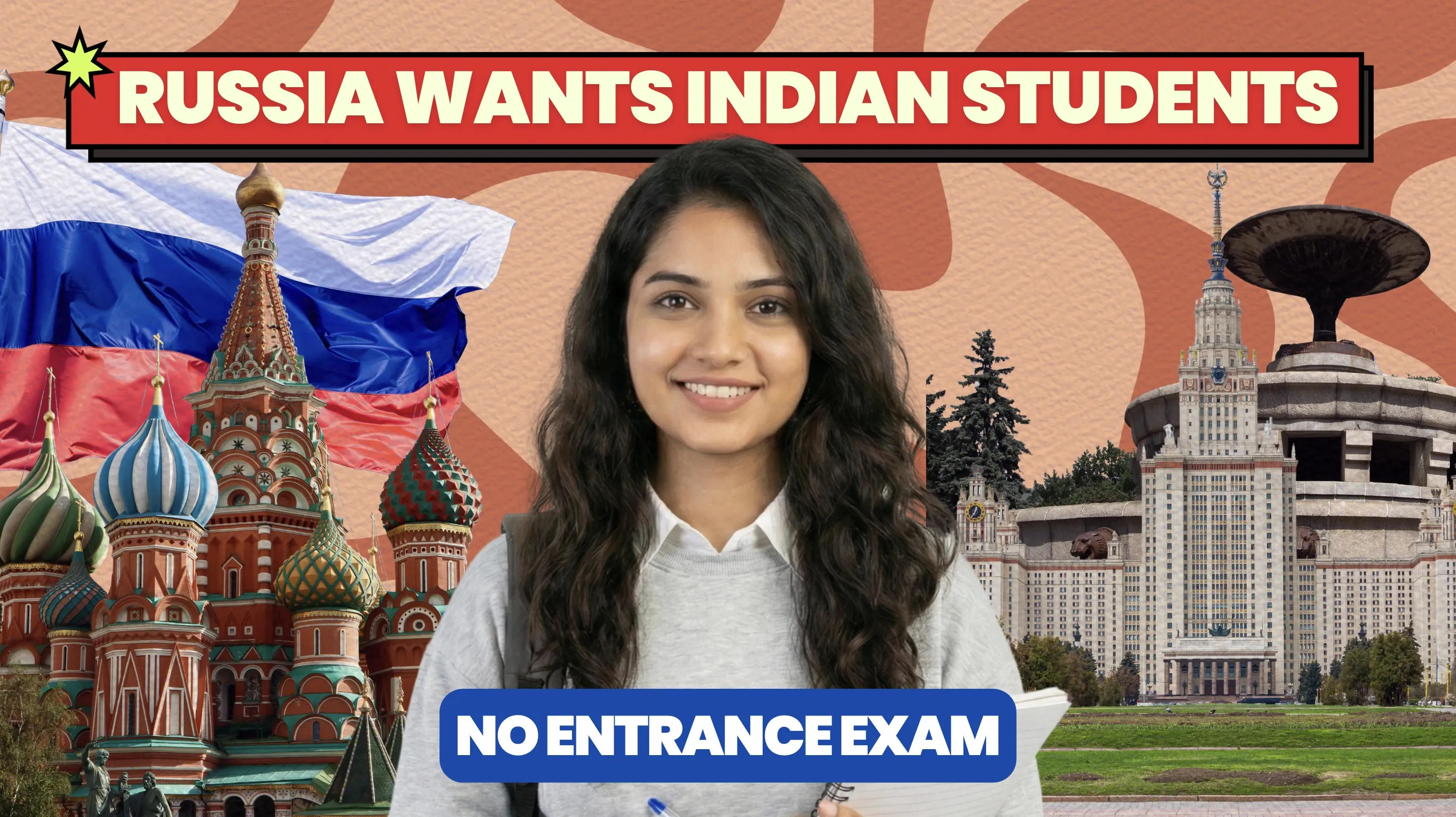
Russia has opened 300 fully tuition-funded scholarships for Indian students for the 2026-27 academic year, covering tuition across medicine, engineering, management, and over a dozen other disciplines at universities from Moscow to Vladivostok. There is no entrance examination. Selection is based entirely on academic performance and a student portfolio.
There is something important to know upfront. Stage 1 of the application process for the current 2026-27 cycle closed on January 15, 2026. If you are reading this in mid-2026, that window has passed. Here’s what the scholarship offers, where the current cycle stands, and when and how to apply for the next one.
What You Actually Get
The scholarship provides a 100% tuition fee waiver. You pay zero tuition for your entire degree, whether it's a bachelor's, master's, or PhD, at nearly all participating public institutions.
What is included:
- Full tuition fees for the entire duration of your degree.
- A one-year Russian language preparatory course, if required, also fully covered.
- Hostel accommodation at a heavily subsidized nominal rate.
- A small monthly stipend, similar to what Russian students receive.
What is not included:
- The monthly stipend is genuinely small. Think of it as pocket money, not a living expenses package.
- Travel, food, personal expenses, and health insurance are largely your responsibility.
This is a strong tuition scholarship, not a full ride. That distinction matters when you build your budget for four to six years abroad.
Why Eliminating the Entrance Exam Changes the Picture
For decades, the biggest barrier to studying abroad on a government scholarship has been the entrance examination. Russia's program removes that barrier entirely.
Selection is based on a student's academic performance and overall portfolio, which may include academic transcripts, research work, letters of recommendation, and certificates from national or international competitions and Olympiads.
What this program means practically:
- Students with strong Class 12 or undergraduate grades do not face disadvantages, even if they may not test well under exam pressure.
- A strong portfolio, including Olympiad certificates, research projects, or extracurricular achievements, can meaningfully strengthen an application.
- This approach allows students who might never have considered a foreign government scholarship due to exam anxiety or limited coaching access to apply.
How the Two-Stage Selection Process Works
Stage 1: Document screening. Applicants submit academic transcripts, notarized Russian translations of their passport and educational certificates, medical certificates with Russian translations, and supporting portfolio documents. For the 2026-27 cycle, this stage closed on January 15, 2026.
Stage 2: University matching and visa processing. Shortlisted candidates are matched to universities by Russia's Ministry of Science and Higher Education. Students can choose up to six universities in order of preference. You are enrolled at whichever one from your six selects you, not necessarily your first choice.
India's Ministry of Education has clarified that it is not involved in the scholarship's screening or nomination process. The selection is run entirely by the Russian government through the official portal.
Notarized translations are the most common reason applications fail. All documents, including Russian translations of your passport and educational certificates, must be uploaded by the deadline. Notarized translations take time to arrange. Students who wait until the final week before the deadline to start this process frequently run out of time.
What Subjects and Universities Are Covered
The fields available include medicine, pharmacy, engineering, architecture, agriculture, management, economics, humanities, mathematics, space science, aviation, sports, and the arts.
The program covers almost all universities in Russia, from Moscow and St. Petersburg to Krasnodar, Kaliningrad, and Vladivostok, with the exception of Lomonosov Moscow State University and MGIMO, which are excluded from this specific program.
A few course-selection points worth knowing:
- Some medical and engineering courses are taught in English. Most other programs are Russian-medium.
- If your chosen program is Russian-medium and you do not yet speak the language, you spend an additional year at a preparatory faculty learning Russian and subject fundamentals, with tuition covered for that year as well.
- Russia is internationally known for physics, mathematics, nuclear engineering, aerospace, and computer science. Institutions like Moscow State University, Tomsk Polytechnic University, and Novosibirsk State University offer genuinely strong programs in these fields.
- Choosing only Moscow and St. Petersburg is a common mistake. Cities like Tomsk, Novosibirsk, and Kazan offer strong technical universities, better acceptance odds, and significantly lower living costs.
The MBBS-Specific Financial Case
Russia has been a popular MBBS destination for Indian students for decades, and this scholarship sharpens that case considerably.
Private MBBS tuition in India ranges from Rs. 15 lakh to Rs. 50 lakh for the full 5.5-year course under the state or government quota, rising to Rs. 65 lakh to over Rs. 1 crore under the management quota. Eliminating tuition entirely through this scholarship changes the financial equation for students who would otherwise need to fund the equivalent of four to six years of tuition abroad.
The honest caveat for MBBS students: You must still pass the FMGE or NExT licensing exam and complete a mandatory internship in India to practice medicine domestically. Confirm that your chosen Russian medical university meets current NMC regulations before applying. The scholarship removes the tuition barrier. It does not remove the exam requirement for practicing in India afterward.
Where the Current Cycle Stands, and What Comes Next
Where things stand:
- Stage 1 document screening for the 2026-27 cycle closed on January 15, 2026.
- Stage 2, university matching and visa processing, is currently underway for students who applied within that window.
- Results are typically communicated one to two months after Stage 1 closes, meaning most applicants should have heard back between March and May 2026.
If you missed this cycle: The next application window is expected to open around September 2026 for the following academic intake. Monitor the official portal at education-in-russia.com directly for the exact opening date and updated guidelines.
What to do between now and then:
- Start gathering and notarizing your document translations early. This delay is the single biggest cause of incomplete applications.
- Build your portfolio now. Academic transcripts, research work, recommendation letters, and competition certificates all take time to assemble properly.
- Research your six target universities ahead of time, rather than making a rushed choice close to the deadline.
- Apply only through the official portal at education-in-russia.com. Do not pay any agent who claims they can guarantee a seat on this program.
Book a free session with a Leap Scholar counselor to understand whether this scholarship fits your academic profile and career goals, how to prepare a strong portfolio for the next application cycle, and what the full financial and language picture looks like for studying in Russia.
Sources: Government of India, Ministry of Education, Official Notification, Scholarships Russian Federation AY 2026-27 | Business Standard, Russia Offers Exam-Free Scholarships to Indian Nationals | EducationPost, Russia Opens 300 Fully Funded Scholarships for Indian Students 2026-27 | National Medical Commission,FMGL Regulations 2021 | State counselling/fee authority

Kirti Singhal
Kirti is an experienced content writer with 4 years in the study abroad industry, dedicated to helping students navigate their journey to international education. With a deep understanding of global education systems and the application process, Kirti creates informative and inspiring content that empowers students to achieve their dreams of studying abroad.
Users also read
Top 10 Global Internships with Deadlines Before July 31, 2026: Apply Now
Canada's 2026 Express Entry Overhaul: New Categories, Higher Requirements, and What It Means for Indian Students
Switzerland Pays CHF 20–30/Hour for Student Work and Waives IELTS for Indian Applicants