Blogs
Blogs  Leap Digest
  Events
  About Us
 Trending News
Why Indian Students Are Rethinking Study Abroad in 2026: Affordability, Post-Study Work, and AI Are Now the Priority
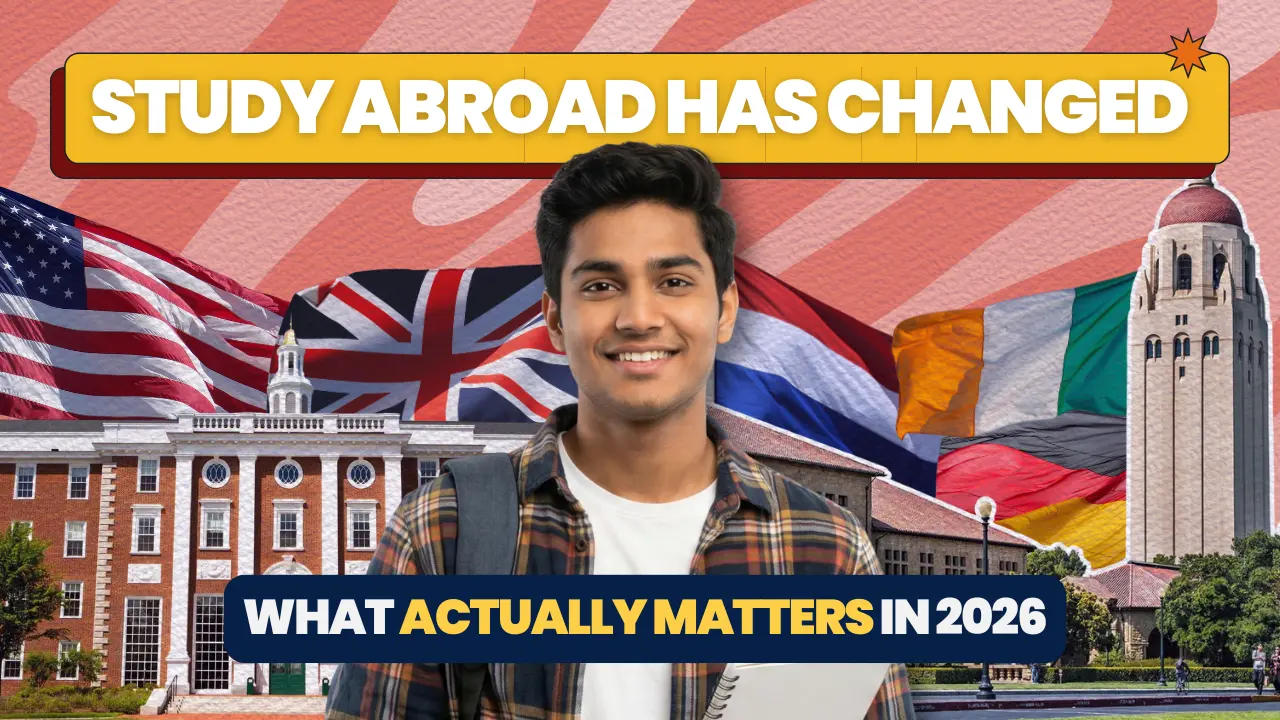
Something has shifted in how Indian students are approaching study abroad in 2026.
The old process went roughly like this: pick the most prestigious university you can get into, figure out the money later, apply to the USA or UK by default, and assume the degree will take care of the rest.
That thinking is being replaced by something considerably more strategic. And the data backs it up.
In ApplyBoard's Fall 2025 Recruitment Partner Pulse Survey, only 12% of respondents said affordability was not affecting student plans. The remaining respondents said they were considering alternate destinations, different program options, or employment opportunities to manage the cost.
That is 88 percent of students actively adjusting their plans around financial reality. That is not a marginal trend. That is a fundamental shift in how the entire decision is being made.
Here is what is driving it and what it means for your choices right now.
Shift 1: Affordability Is No Longer a Secondary Concern
For a long time, the study abroad cost conversation went one way: here is how expensive it is and here is how to manage it. Students were expected to find a way to afford the destination they wanted.
That dynamic has reversed completely.
Financial considerations now dominate the decision-making process for prospective students. Four of the top five drivers cited by recruitment partners relate directly to finances: the cost of studying, the cost of living, and the ability to find work both during and after the program.
Students are no longer fitting their finances around their destination. They are choosing their destination based on their finances first.
The growing cost of international study is meaningfully shifting student journeys. Student inflows to non-Big Four destinations are likely to continue rising as students explore alternatives to the USA, UK, Canada, and Australia.
The countries benefiting most from this shift:
- Germany: Tuition-free or near-zero-cost public universities. Almost 75 percent of German universities welcomed equal or higher numbers of new international students over the most recent academic year. Strong in engineering, technology, and research. No tuition, manageable living costs, and a persistent skilled worker shortage across technical fields
- Ireland: Tuition significantly lower than the UK. Dublin is the European headquarters for Google, Meta, Apple, and LinkedIn, which means the employer access from day one of your job search is exceptional
- Portugal: World-class education at some of Europe's most affordable living costs, with growing programs in business, marketing, and sustainability
- Netherlands: Fully English-taught programs at globally ranked universities combined with a thriving international business and technology community
The students choosing these destinations are not settling for second best. They are choosing strategically. A strong degree with manageable debt delivers a better real-world outcome than a prestigious degree with a loan that takes fifteen years to clear.
Shift 2: Post-Study Work Rights Are Now a Deal-Breaker
Here is something that would have surprised a student from ten years ago: the post-study work visa is now one of the most important factors in choosing a university, often more important than the university's ranking.
Students are no longer automatically gravitating toward traditional destinations. Instead, they are comparing visa rules, employment rates, living costs, and long-term settlement prospects before making decisions. Indian students in particular are becoming highly research-driven.
This makes complete financial sense. An education loan is not repaid by a degree certificate. It is repaid by a salary. And the salary only arrives if you can legally stay and work in the country where you graduated. Post-study work rights are not a bonus feature of a study abroad plan. They are the financial foundation of one.
Canada and the UK recorded 14% declines in job vacancies year-over-year in 2025; the US posted a 6% drop, as per ApplyBoard Trends Report 2026.
Here is where each major destination currently stands on post-study work for Indian students:
- UK: 2-year Graduate Route Visa gives students graduating now in 2026 and applying before Dec 31, 2026, 2 years, but students applying from Jan 1, 2027, will only receive 18 months. One of the most straightforward stay-back pathways in Europe and no lottery involved
- Australia: 2 to 4 years depending on degree level and institution location. Strong skilled occupation pathways to permanent residency with a well-established Indian graduate community across major cities
- Canada: Post-graduate work permit of up to 3 years with a clear pathway to permanent residency through Express Entry. Most predictable immigration pathway of any English-speaking destination
- Germany: 18-month job search visa after graduation. Active demand for skilled workers in engineering, technology, and healthcare means most STEM graduates find roles within the window
- Ireland: 2-year third-level graduate program for postgraduate completers. Direct access to European operations of the world's largest technology companies from the moment you graduate
The USA, by contrast, offers optional practical training but with significant uncertainty around H-1B lottery outcomes and shifting immigration policy. For Indian students planning long-term career trajectories carefully, that unpredictability is increasingly a reason to look elsewhere.
This highly competitive environment is empowering prospective students. With a wider range of viable destinations, applicants are now comparing countries based on tangible returns, including post-study work rights and long-term career prospects. This dynamic encourages students to be more intentional in their choices than ever before.
Shift 3: AI Integration Is Now Part of What Students Are Paying For
This shift is the most recent and is moving fastest.
Programs that integrate digital literacy, artificial intelligence fundamentals, sustainability, and cross-cultural communication are gaining popularity. Employers want graduates who can think critically, collaborate globally, and adapt quickly to technological change.
Students in 2026 are actively seeking programs where AI is embedded into the curriculum, not just mentioned in a brochure. The reason is simple: entry-level roles across every industry are being reshaped by automation, and graduates who understand how to work with AI tools are being hired over those who do not.
Intensified competition from peers, as well as the replacement of many entry-level roles with automation, means graduate engagement rates are becoming more than just numbers to prospective students. Graduate engagement is now a measurable indicator of whether the investment in international education is actually worth it.
What AI integration in a study abroad program actually looks like in 2026:
- Data science and machine learning modules embedded within business, engineering, and health programs, not as electives but as core curriculum components
- University partnerships with technology companies like Google, Microsoft, and Amazon providing real-world AI project exposure during the degree
- Career services that actively use AI-driven tools to match graduates with employer pipelines in their specific field
- AI ethics and governance coursework appearing in law, policy, and social science programs as employers increasingly need professionals who understand AI regulation
- Research opportunities in AI-adjacent fields with direct industry collaboration built into the program structure
Students shortlisting programs are now asking a question that simply did not exist five years ago: Where does AI appear in this curriculum, and how does it connect to the jobs I want after graduation?
What This Means for Your Decision Right Now
The combination of these three shifts, affordability-first thinking, post-study work as a core requirement, and AI curriculum integration as a differentiator, has fundamentally changed what a smart study abroad decision looks like in 2026.
In 2026, the best study abroad destination is not necessarily the most famous one. It is the one that aligns with a student's goals, budget, career plans, and lifestyle. Students who research carefully, stay flexible, and plan strategically will be in the best position to make the right decision for their future.
On affordability, ask yourself:
- What is the total cost of attendance including tuition, living, visa, and insurance before shortlisting any university?
- What is the expected graduate salary in your field and destination country, and how long will it realistically take to repay the loan?
- Does the destination have government or university scholarship programs you qualify for?
- Can you legally work part-time during your degree to offset living costs?
On post-study work, ask yourself:
- What is the exact post-study work visa in your destination country, and how long does it last?
- Does your field appear on the skilled occupation list for permanent residency pathways?
- What are the actual graduate employment rates in your discipline at the universities you are considering?
- Is the job market in that country actively absorbing graduates in your field right now?
On AI integration, ask yourself:
- Does the program explicitly name AI, machine learning, or data science modules in the curriculum?
- Does the university have active industry partnerships with technology employers?
- Where are recent graduates from this program working, and are those employers in the AI and technology sector?
- Will this degree make you more hireable in a market where entry-level roles are being automated?
Conclusion
This new generation of learners is approaching international education as a high-stakes decision rather than a standard path. They are examining both what institutions claim to offer and the experiences they actually deliver. In doing so, students are reshaping demand across markets and sending clear signals about what matters most.
The students who will get the best outcomes from studying abroad in 2026 are not necessarily the ones who got into the most famous university. They are the ones who researched the most carefully, matched their decision to their actual financial situation and career goals, and chose a destination where the post-study opportunity is as strong as the academic program itself.
That kind of decision does not happen by accident. It happens with clear information, honest planning, and the right guidance from people who understand both the Indian academic landscape and the global job market.
Want Help Making the Right Study Abroad Decision for 2026?
At LeapScholar, our counselors work with Indian students to navigate exactly this: which destination, which program, and which financial plan gives you the best real-world outcome for your specific profile and goals.
Book your free counseling session with Leap Scholar today and make your study abroad decision with complete clarity, not guesswork.
Sources: ApplyBoard, International Education Sector Trends 2026 | ApplyBoard, Trends Report 2026 | British Council Going Global

Kirti Singhal
Kirti is an experienced content writer with 4 years in the study abroad industry, dedicated to helping students navigate their journey to international education. With a deep understanding of global education systems and the application process, Kirti creates informative and inspiring content that empowers students to achieve their dreams of studying abroad.
Users also read
Vietnam Steps Into the Global Academic Spotlight at APAIE 2026: And Indian Students Should Pay Attention
Vietnam Steps Into the Global Academic Spotlight at APAIE 2026: And Indian Students Should Pay Attention
Indian Passport Fees Rise From July 1, 2026. Here Is What It Means If You Plan to Study Abroad.