Blogs
Blogs  Leap Digest
  Events
  About Us
 Trending News
Germany Aggressively Recruiting Indian Talent with Tuition-Free Education and DAAD Scholarships
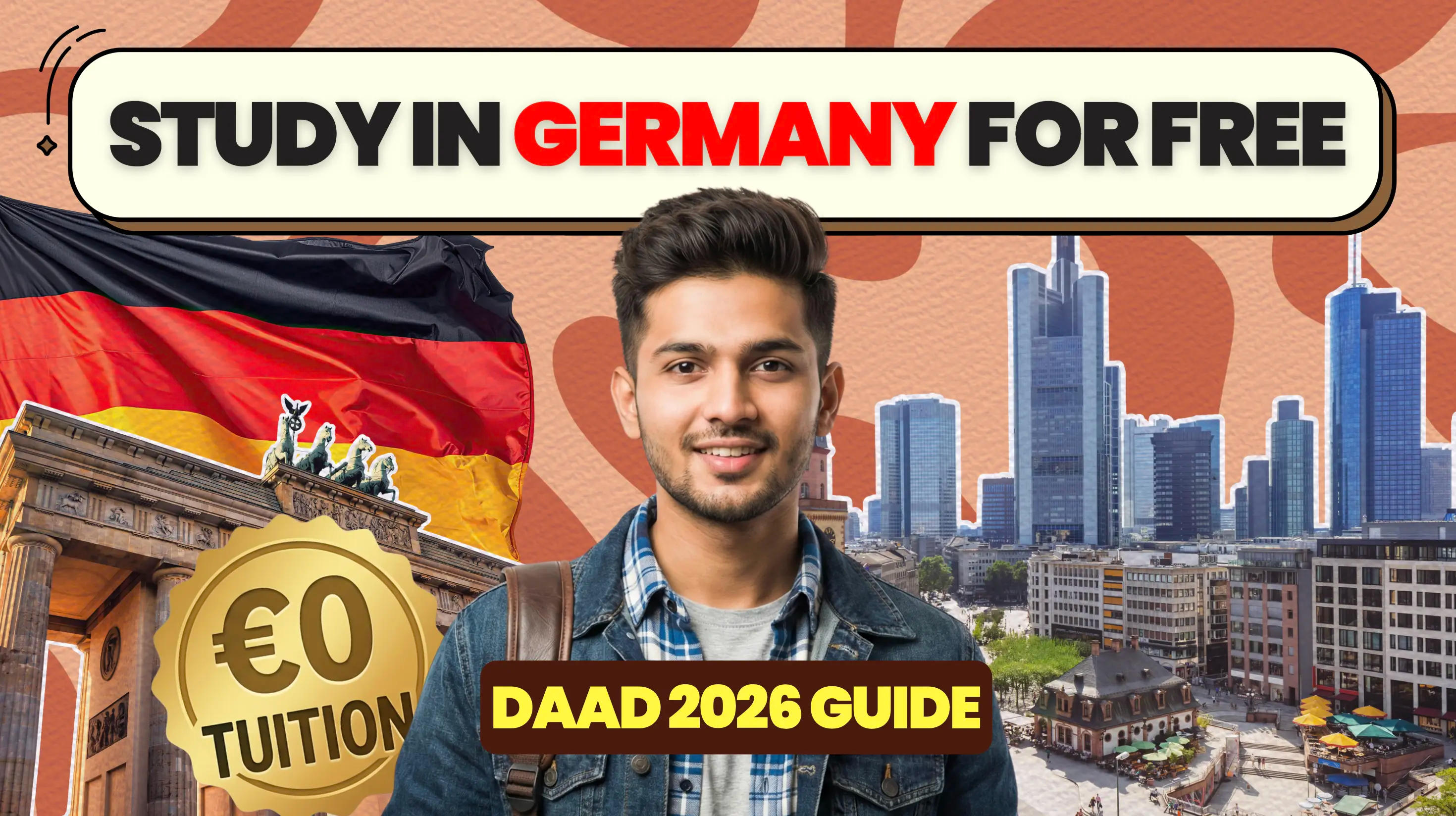
The dream of studying abroad has shifted its compass. For decades, the "Big Four", the US, UK, Canada, and Australia, were the default choices for Indian students. However, as 2026 approaches, a new powerhouse has emerged at the top of the list. Germany is no longer just a "backup" option, it's become a primary destination, actively and aggressively recruiting Indian talent to fuel its innovation-driven economy.
With a perfect storm of aging demographics and a massive skilled labor shortage, Germany is laying out the red carpet for Indian engineers, IT specialists, and researchers. By offering a world-class education with zero tuition fees and prestigious funding like the DAAD scholarships, the German government is sending a clear message: They don't just want you as a student, they want you as a future contributor to their society.
Here's what makes Germany exceptional for 2026:
- Tuition-Free Public Universities: Most public universities in Germany charge no tuition fees for international students
- Aggressive Recruitment: India is now the largest source country for international students in Germany, surpassing China
- DAAD Scholarships 2026-27: Prestigious monthly stipends have increased, now offering up to €992 (~₹91,000) for Master's and €1,300 (~₹1.19 Lakh) for PhD candidates
- Skilled Immigration Act: Recent reforms make it easier to stay, work, and gain Permanent Residency (PR) in record time
- Post-Study Flexibility: An 18-month job-seeker visa allows you to work in any field while hunting for your dream role
The 2026 Shift: Why Germany is Choosing India
As we look at the 2026-2027 academic cycle, the landscape of global education has changed. While other nations are tightening visa caps and raising fees, Germany has taken a "straight-line" approach. The German Ambassador to India recently described their migration policy as "reliable and predictable," emphasizing that Indian professionals are among the top earners in the country. That's not diplomatic talk, that's data-backed reality.
Germany is facing a shortage of nearly 400,000 skilled workers annually. To bridge this gap, they aren't just hiring experienced professionals, they're building a "talent pipeline" starting from the university level. This is why the number of English-taught programs has skyrocketed, allowing Indian students to begin their journey even before they've mastered the German language. You don't need to speak German on day one, you can learn as you go.
Tuition-Free Education: Breaking the Debt Trap
For a middle-class Indian family, the biggest hurdle to studying abroad is often the education loan. Germany effectively removes this barrier. Public universities operate on a "socially funded" model where education is a right, not a commodity. Let that sink in, education as a right, not a product.
Instead of tuition fees, you pay a "Semester Contribution." In 2026, this typically ranges from €150 to €350 (~₹13,700 to ₹32,000). This fee isn't even a cost, it's an investment, as it usually includes a "Semester Ticket" giving you free or highly subsidized unlimited public transport across your city or even the entire state. You're basically paying for a metro pass that also happens to come with a free university education.
DAAD Scholarships: The Gold Standard for 2026-27
If free tuition wasn't enough, the German Academic Exchange Service (DAAD) provides one of the world's most comprehensive scholarship programs. For the 2026-2027 intake, the competition is fierce, but the rewards are life-changing.
The DAAD doesn't just look for "toppers." They look for consistency and a clear vision of how your studies will benefit both India and Germany. They want people with purpose, not just high GPAs.
2026 DAAD Scholarship Benefits Breakdown
Benefit Type | Master's Students (2026) | PhD Candidates (2026) |
| Monthly Stipend | €992 (~₹90,800) | €1,300 (~₹1,19,000) |
| Tuition Fees | Fully Waived (Public Uni) | Fully Waived (Public Uni) |
| Health Insurance | Fully Covered | Fully Covered |
| Travel Allowance | Annual Flat Rate | Annual Flat Rate |
| Study Allowance | €460/year (~₹42,000) | €460/year (~₹42,000) |
| Language Course | 2-6 months (Funded) | 2-6 months (Funded) |
Conversion Rate: €1 = ~₹91.50 (Projected 2026 Average)
That monthly stipend isn't pocket money, it's enough to live comfortably in most German cities.
Navigating the Cost of Living
While tuition is free, you still need to eat and sleep. The German government requires international students to prove they have sufficient funds through a Blocked Account (Sperrkonto). For 2026, the required amount is approximately €11,904 (~₹10.89 Lakh) per year. That sounds like a lot, but it's released to you monthly, it's your own money, just held in escrow.
However, many students offset this cost through "Werkstudent" (Working Student) roles. Under the updated 2026 regulations, international students can now work up to 140 full days per year (up from 120), allowing you to earn a decent living while gaining relevant industry experience. That's not just survival income, that's a career-building experience that's paid.
Monthly Budgeting in Germany (2026 Estimates):
- Rent (Shared Flat/WG): €450 - €700 (~₹41,000 - ₹64,000)
- Food & Groceries: €200 - €300 (~₹18,000 - ₹27,000)
- Health Insurance: €120 (~₹11,000)
- Miscellaneous: €100 (~₹9,000)
- Total: ~€870 - €1,220 (~₹79,000 - ₹1.11 Lakh)
From Student to Resident: The Career Path
What makes Germany truly aggressive in its recruitment is the post-study pathway. Unlike the H-1B lottery system in the US, Germany's system is merit-based and transparent. You control your own destiny.
18-Month Job Seeker Visa: After graduation, you get a year and a half to find a job. You can work any job (even part-time) to support yourself during this search. That's 18 months of runway, not a rushed three-month scramble.
EU Blue Card: Once you secure a job in your field with a minimum salary (approx. €45,000+ for STEM), you qualify for the Blue Card. This is your ticket to work anywhere in the EU.
Fast-Track PR: With a Blue Card and basic German (B1 level), you can apply for Permanent Residency in as little as 21 months. That's less than two years from graduation to permanent residency. Compare that to the decade-long wait in other countries.
How to Prepare for the 2026-2027 Intake
The aggressive nature of German recruitment means the windows of opportunity open and close quickly. Here's the mentor-recommended timeline:
- Step 1 (Feb – May 2026): Shortlist your courses. Focus on "Universities of Applied Sciences" (Fachhochschulen) if you want practical, industry-linked learning. These are underrated but incredibly valuable.
- Step 2 (June – Aug 2026): Complete your APS (Academic Evaluation Centre) certification. This is mandatory for Indian students and can take a few months. Don't procrastinate on this, it's the bottleneck for most students.
- Step 3 (Sept – Dec 2026): Apply for DAAD scholarships and university admissions. Most deadlines for the 2027 Winter Semester fall in this window.
- Step 4 (Jan – March 2027): Appear for interviews. If applying for DAAD, focus on your "Motivation Letter", it's the heart of your application. Generic letters get rejected, specific, purposeful letters get funded.
Conclusion: The Door is Wide Open
Germany has moved past the era of being a difficult, language-heavy destination. In 2026, it stands as the most stable, cost-effective, and welcoming platform for Indian talent. Whether you're an aspiring AI engineer or a sustainability researcher, the combination of no tuition fees and robust scholarship support means your focus stays on your education, not your debt.
The hurdles, like the German language or the APS process, are just small steps in a journey that leads to a global career. The German government is doing its part to make the transition easy, the next move is yours.
Ready to start your German journey? Book a free consultation with a Leap Scholar expert today to shortlist the best tuition-free universities for your profile.

Kirti Singhal
Kirti is an experienced content writer with 4 years in the study abroad industry, dedicated to helping students navigate their journey to international education. With a deep understanding of global education systems and the application process, Kirti creates informative and inspiring content that empowers students to achieve their dreams of studying abroad.
Users also read
Vietnam Steps Into the Global Academic Spotlight at APAIE 2026: And Indian Students Should Pay Attention
Vietnam Steps Into the Global Academic Spotlight at APAIE 2026: And Indian Students Should Pay Attention
Indian Passport Fees Rise From July 1, 2026. Here Is What It Means If You Plan to Study Abroad.