Blogs
Blogs  Leap Digest
  Events
  About Us
 Expert Insights
The German Advantage: Why Indian Tech and Engineering Graduates Are in Peak Demand
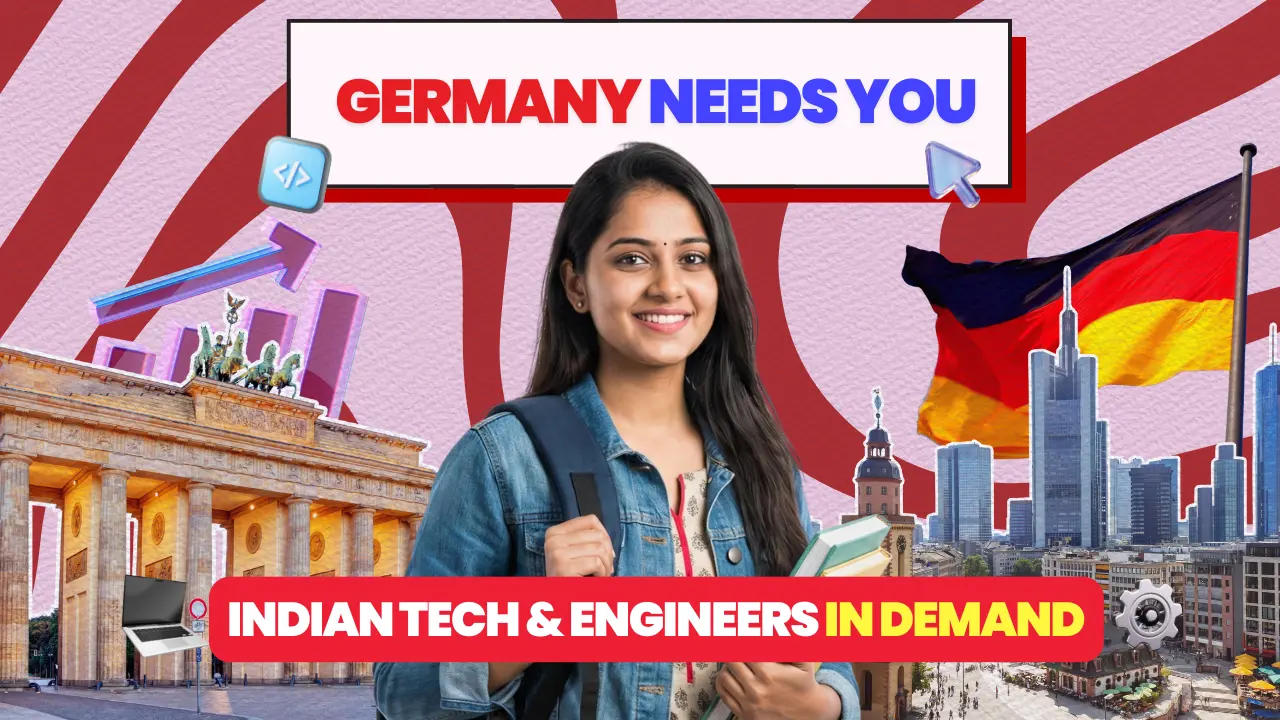
Germany is in trouble. The good kind of trouble, if you're an Indian tech or engineering graduate looking for international opportunities.
Right now, the country is facing a massive shortage of approximately 250,000 engineers and over 137,000 vacant IT roles, creating a literal career goldmine for ambitious Indian professionals.
This gap is widening as Germany’s aging population and declining rate of domestic STEM graduates fail to keep up with a massive digital transformation. While globally famous for industrial giants like BMW, Siemens, and Bosch, the nation is now pivoting its legendary precision engineering toward AI, electric vehicles, and Industry 4.0, and they simply don't have enough skilled people to make it happen. For graduates with strong technical skills and English proficiency, the opportunity to step into these high-stakes roles has never been more accessible.
Why Germany Needs You Specifically
Germany's economic strength has always relied on innovation. They're leaders in advanced manufacturing, automotive technology, and now they're driving Europe's green energy transition.
But all of this requires skilled professionals who can code, design, optimize, and secure complex systems.
The German government recognizes this urgency. They've responded by simplifying immigration for skilled workers through the new Skilled Immigration Act, making it more direct and welcoming for qualified professionals from outside the EU.
Translation?
They want you there, and they're removing barriers to make it happen.
Where the Opportunities Are
The demand isn't generic, it's focused on specific, high-value technical roles where Indian graduates excel.
1. Information Technology and Digitalization
Germany’s major cities like Berlin, Munich, and Hamburg have evolved into global tech hubs, with every major industry currently undergoing a digital overhaul. This shift has created a massive demand for specialized talent in software development, data science, and security. Beyond the technical roles, the market is defined by highly competitive salaries and the country's strong commitment to work-life balance. To attract this talent, German firms are offering competitive compensation packages ranging from €55,000 to €75,000 (₹57.75 Lakh to ₹78.75 Lakh) paired with world-class social benefits.
2. Engineering and Manufacturing
Engineering is the bedrock of the German economy. While the core disciplines remain strong, the "new" engineering sectors are where the highest growth lies:
The Automotive Transformation - The shift to electric vehicles and autonomous driving has created a surging demand for:
- Embedded Systems Engineers: Specialists who can integrate software into vehicle hardware.
- Automotive Software Specialists: Professionals to lead the "Software Defined Vehicle" revolution at Mercedes-Benz and Volkswagen.
The Mechanical and Industrial Core - Traditional mechanical and electrical engineers remain essential for:
- Industry 4.0 Automation: Helping companies like Siemens and Bosch automate production lines.
- Production Management: Ensuring German precision remains efficient in the digital age.
Green Technology and Renewable Energy - With the EU’s climate goals, there is a specialized need for:
- Energy Systems Experts: Building the infrastructure for solar and wind power.
- Sustainability Consultants: Helping manufacturing firms reduce their carbon footprint through engineering innovation.
The Money and the Lifestyle: What You Can Expect in 2026
Let's talk practically about what you can expect. It’s not just about the paycheck; it’s about the quality of life that comes with it.
Salary Breakdown by Role
- Software Developers: Average ~€68,750 (ranging up to €90,000 for specialized niches).
- Data scientists: Average ~€74,000 (₹77.7 Lakh)
- Mechanical & Electrical Engineers: Average ~€55,000 to €65,000.
- IT Security Specialists: Typically earn around €68,000 annually.
- Automotive Software Engineers: High demand roles can range between €65,000 and €95,000.(~₹63 Lakh to ₹99.75 Lakh)
Note: These figures represent mid-level professionals, and actual salaries vary by experience, city, and company size.
Work-Life Balance: The German Standard
- Standard Work Week: Expect 38–40 hours per week. German culture strictly respects "Feierabend" (the end of the workday).
- Paid Vacation: You’ll typically enjoy 25–30 days of paid leave annually, encouraging you to explore Europe or travel home.
- Long-Term Security: Your salary contributions go into a robust social security system, covering top-tier healthcare and a stable pension.
The Blue Card Pathway: Your Fast-Track Residency in 2026
The EU Blue Card is the primary work permit for skilled non-EU professionals. For Indian graduates in IT and Engineering, the process is streamlined and highly accessible.
1. Lower Entry Barriers
Because IT and Engineering are considered "shortage occupations," the requirements are more flexible:
- Lower Salary Threshold: Only ~€43,800 (₹45.99 Lakh) per year.
- Targeted Roles: Most tech and developer positions qualify.
- Ease of Entry: Ideal for recent graduates or early-career professionals.
2. Accelerated Permanent Residency (PR)
Germany offers one of the fastest paths to permanent status in Europe:
- Standard Path: Eligible for PR in 33 months.
- Fast Track: Eligible in just 21 months (if you reach B1-level German).
3. Family Benefits
Moving with a partner is seamless under the Blue Card:
- Immediate Work Rights: Your spouse gets full, unrestricted access to the German job market from day one.
- No Restrictions: Their right to work is not tied to your employer or a specific role.
Cracking the German Code: How Indian Graduates Can Stand Out
To win in the German job market, focus on two critical pillars: Deep Technical Specialization and Cultural Integration.
1. Become a Specialist, Not a Generalist
German employers value deep expertise over broad, shallow knowledge. To stand out:
- Pick a High-Demand Niche: Focus on one area like Cloud Computing (AWS/Azure), Cybersecurity, or EV/Automotive Software.
- Get Certified: Professional certifications are "social proof" in Germany. AWS, Azure, or CISSP badges on your CV can be the difference between a "yes" and a "no."
- Build a Portfolio: Be ready to show specific projects or code that demonstrate your mastery in your chosen niche.
2. Bridge the Language Gap
While tech teams often speak English, the most successful expats commit to learning German early.
- Why it Matters: It’s not just for the office; it’s for contracts, banking, and building a social life. Most importantly, it shows employers you are committed to the long term.
- The Goal: Aim for B1 Proficiency.
- The Reward: Reaching B1 doesn't just make life easier; it slashes your wait for Permanent Residency from 27 months down to just 21 months.
The Bigger Picture
Germany isn't looking for short-term contractors or temporary workers. They're investing in their future workforce, and they want people who will stay, integrate, and contribute long-term.
By leveraging your technical background, targeting the right specializations, and showing commitment to integration through language learning, you can build a thriving career in the heart of Europe. The pathway is clear, the demand is real, and the opportunity window is wide open.
This is your chance to transform your Indian education and skills into a stable, rewarding international career with genuine work-life balance and a clear path to permanent residency. Germany needs what you have to offer.
The question is: are you ready to take that step?
Talk to a Leap Scholar’s Counselor today to begin your journey. Whether you need help shortlisting the right German university or securing an education loan to fund your dream, we are here to ensure your transition is seamless.

Kirti Singhal
Kirti is an experienced content writer with 4 years in the study abroad industry, dedicated to helping students navigate their journey to international education. With a deep understanding of global education systems and the application process, Kirti creates informative and inspiring content that empowers students to achieve their dreams of studying abroad.
Users also read

Top 10 Industries That Create the Most Billionaires in 2026: Guide for Indian Students

Stanford MBA Career Diversity: Industries, Salaries and What Indian Students Need to Know

Anthropic Academy: 16 Free AI Courses With Certificates in 2026 That Indian Students Cannot Afford to Ignore