Blogs
Blogs  Leap Digest
  Events
  About Us
 Expert Insights
How Blockchain is Ending Degree Fraud for Indian Students in 2026
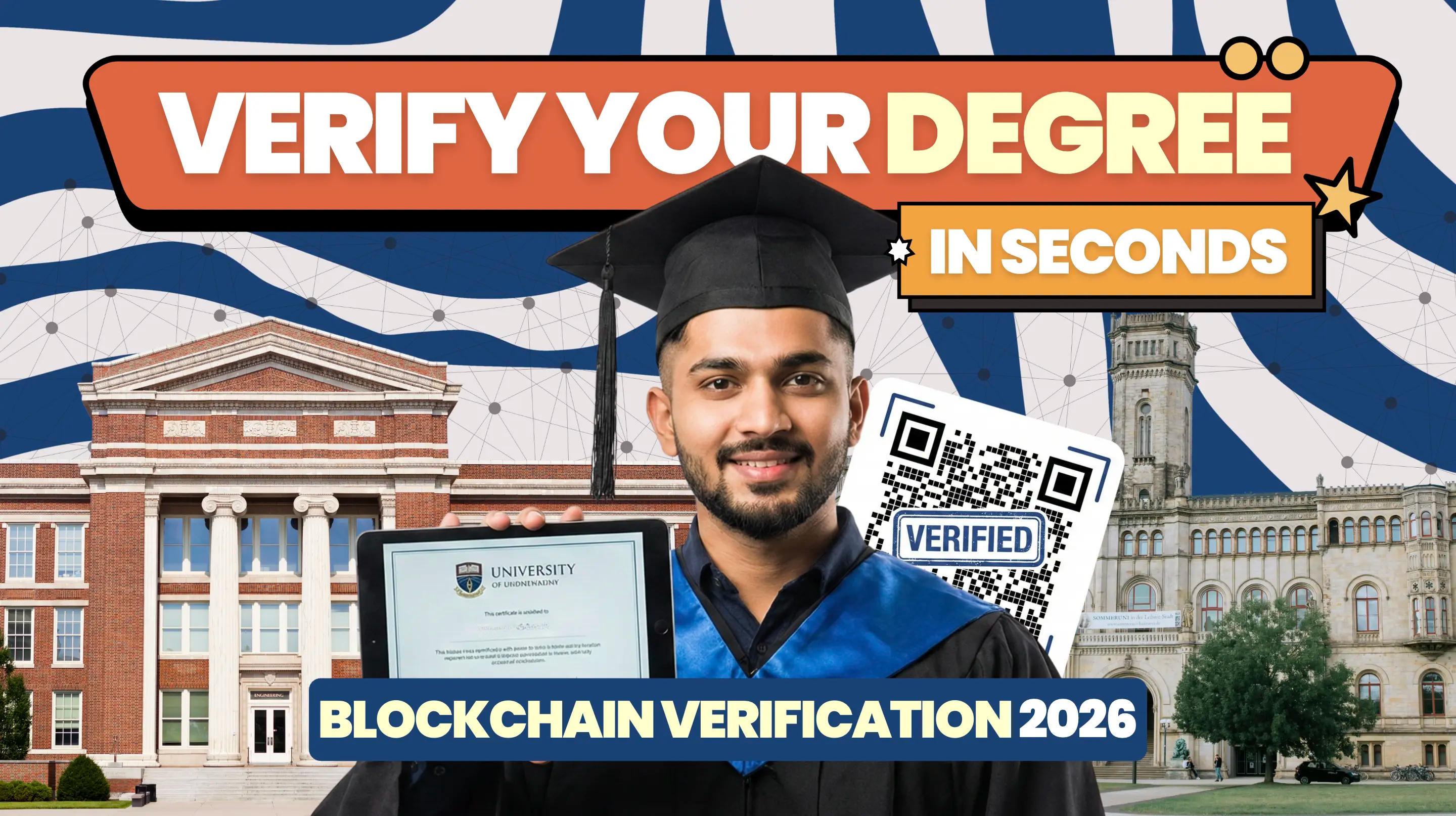
For years, the dream of studying at a top-tier university in the US, UK, or Canada has been a primary goal for thousands of Indian students. However, a shadow has often loomed over this ambition: the rising cases of "fake degrees" and forged academic transcripts. In the past, a few bad actors using fraudulent documents made international admissions officers extra cautious, leading to longer processing times and "red flags" for honest, hardworking applicants.
But as we move into the 2026-2027 academic cycle, the narrative is changing. Blockchain technology, the same tech behind secure digital currencies, is now being deployed at a massive scale across India to put an end to academic fraud. This isn't just a tech experiment; it's a shield for your hard-earned credentials, ensuring that when you apply abroad, your degree is trusted instantly.
Here's what blockchain verification means for you:
- Immutable Records: Blockchain creates a "digital fingerprint" for your degree that cannot be edited or deleted
- Instant Verification: Foreign universities can verify your credentials in seconds instead of weeks
- Government Backing: Projects like "Vishvasya" and the National Blockchain Framework are now mainstream
- Global Trust: Major bodies like WES (World Education Services) are increasingly integrating with digital and blockchain-backed repositories
- Cost Efficiency: Eliminates the need for expensive third-party manual verification agencies
The Current Scenario: 2026-2027
In 2026, the Indian education landscape looks very different from five years ago. Under the National Education Policy (NEP) 2020, digital empowerment has become the standard. Today, the National Blockchain Framework (NBF), supported by the Ministry of Electronics and Information Technology (MeitY), provides a unified architecture called "Vishvasya." This framework allows universities to issue "Digital-First" degrees.
When a student graduates today, they don't just receive a paper certificate, they receive a cryptographically signed digital asset. This asset is anchored to a blockchain, meaning its authenticity is guaranteed by a network of secure servers rather than just a single office's stamp. It's like having thousands of witnesses verifying your degree instead of one person with a rubber stamp.
Why Fake Degrees Were a Growing Problem
Before blockchain, verifying an Indian degree was a manual, "high-friction" process. A university in New York would have to email or call a college in Punjab or Karnataka, wait for a registrar to find the physical file, and confirm the details. That could take weeks.
Fraudsters took advantage of this delay, creating high-quality paper forgeries that looked identical to the real thing. In 2025 and early 2026, several high-profile cases of forged documents at airport immigration led to stricter scrutiny. This made life difficult for genuine students, who faced "administrative holds" on their visas and admissions. You were being punished for someone else's crime.
How Blockchain Solves the Trust Gap
Blockchain technology acts as a "Single Source of Truth." Here's how it works for a student in the 2026-27 session:
- Issuance: The university uploads a "hash" (a unique digital code) of your degree to the blockchain. Think of it like a digital DNA for your certificate.
- Storage: The actual document is kept in a secure digital locker (like DigiLocker), but the "proof" of its validity is on the blockchain.
- Verification: When an employer or a foreign university wants to check your degree, they simply "ping" the blockchain. If even a single comma or digit in the document was changed, the hash won't match, and the document is flagged as fake immediately. There's no way to cheat the system.
University Adoption in India (2026-2027)
Leading the charge are institutions like Dr. APJ Abdul Kalam Technical University (AKTU), which has issued over 50,000 degrees via blockchain. Other institutions like Dr. Subhash University and CT University have followed suit, offering blockchain-secured documents that can be verified globally for a small fee, often around ₹500 (approx. $6.00 USD). That's less than a coffee at Starbucks.
Feature | Traditional Verification | Blockchain Verification (2026-27) |
| Time Taken | 2 to 6 Weeks | Under 1 Minute |
| Security | Physical seals (can be forged) | Cryptographic Hash (unforgeable) |
| Cost to Student | ₹2,000 - ₹5,000 (approx. $24 - $60) | ₹0 - ₹500 (approx. $0 - $6) |
| Ease of Sharing | Physical Courier/Postal | Secure Digital Link/JSON file |
| Global Acceptance | Requires Notarization/Apostille | Self-verifying via Public Key |
Note: All currency conversions in this table and article are calculated based on the 2026 projected exchange rate of 1 USD = ₹83.50.
Look at those numbers. You're going from weeks to minutes, from thousands of rupees to essentially free.
The Impact on Your Study Abroad Journey
If you're planning to head abroad in 2027, this technology is your best friend. Here's why:
1. Faster WES and Credential Evaluations
The World Education Services (WES) has partnered with Indian bodies like the National Skill Development Corporation (NSDC) to accept digital, blockchain-verified records. In the 2026-27 cycle, this means your "Course-by-Course" evaluation, which used to take a month, can now be completed in a fraction of the time. That's one less thing keeping you up at night.
2. Reduced Visa Rejection Risk
Visa officers are often wary of "fraudulent intent." By presenting a blockchain-verified transcript, you remove any doubt about your academic background. It shows that you're a serious, legitimate candidate, which can streamline your financial and academic background checks. You're giving them one less reason to say no.
3. Academic Bank of Credits (ABC)
The Academic Bank of Credits (ABC) is now fully integrated with blockchain. This means if you did a 6-month diploma at one college and a degree at another, all your credits are stored in one "digital wallet." This makes "credit transfers" to foreign universities much simpler and more transparent. No more scrambling to collect documents from three different colleges.
How to Use This to Your Advantage
As a mentor, my advice is simple: Be Proactive.
1. Check your University's Status: Ask your registrar if they issue blockchain-secured degrees or if they're integrated with the National Academic Depository (NAD). If they are, you're golden. If not, you'll need to go through traditional channels.
2. Use DigiLocker: Ensure all your mark sheets are pulled into your verified DigiLocker account, as this is the primary gateway for most blockchain verification stacks in India. Set this up now, not when you're panicking about a deadline.
3. Share the Smart PDF: Many universities now provide a "Smart PDF" with a QR code. When you apply to a university in London or Toronto, send this version. It allows them to verify you instantly without waiting for a physical transcript. That instant verification can be the difference between getting your offer in February versus April.
Conclusion: You Can Do This!
The move toward blockchain is a massive win for the honest Indian student. It levels the playing field, ensuring that your hard work is recognized and protected against the actions of a few fraudsters. By 2027, the "Trust Gap" will be a thing of the past.
Navigating the world of digital credentials, WES evaluations, and university applications can feel like a lot, but remember, you're not alone. These technologies are being built specifically to make your journey smoother and more secure. You have the talent; now you have the technology to back it up.
Need help shortlisting the right university or navigating the WES verification process? Book a free consultation with a Leap Scholar expert today.

Kirti Singhal
Kirti is an experienced content writer with 4 years in the study abroad industry, dedicated to helping students navigate their journey to international education. With a deep understanding of global education systems and the application process, Kirti creates informative and inspiring content that empowers students to achieve their dreams of studying abroad.
Users also read

Top 10 Industries That Create the Most Billionaires in 2026: Guide for Indian Students
Stanford MBA Career Diversity: Industries, Salaries and What Indian Students Need to Know
Anthropic Academy: 16 Free AI Courses With Certificates in 2026 That Indian Students Cannot Afford to Ignore