
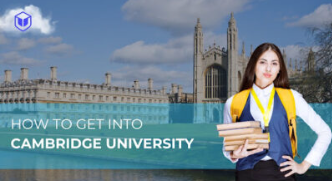
You’ve achieved academic excellence in India, but the highly selective path to the University of Cambridge is a complex puzzle with critical 2026 admissions updates, including the new ESAT and UCAT exams, that most students miss. While its reputation is unparalleled as the fifth-oldest university globally and one with over 121 Nobel laureates, the admission process is notoriously challenging. Simply achieving high scores is not enough; securing a place requires a precise, strategic application.
The competition is fierce. The overall acceptance rate is around 21.4%, but for international students, it drops to approximately 15.4%. For Indian students, the success rate in a recent cycle was even lower, underscoring the necessity for a highly distinguished application. Without guidance on the specific academic benchmarks, new admission tests (like UCAT and ESAT), and interview psychology, your efforts might fall short.
This complete guide provides the precise, India-specific requirements and the strategic roadmap for the 2026 entry cycle. We will break down the academic prerequisites, the updated mandatory assessments, the financial planning, and the psychological edge you need to successfully navigate the highly selective process of how to get into Cambridge University.
Why Choose Cambridge: The ROI for Indian Students?
Studying at Cambridge is more than an education; it’s a global credential that guarantees a high return on investment (ROI) for Indian students.

Choose your dream country
 UK
UK
 USA
USA
 Germany
 Australia
 Ireland
 Canada
 UAE
UAE
 France
 Sweden
 Italy
Italy
 Other
Other
When do you want to study abroad?
What's your highest level of education?
Select you current city
How Leap will help you

Personalised University Shortlist

Express Applications with Quicker Admits

End-to-End Application Support
- Academic Excellence: Ranked consistently among the top 5 universities globally and a proud member of the prestigious Russell Group, Cambridge's reputation speaks for itself. It’s where you can engage with advanced research and receive a world-class education that prepares you for future success.
- Prestigious Reputation: Being part of Cambridge means joining a community with a legacy of over 800 years of academic excellence. The university’s global reputation opens doors to opportunities and recognition across industries and continents.
- Global Networking: The university’s diverse student body and extensive alumni network provide unparalleled networking opportunities. You’ll connect with peers from over 140 countries and join a community that includes Nobel laureates, world leaders, and influential professionals.
- Personal Growth: Life at Cambridge is enriching both academically and personally. The vibrant campus environment, rich cultural heritage, and numerous extracurricular activities ensure a well-rounded student experience that fosters personal growth and development. As a student at Cambridge University, you can explore over 80 sports clubs and societies, participate in cultural activities and more.
- Career Advancement: A degree from Cambridge is highly respected by employers worldwide, giving you a competitive edge in the job market. As a graduate of Cambridge University, you can earn up to INR 63L (£52,500) on average annually.
How to Get Into Cambridge University? (2026 Entry Requirements)
To apply for Cambridge admission, you must first meet the exceptionally demanding academic and linguistic prerequisites.
1. Academic Benchmarks for Undergraduate Programs
Cambridge evaluates Indian applicants based on their Class XII performance, with certain boards requiring supplemental exams.
| Indian Board/Qualification | Minimum Competitive Requirement |
|---|---|
| CBSE | Five or more A1 grades in relevant subjects. |
| CISCE (ISC) & NIOS | Minimum of 90% in the Class XII certificate. |
| State Boards | 95% or higher in five or more relevant subjects. |
| International Baccalaureate (IB) | 40 to 42 points out of 45, with 776 in Higher Level subjects. |
| Advanced Placement (AP) | A minimum of five AP Test scores at Score 5, relevant to the chosen course. |
Note: For highly competitive courses like Engineering or Natural Sciences, Cambridge may consider performance in the IIT-JEE (Advanced) examination, provided the candidate secures a rank of less than 2,000.
2. Entry Requirements for Postgraduate Courses (Masters/PhD)
Postgraduate admission is equally competitive, often requiring a standard higher than the minimum.
- Academic Qualification: A Bachelor’s degree from a recognised university with an overall grade of 70% or a CGPA of 7.3/10 is the minimum. However, for most competitive Master’s and PhD programs, applicants must aim for the equivalent of a First Class degree, usually 75% or a CGPA of 8.0 or higher from a top-tier Indian institution.
- Required Documents: A CV/resume, two academic references, and a statement of purpose (Reasons for Applying, max 5,000 characters). Some PG programs may also require the GRE/GMAT. While a CV is mandatory, formal work experience is not a universal requirement but is highly valued, especially for professional Master's degrees, and should be detailed on the CV.
3. English Language Proficiency Tests
Since Cambridge is taught and examined entirely in English, all non-native speakers must demonstrate strong proficiency.
| Tests | Minimum Score Required |
|---|---|
| IELTS Academic | 7.5 overall, usually with 7.0 or above in each element. |
| TOEFL Internet Based Test (iBT) | 110 overall, with 25 or above in each element. |
Validity: Scores must be valid on the first day of your Cambridge course. For visa purposes, the test is only valid for two years from the exam date.
Course-Specific Requirements: Which Exams Are Required for Cambridge?
After meeting the academic threshold, performance in subject-specific admissions tests is the most decisive factor for how to get into Cambridge University. These tests assess your intellectual capacity and critical thinking, not just memorization.
Important Update for 2026 Entry: The BMAT is no longer used for Medicine. The new UAT-UK framework includes ESAT, TMUA, and TARA.
Key Admissions Test Requirements
| Course Stream | Required Test(s) | Focus Area | Registration Deadline (Approx.) |
|---|---|---|---|
| Medicine (Standard Course) | UCAT (University Clinical Aptitude Test) | Adaptability, Time Pressure, Clinical Aptitude | Mid-September 2025 |
| Engineering, Natural Sciences, Vet. Medicine | ESAT (Engineering and Science Admissions Test) | Adaptability to unfamiliar problems in Science/Maths | Late September 2025 |
| Computer Science, Economics | TMUA (Test of Mathematics for University Admission) | Mathematical Reasoning, Problem-Solving | Late September 2025 |
| Law | LNAT (Law National Aptitude Test) | Critical Thinking and Written Reasoning | Mid-October 2025 |
| Mathematics | STEP 2 & 3 (Sixth Term Examination Paper) | Problem-solving approach, intellectual insight | May 2025 |
Note: For Mathematics and related degrees, the STEP is arguably the most challenging assessment. You generally need to achieve a Grade 1 in both STEP 2 and STEP 3 papers. This test is specifically designed to assess your intellectual insight and mathematical problem-solving approach.
How to Apply at Cambridge University: A Step-by-Step Guide
The undergraduate application flow is standardized, but requires attention to Cambridge-specific details.
Stage 1: UCAS Application (By October 15, 2025)
All undergraduate applications must be submitted through the UCAS portal.
- Course Selection: Choose one course. Cambridge offers over 38 subjects that rank among the top 10 globally.
- College Choice: Select one of the 31 colleges (e.g., King's College, Churchill College) or opt for an 'open' application if you have no preference.
- Personal Statement: This is a crucial document. It must be a maximum of 800 words and should focus over 90% on your academic interests, reading, and subject engagement outside of the classroom.
- Reference: Include solid academic references from your teachers or counsellor.
- Submission: The deadline for all materials (including references) is typically October 15, 2025, for 2026 entry. The UCAS application fee is approximately £60 (INR 7,197).
Stage 2: Supplementary Application Questionnaire (SAQ)
Following UCAS submission, Cambridge will invite you to complete the SAQ. This is mandatory and allows you to provide further, granular detail on your specific academic qualifications, modules, and performance.
Stage 3: Admissions Tests & Pre-Submitted Work
You must register, sit, and achieve high scores in the mandatory admissions tests (UCAT, ESAT, TMUA, or LNAT) by the October deadline. Some courses may also require the submission of marked school essays or coursework.
Stage 4: The Cambridge Interview
Approximately 75% of applicants are called for an interview, which takes place in December. This is your chance to differentiate yourself.
The Holistic Assessment: Beyond Grades
Cambridge uses E-E-A-T principles to assess applicants.
- Demonstrated Passion: Show evidence of engagement beyond the syllabus through research projects, internships, or relevant extracurricular activities.
- The "X-Factor": The admissions committee looks for intellectual curiosity, leadership potential, and the ability to contribute uniquely to the Cambridge community.
Financial Planning: Cambridge University Fees in INR (2026)
Financial planning is a core concern for Indian students. The following breakdown, using the conversion rate of 1 GBP = 119.95 INR, helps you budget for the substantial cost of studying at Cambridge University.
1. Estimated Annual Tuition Fees
| Course Level/Type | Estimated Annual Tuition Fee (GBP) | Estimated Annual Tuition Fee (INR) |
|---|---|---|
| Undergraduate (Arts/Humanities) | £25,734 – £29,052 | INR 30.87 Lakhs – 34.85 Lakhs |
| Undergraduate (Science/Engineering) | £39,162 – £44,214 | INR 46.97 Lakhs – 53.03 Lakhs |
| MBBS (Medicine) | £70,554 | INR 84.63 Lakhs |
| Master’s (General) | £24,700 – £69,000 | 29.63 Lakhs – 82.77 Lakhs |
| MBA | £80,000 | INR 95.96 Lakhs |
2. Estimated Annual Living Costs
The cost of living for a student at Cambridge is estimated to be between £14,880 and £19,860 annually, or approximately INR 17.85 Lakhs – 23.82 Lakhs.
| Expense Category | Monthly Cost (GBP) | Monthly Cost (INR) |
|---|---|---|
| Accommodation | £800 – £1,200 | INR 95,960 – 1,43,940 |
| Food/Groceries | £285 | INR 34,186 |
| Personal/Social | £200 – £250 | INR 23,990 – 29,988 |
| Study Materials | £20 – £50 | INR 2,399 – 5,998 |
Exchange rates vary daily. The INR values provided are approximate (as per 1 GBP = 119.95 INR) and should be checked against the latest rates when planning your finances.
Tips for Indian Students on How to Get Selected in Cambridge Uni
To make your application stand out from the thousands of other high-achieving Indian students, you must focus on differentiation beyond just academic grades. This is your strategic roadmap for securing an offer.
1. Build Your Academic Differentiator ("The X-Factor")
Cambridge uses a holistic assessment and looks for your genuine intellectual curiosity and potential contribution.
- Demonstrate Passion: Show evidence of engagement beyond the school syllabus, such as participation in relevant research projects, internships, or community service related to your chosen field.
- Highlight Unique Qualities: Showcase your "X-Factor" whether it’s exceptional leadership, a compelling writing style, or a unique perspective on a subject to prove your potential to thrive in the Cambridge community.
2. Ace the Mandatory Admissions Tests
The admissions tests (like UCAT, ESAT, and STEP) are the most objective way for Cambridge to assess your raw intellectual capacity and problem-solving method.
- Focus on Logic, Not Rote: These exams test your ability to think under pressure and adapt to unfamiliar problems. For Mathematics (STEP), the focus is on your intellectual insight and problem-solving approach, not just the final answer.
- Be Current with Updates: Ensure you are preparing for the new exams for the 2026 cycle. For Medicine, this is the UCAT, and for Engineering/Natural Sciences, it is the ESAT.
3. Master the Interview Psychology
The interview is critical for the 75% of applicants who reach this stage. It’s a discussion designed to test your critical thinking and enthusiasm for the subject.
- Verbalize Your Thinking: The key is to show your thought process aloud. Don't just give a final answer; talk through how you arrive at a solution or conclusion, showing your ability to think analytically.
- Engage and Adapt: Be prepared to discuss your subject in depth and engage in conversation that extends beyond what you wrote in your personal statement. Show willingness to adapt your understanding when challenged by the tutor.
- Practice: Engage in mock interviews to become comfortable with the format and questions, allowing you to stay calm and engaged during the actual assessment.
Conclusion:
The path to securing a place at the University of Cambridge is undeniably competitive, demanding academic excellence, strategic test preparation, and a truly compelling application. By understanding the stringent academic benchmarks, preparing for the updated mandatory admissions tests (UCAT, ESAT, TMUA), and strategically mastering the interview, you can significantly increase your chances of admission.
You have the ambition; we have the expertise. If you are planning for the 2026 intake and need tailored support-from optimizing your personal statement to securing a top score on the ESAT or UCAT-connect with a LeapScholar expert counsellor today. Let us guide you through every step of this high-stakes process.
Frequently Asked Questions (FAQ’s)
-
How can an Indian student get into Cambridge?
An Indian student can get into Cambridge by achieving exceptional academic results, such as five or more A1 grades in CBSE or 95%+ in State Boards. Crucially, you must also secure high scores in mandatory course-specific assessments like the UCAT or ESAT for 2026 entry, and excel in the highly selective interview where your problem-solving approach is assessed. The entire application is submitted through the UCAS system by the strict October deadline.
-
Do you need all 9s for Cambridge?
No, you do not strictly need all 9s (A*s) at GCSE (or equivalent) to receive an offer from Cambridge. While the majority of successful applicants have seven or more 8s and 9s, the university uses a holistic admissions process. Strong performance in your A-Levels (or equivalent predicted grades), the admissions test, and the interview is often more critical than a perfect GCSE record.
-
Does Cambridge accept JEE Advanced?
Yes, for applicants to Chemical Engineering, Engineering, and Natural Sciences (Physical), Cambridge may consider performance in the IIT-JEE (Advanced) examination. However, this is typically considered a supplementary qualification conditional on attaining a rank of less than 2,000.
-
What are the requirements to get into Cambridge University?
The core requirements include exceptional academic grades (e.g., A1 grades or 95%+) in relevant subjects, and meeting the minimum English language requirement of IELTS 7.5 or TOEFL 110. Furthermore, you must achieve high scores in mandatory admissions tests like UCAT, ESAT, LNAT, or TMUA, and impress the interviewers with your critical thinking abilities.
-
Can I go to Cambridge University after 12th?
Yes, you can apply to Cambridge immediately after completing your Class 12th, but your results alone are typically not sufficient for admission. You must supplement your application with outstanding results, such as five A1 grades (CBSE) or 90%+ (CISCE/NIOS), along with strong scores in required additional qualifications like five or more AP Tests at Score 5.
-
Is it hard to get into Cambridge University?
Yes, getting into Cambridge is highly competitive and extremely hard. While the overall acceptance rate hovers around 21%, the success rate for Indian students has been reported as low as 5.2% in recent cycles, underscoring its highly stringent admission standards. Success depends not only on top grades but also on strong performance in specialist entrance exams and interviews.











Have Questions? Get Guidance to reach your Dream University
Connect with India's finest counsellors and biggest study abroad community.
Get Guidance