
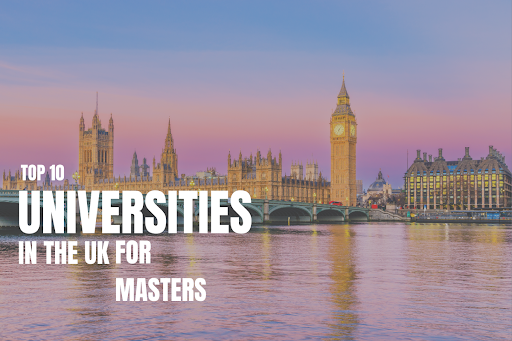
If you’re planning your Master’s for 2026, the UK remains the most efficient route to a global degree, but the “standard” advice has changed. For Indian students, the decision isn’t just about picking a famous name anymore; it’s about navigating a one-year intensive timeline while the UK implements some of the biggest visa and dependants’ rule shifts in a decade.
The 2026 landscape requires a tactical approach. You are looking at a higher currency exchange rate and a tighter post-study work window, meaning your choice of university must offer more than just a certificate; it needs to provide a direct line to industry connections.
Whether you’re eyeing the tech hubs of London or the research powerhouses in the North, this guide breaks down the Top 10 UK universities based on their actual ROI, employability for international graduates, and the 2026-specific costs you need to budget for.
Why Study a Master’s in the UK in 2026?
Studying a Master’s in the UK in 2026 fast-tracks your career. While the US and Canada typically require a 24-month commitment, the UK’s one-year programs are designed to get you into the global workforce in half the time.

Choose your dream country
 UK
UK
 USA
USA
 Germany
 Australia
 Ireland
 Canada
 UAE
UAE
 France
 Sweden
 Italy
Italy
 Other
Other
When do you want to study abroad?
What's your highest level of education?
Select you current city
How Leap will help you

Personalised University Shortlist

Express Applications with Quicker Admits

End-to-End Application Support
- Program Duration: Most UK Master’s programs are completed in one year, helping you graduate faster and reduce overall tuition costs.
- Degree Recognition: UK degrees are globally recognised and valued by employers worldwide.
- Popular Fields: High-demand areas include Business, Data Science, AI, Engineering, Law, Economics, and Arts & Humanities.
- Graduate Route Visa: Allows you to stay and work in the UK for up to two years after graduation.
- Industry Connections: Universities offer strong employer links, internships, and career support services.
- Scholarships & Support: Access to scholarships, financial aid, campus facilities, and student services.
- ROI & Career Advantage: Shorter degree duration combined with in-demand skills leads to a strong return on investment.
List of Top 10 Universities in UK for Masters: Rankings & Fees
| University | Global Ranking | Popular Programs for Indian Students | Estimated Annual Tuition (INR) | Minimum Entry Requirement (Indian Degree) |
|---|---|---|---|---|
| Imperial College London | 2 | Computing, Artificial Intelligence, Business Analytics | ₹48.0 Lakh – ₹55.5 Lakh | 70% to 75% from Tier 1 Institutions |
| University of Oxford | 3 | Advanced Computer Science, Law, Economics | ₹36.5 Lakh – ₹61.0 Lakh | 75% to 80% (First Class with Distinction) |
| University of Cambridge | 5 | Engineering, Machine Learning, Management | ₹38.0 Lakh – ₹58.5 Lakh | 75% or 8.0+ CGPA + Research Portfolio |
| University College London | 9 | Data Science, Architecture, Global Health | ₹34.5 Lakh – ₹48.5 Lakh | 60% to 70%, depending on the program |
| University of Edinburgh | 27 | Artificial Intelligence, Informatics, LLM | ₹33.0 Lakh – ₹46.5 Lakh | 60% (High selectivity for STEM) |
| King’s College London | 31 | Digital Law, International Affairs, Public Health | ₹35.5 Lakh – ₹47.5 Lakh | 60% from Tier 1 / 65% from Others |
| London School of Economics | 52 | Finance, Data Science, Public Policy | ₹32.5 Lakh – ₹45.5 Lakh | 65% to 70% + Strong Analytical Background |
| University of Manchester | 34 | Business Analytics, Engineering, Finance | ₹30.5 Lakh – ₹42.5 Lakh | 60% to 65% (Work experience adds value) |
| University of Bristol | 54 | Environmental Science, Engineering, Data Science | ₹30.5 Lakh – ₹39.5 Lakh | 60% or 6.5 CGPA out of 10 |
| University of Warwick | 63 | Business Analytics, Finance, Management | ₹34.0 Lakh – ₹46.5 Lakh | 60% to 70% from recognised universities |
Top 10 UK Universities for Master’s 2026
1. University of Oxford
Oxford is a "research-first" institution. Its Tutorial System means defending your ideas in a room with just one or two others and a world-leading expert.
- Indian Entry Bar: 75–80% (Tier-1) or 85%+ (Other) from a 3 or 4-year Bachelor’s.
- Scholarship Power-Move: Clarendon Fund. This is a "Full Ride" (tuition + living). There is no separate application; you are automatically considered if you apply by the December/January course deadline.
- The ROI: High-demand Oxford graduates in Economics or Data Science often command starting salaries of £50,000 – £65,000 (₹60L – ₹78L).
- Best For: Academic depth and global leadership pathways.
2. University of Cambridge
The innovation engine of the UK. Cambridge is currently a global hub for Deep-Tech and AI research, perfect for those with high quantitative strength.
- Indian Entry Bar: 75% or 8.0/10 CGPA. A strong Research Proposal is vital here.
- Scholarship Power-Move: Gates Cambridge. This covers the full cost of study. Requires a separate application that emphasises "social leadership."
- The ROI: Graduates in STEM and Engineering typically see starting salaries of £45,000 – £55,000 (₹54L – ₹66L).
- Best For: STEM, Theoretical Physics, and Innovation.
3. Imperial College London
Located in the heart of London, Imperial feels more like a high-intensity corporate HQ. It is arguably the best "practical" investment for Indian engineers.
- Indian Entry Bar: 8.5/10 CGPA or 75% from a top engineering college.
- Scholarship Power-Move: GREAT Scholarships (India). Worth £15,000 (₹18L). You must have an offer by March 2026 to apply.
- The ROI: Imperial’s proximity to London’s tech scene leads to starting salaries in FinTech and AI ranging from £48,000 to £70,000+ (₹58L – ₹84L).
- Best For: Technology and Quant-Finance careers.
4. UCL (University College London)
UCL is massive, diverse, and houses over 1,000 Indian students. It is one of the most accessible "Global Top 10" schools with a huge alumni network in India.
- Indian Entry Bar: 60% (if your uni is on their Priority List) or 70% (if not).
- Scholarship Power-Move: UCL Global Masters Scholarship. Worth £15,000 (₹18L). Aimed at students from lower-income backgrounds.
- The ROI: Architecture and AI graduates see a high "placement rate," with average salaries around £35,000 – £45,000 (₹42L – ₹54L).
- Best For: Architecture, AI, and Biomedical Sciences.
5. University of Edinburgh
Edinburgh combines a historic feel with modern research. It’s the home of the oldest AI center in the UK and offers a better cost-of-living vs. reputation balance than London.
- Indian Entry Bar: 60% (or 8/10 CGPA). Some priority Indian colleges may be accepted at 55%.
- Scholarship Power-Move: Edinburgh Global Masters. Covers a portion of the tuition (usually £5,000/₹6L).
- The ROI: Excellent for Data Science and Informatics, with salaries reaching £40,000 – £52,000 (₹48L – ₹63L).
- Best For: AI, Data Science, and Research.
6. London School of Economics (LSE)
LSE is purely about the Social Sciences. It is the direct pipeline to London’s Investment Banking and International Policy firms.
- Indian Entry Bar: First Class degree (65–70%+). They look for an "analytical spark" in your SOP.
- Scholarship Power-Move: LSE India Trust. Partial tuition coverage for Indian nationals with high merit and need.
- The ROI: Banking and Finance graduates from LSE have some of the highest entry-level salaries in the UK, often £50,000 – £65,000 (₹60L – ₹78L).
- Best For: Economics, Finance, and Public Policy.
7. King’s College London (KCL)
KCL is the medical and legal heart of the UK, with campuses literally integrated into London’s hospitals and legal districts.
- Indian Entry Bar: 65% or CGPA of 7.5+.
- Scholarship Power-Move: KCL International Scholarship. Merit-based awards often worth £10,000 (₹12L).
- The ROI: Strongest in International Law and Healthcare, with average starting ranges of £32,000 – £40,000 (₹38L – ₹48L).
- Best For: Law (LLM), Healthcare, and International Relations.
8. University of Manchester
Consistently the most targeted university by UK employers. Manchester offers a "Big City" experience with significantly lower rent than London.
- Indian Entry Bar: 60–80%. Many departments accept Standard XII English (80%+) to waive the IELTS.
- Scholarship Power-Move: Global Futures Scholarship. Awards of £6,000 to £10,000 (₹7L – ₹12L) for Indian students based on academic excellence.
- The ROI: High for Business Analytics and Project Management, where salaries average £34,000 – £44,000 (₹41L – ₹53L).
- Best For: Business, Engineering, and Employer Reputation.
9. University of Bristol
Bristol is the sustainability capital of the West. It suits students looking for a creative, high-tech environment outside the London bubble.
- Indian Entry Bar: 60% or 6.5/10 CGPA. High preference for NAAC A++ colleges.
- Scholarship Power-Move: Think Big Scholarship. One of the most generous, offering £6,500 to £26,000 (₹8L – ₹31L).
- The ROI: Very high for Environmental Engineering and Civil Engineering, with salaries around £31,000 – £38,000 (₹37L – ₹46L).
- Best For: Engineering and Sustainability.
10. University of Warwick
Warwick feels like a modern US campus. Its Business School (WBS) is one of the most elite globally, often beating out London schools in employment metrics.
- Indian Entry Bar: 60% to 70% from recognised Indian universities.
- Scholarship Power-Move: WMG Excellence Scholarships. Tiered awards (25%, 50%, or 100% tuition) for Engineering and Management applicants.
- The ROI: Excellent for Management and Logistics, with starting salaries of £35,000 – £45,000 (₹42L – ₹54L).
- Best For: Business, Finance, and Management.
UK Master’s Application Roadmap for Indian Students
Step 1: Pre-Application Essentials (9–12 Months Before Intake)
Before applying, you need to establish your academic and linguistic baseline.
- Research & Shortlist: Identify courses and universities that align with your career goals. (Refer to the Top 10 Universities table above for fees and rankings.)
- Academic Readiness: Ensure you meet the minimum entry requirements. Most top UK universities require a First Class degree (60–70%) from a recognised Indian institution.
- English Proficiency: Register and prepare for the IELTS (target 6.5–7.5) or TOEFL. Some universities also accept PTE.
Step 2: Document Preparation (6–8 Months Before Intake)
UK applications are document-heavy. Start gathering these early:
- Statement of Purpose (SOP): A personal essay detailing your academic background, why you chose the UK, and your future career aspirations.
- Letters of Recommendation (LOR): Usually two, one academic (from a professor) and one professional (if you have work experience).
- Academic Transcripts: Certified copies of your degree certificates and semester-wise mark sheets.
- Updated CV: Highlighting internships, projects, and work experience.
Step 3: Submit Applications (September – January)
Most UK universities open their applications a year in advance.
- Apply via UCAS or Direct Portal: While undergraduate applications go through UCAS, most Master's applications are submitted directly through the university's official website.
- Track Deadlines: Highly competitive programs at Oxford or LSE may have early deadlines in December or January.
Step 4: Managing Offers (February – April)
Once you submit, you will receive one of two types of offers:
- Conditional Offer: You are accepted, provided you meet certain conditions (e.g., final semester results or a specific IELTS score).
- Unconditional Offer: You have met all requirements and have a confirmed seat.
- Acceptance & Deposit: To secure your seat, you must formally accept the offer and pay a tuition deposit (usually £1,000 to £5,000).
Step 5: CAS and Financial Proof (May – July)
- CAS (Confirmation of Acceptance for Studies): Once you accept your unconditional offer and pay the deposit, the university will issue your CAS number. You cannot apply for a visa without this.
- Financial Documentation: You must prove you have enough funds to cover tuition and living expenses for one year. Funds must be held in your bank account for at least 28 consecutive days.
Step 6: Visa Application (June – August)
- Student Visa (Subclass 500): Apply for your visa once you have your CAS.
- Biometrics & Interview: Book your appointment at a VFS Global centre in India. Some students may be called for a "Credibility Interview."
Step 7: Departure (August – September)
- Accommodation: Finalise your student housing (University halls or private rentals).
- Travel: Book your flights and prepare for your university induction week!
Conclusion
Selecting the UK for your Master's is a strategic decision that balances academic excellence with high employability. With the advantage of one-year programs and the two-year Graduate Route Visa, international students can fast-track their careers and achieve a strong return on investment in high-demand fields.
To navigate this journey smoothly, LeapScholarprovides personalised support, from university shortlisting and IELTS preparation to end-to-end visa assistance. Whether you're looking for the right scholarship or need guidance on the application roadmap, you can connect with Leap's expert counsellors to turn your study abroad dreams into reality.
Frequently Asked Questions (FAQs)
-
What is the toughest university to get into in the UK?
What Are the Hardest Universities to Get into UK? University of Oxford, University of Cambridge, University College London, and the London School of Economics and Political Science (LSE) are frequently regarded as the most competitive and hardest universities to get into in the UK.
-
What is the UK golden triangle?
The golden triangle is a term used to describe the science, technology and innovation cluster in the southeast of England, which is made up of Oxford, Cambridge and London. The golden triangle has been named as one of the top 25 clusters in the world.
-
What are the big 5 UK universities?
While there's no single official "Big 5," the term often refers to the elite group known as the Golden Triangle: Oxford, Cambridge, Imperial College London, University College London (UCL), and the London School of Economics (LSE). Other top universities frequently in the UK's top tier include King's College London, University of Edinburgh, University of Manchester, and University of Bristol, often appearing in global rankings alongside the G5.
-
Can I get a 100% scholarship in the UK?
Indian students can pursue “full scholarships in the UK” through avenues like government-funded schemes such as Chevening or Commonwealth, or by exploring university-specific scholarships based on academic excellence or financial need.
-
Which university has the most Indian students in the UK?
Some top universities in the UK that are popular among Indian students, especially for the September 2026 intake, are the University of Manchester, University College London (UCL), and the University of Edinburgh.












Have Questions? Get Guidance to reach your Dream University
Connect with India's finest counsellors and biggest study abroad community.
Get Guidance