Blogs
Blogs  Leap Digest
  Events
  About Us
 Expert Insights
Your Complete Guide to the US F-1 Student Visa Process
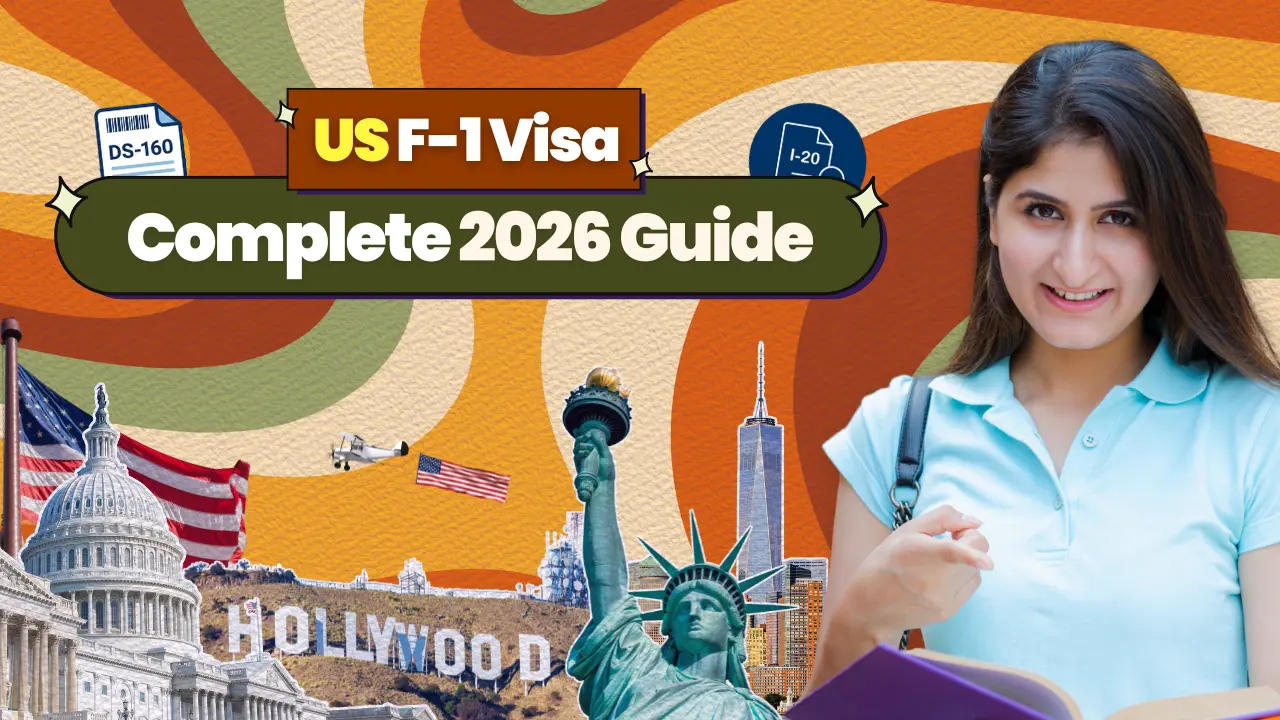
You've been accepted to a US university. The hard part is over, right? Not quite. Now comes the F-1 student visa process, and if you're like most international students, you're probably feeling a mix of excitement and anxiety.
The visa process isn't complicated, but it is detailed. One missing document, one inconsistent answer, or one misunderstanding about what consular officers are actually looking for can derail months of planning. The good news? If you understand what's required and prepare properly, the process is straightforward.
This guide walks you through every step, includes critical updates for 2026-2027, and explains what consular officers are really evaluating during your interview.
Step 1: Getting Your I-20 and Paying Fees
Your visa journey officially begins when your university issues your Form I-20. This is your Certificate of Eligibility for Nonimmigrant Student Status, and it's the most important document in this entire process.
What the I-20 Contains:
- Your unique SEVIS ID (Student and Exchange Visitor Information System number)
- Details about your academic program
- Estimated costs for your education
- Confirmation that your school is SEVP-certified (authorized to enroll international students)
Review your I-20 immediately when you receive it. Check every detail for accuracy your name, program dates, financial information. Any errors need to be corrected by your school's Designated School Official before you proceed. Sign and date it once you've confirmed everything is correct.
Two Mandatory Fees:
- SEVIS I-901 Fee: Currently $350 (₹31.6k). This supports the database that tracks international students in the US. Pay this at least three business days before your visa interview. Save the receipt, you'll need it.
- MRV Fee (Visa Application Fee): Currently $180-$185 (₹16.2k - 16.7k) (this has increased recently and may continue to change). This processes your visa application. Save this receipt too.
Important: These fees can change. Always verify current amounts on the official US Department of State website before paying. For the 2026-2027 cycle, budget for possible increases.
Step 2: The DS-160 Form and Scheduling Your Interview
1. Completing the DS-160:
The DS-160 is your comprehensive online visa application. It's long, and it requires absolute accuracy. This is where consular officers form their first impression of you.
Every detail must match your I-20 exactly. Inconsistencies between your DS-160 and I-20 are a common reason for visa delays or denials. Double-check your passport information, academic details, travel history, and financial information before submitting.
Once submitted, print the confirmation page with the barcode. You need this for your appointments.
2. Scheduling Your Visa Interview:
This is where timing becomes critical. You can apply for your F-1 visa up to 365 days (one full year) before your program start date. But visa appointment availability varies dramatically by location and season.
Schedule your interview as soon as you have your I-20, SEVIS payment receipt, and DS-160 confirmation. Don't wait. Many Indian consulates have long wait times, especially during peak season (summer months).
You'll typically need two appointments: one for biometric data collection (fingerprinting and photo) and one for the actual interview with a consular officer.
Critical Policy Changes for 2026-2027
The F-1 visa landscape is evolving. Understanding these changes helps you prepare properly:
Duration of Status (D/S) Proposal:
Currently, F-1 students are admitted for "Duration of Status," meaning you can stay as long as you maintain your student status. However, the Department of Homeland Security has proposed eliminating this flexible policy.
If finalized, students would be admitted for a fixed period (typically four years) plus a grace period. If you need more time to complete your degree, you'd have to file a costly Extension of Stay application with USCIS.
The proposal also suggests cutting the post-completion grace period from 60 days to 30 days, giving you less time after graduation to wrap up affairs or transition to Optional Practical Training (OPT).
What This Means: While this is currently just a proposal, it signals stricter timelines ahead. Plan to complete your degree on schedule and maintain your F-1 status carefully.
Increased Interview Requirements:
The broad interview waiver policy (sometimes called "dropbox") that existed during the pandemic is being significantly narrowed. Most F-1 applicants including many renewals will now require a full in-person interview.
Additionally, consular officers are conducting more thorough screening, including social media and online background checks. Make sure your public online presence aligns with your identity as a serious student.
Interview Location Policy:
New guidance generally expects F-1 applicants to interview in their country of nationality or legal residence. This reduces flexibility for third-country visa processing.
The Visa Interview: What They're Actually Evaluating
The visa interview is the decisive moment. Consular officers evaluate two core requirements:
1. Genuine Student Intent
You must clearly articulate why you chose this specific program at this specific US university. Generic answers don't work here. Be prepared to explain:
- Why this degree and field of study
- Why this particular university over options in your home country
- How this education advances your specific career goals
- What makes this program the right fit for you
Your acceptance letters, academic transcripts, and test scores support your case, but your explanation needs to show a logical progression and clear purpose.
2. Non-Immigrant Intent (Strong Home-Country Ties)
This is where many students struggle, and it's the most common reason for visa denials. The F-1 visa is temporary, and US immigration law assumes every applicant wants to immigrate unless proven otherwise.
You must demonstrate compelling reasons to return home after your studies:
Career Ties: Specific job prospects, a family business you'll join, or a specialized field where your US degree creates opportunities back home. Be specific, not "I'll find a job in India" but "I'm returning to join my family's manufacturing business, where my engineering degree will help modernize our operations."
Financial/Property Ties: Proof of assets, property ownership, or significant financial commitments in your home country.
Family Ties: Immediate family members (parents, spouse, non-dependent children) remaining in your home country and depending on you.
Your goal is to show a clear, logical plan: going to the US for education → gaining specific skills → returning home to pursue opportunities that require those skills. The circle must close back in your home country.
Essential Documents for Your Interview
Organize these documents before your appointment:
- Passport: Valid for at least six months beyond your intended stay
- Form I-20: Signed and dated
- DS-160 Confirmation Page
- Fee Receipts: Both SEVIS I-901 and MRV
- Financial Proof: Bank statements, sponsorship letters, education loan approvals showing you can cover first-year expenses listed on your I-20
- Academic Records: Original transcripts, degrees, test scores (TOEFL, IELTS, GRE, GMAT, SAT)
- Evidence of Home-Country Ties: Property documents, employment letters, family information
After Visa Approval
Once approved, remember:
- Entry Window: You can only enter the US up to 30 days before the program start date on your I-20.
- Maintain Your Status: Once in the US, maintaining your F-1 status is critical. Enroll full-time, keep your I-20 valid, and only work with proper authorization (Curricular Practical Training or Optional Practical Training).
- Keep Documents Safe: Your I-20 and passport with F-1 visa stamp are essential. Keep them secure and accessible.
The Bottom Line
The F-1 student visa process demands preparation and attention to detail, but it's not mysterious. Most students who prepare properly, can demonstrate genuine academic intent, and have strong home-country ties receive their visas.
Start early, understand what consular officers are evaluating, and present a clear, honest case for why you're going to the US to study and why you'll return home afterward. With proper preparation, you can navigate this process successfully and focus on the exciting opportunity ahead.
Need Expert Help With Your F-1 Visa Application?
Confused about demonstrating home-country ties convincingly? Worried about the visa interview? Not sure if your financial documents are sufficient?
Get personalized guidance from Leap Scholar’s visa counselors who understand the F-1 process. We can help you organize your documents properly, prepare strong answers for common interview questions, understand how recent policy changes affect your application, and build confidence for your visa interview.
The US student visa process is manageable with the right preparation. Don't navigate it alone, especially with the policy changes coming in 2026-2027.
Kirti Singhal
Kirti is an experienced content writer with 4 years in the study abroad industry, dedicated to helping students navigate their journey to international education. With a deep understanding of global education systems and the application process, Kirti creates informative and inspiring content that empowers students to achieve their dreams of studying abroad.
Users also read

The True Cost of Moving to Germany as a Software Engineer: An Indian Professional's Guide for 2026
How to Switch from the Graduate Route to a Sponsored Job in the UK: The Complete 2026 Guide
TU vs. FH in Germany: Which Degree Actually Lands You a Tech Job Faster in 2026?