Blogs
Blogs  Leap Digest
  Events
  About Us
 Trending News
Vietnam: The New Frontier for Affordable Global Education in 2026
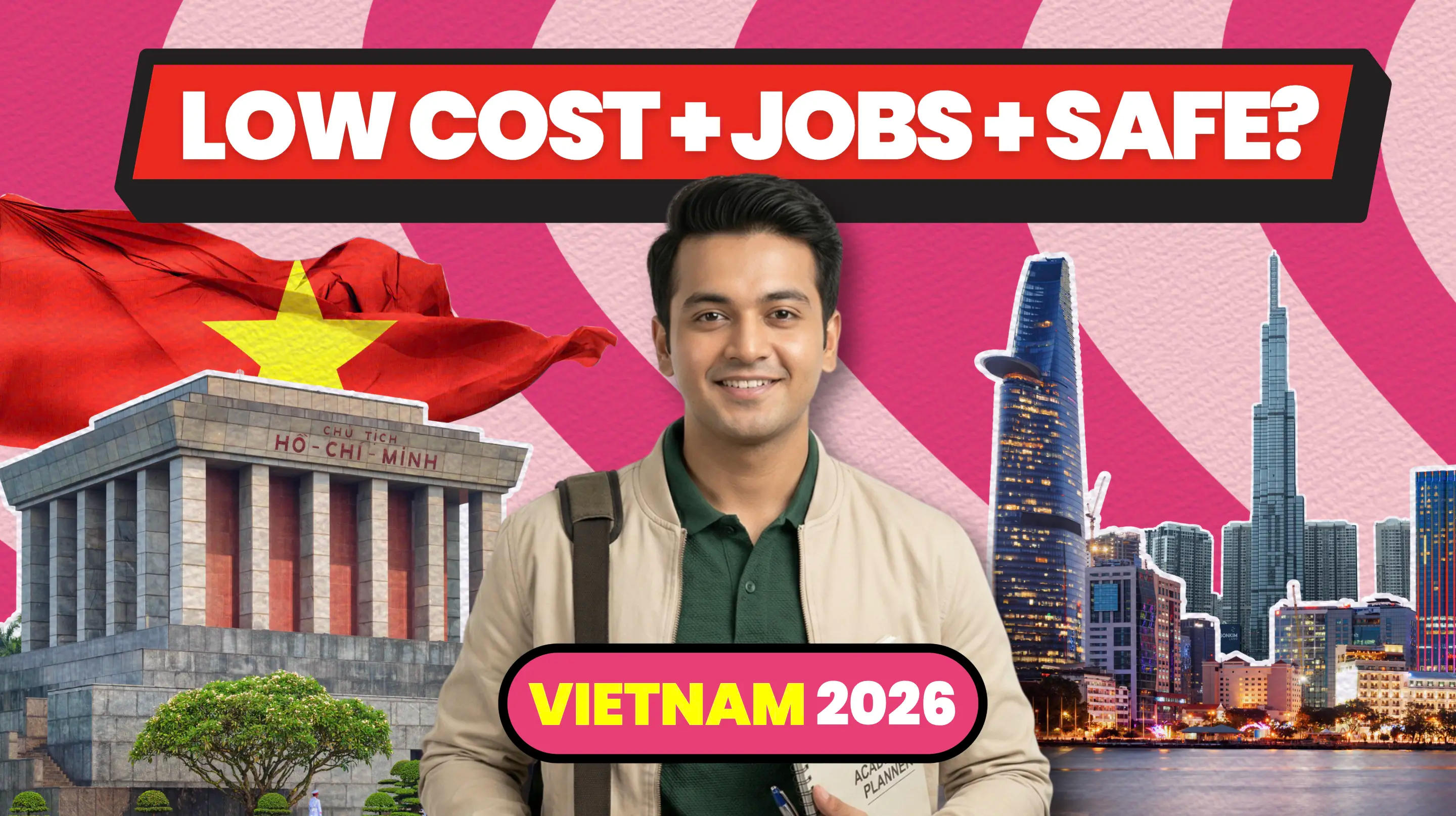
Every conversation about studying abroad seems to start the same way: US, UK, Canada, Australia. And for a long time, that list made sense. But right now, for many Indian families, it is getting harder to justify. Visa uncertainty, rising costs, longer processing times, and immigration policies that seem to shift every few months are making students think differently.
Vietnam is not the first name that comes up in those conversations. But honestly, it probably should be.
While Vietnam has long been known as a country that sends students abroad, it is now actively working to become a country that receives them, driven by low costs, political stability, quality education in both Vietnamese and English, personal safety, and a tropical climate that does not hurt either.
And from 2026, one significant policy proposal, if passed, could make the picture even more compelling for Indian students: formalized part-time work rights for international students.
The Part-Time Work Update That Changes the Math
Here is something most people do not realize about Vietnam right now. International students technically operate in a grey area. There are no formal rules on how many hours they can work, which means many are working informally, without contracts, without legal protections, and without any clarity.
Vietnam's Ministry of Education and Training has proposed changing that, and the details are worth paying attention to.
Under the new proposal:
- International students could be granted work rights of up to 20 hours a week during the semester
- During semester breaks, students would be permitted to work up to 48 hours per week, turning holidays and summers into genuine earning windows
- Job opportunities highlighted for international students include English teaching, IT and technology, marketing and creative fields, and hospitality
Note: Formal English teaching roles in Vietnam currently require a bachelor's degree and a 120-hour TEFL certificate under Decree 219/2025. Students who have not yet completed their degree may not qualify for contracted teaching roles. Verify eligibility before factoring teaching income into your budget
For Indian students who arrive with English fluency and tech skills, those are not stretch goals. They are realistic options from day one.
Ly Tran, a professor at Deakin University's School of Education, told Times Higher Education: 'Employment opportunities are among the top factors international students consider when choosing a destination. This policy sends a strong signal that Vietnam is committed to building a supportive, internationalized higher education system.
One important caveat: This measure is still a proposal submitted to the National Assembly, not a passed law. Implementation details are still being finalized. Do not build your monthly budget around part-time income until the policy is formally enacted. Treat any work earnings as a bonus, not a given.
What Does It Actually Cost to Study in Vietnam?
This scenario is where Vietnam's case becomes very difficult to ignore.
Tuition fees at public universities for international students sit at approximately $1,000 to $2,500 per year. Monthly living costs range from $300 to $600, depending on lifestyle and city. The full annual cost for most Indian students lands between Rs. 4 lakh and Rs. 7 lakh.
To put that in perspective: a single year at a mid-range UK university costs Rs. 30 lakh to Rs. 40 lakh all-in. That gap is not marginal. It is the difference between needing a large education loan and financing your degree with manageable family savings.
Here is what a realistic annual budget looks like for an Indian student in Vietnam in 2026:
Expense | Annual Cost (USD) | Annual Cost (INR approx.) |
| Tuition (Public University) | $1,000 to $2,500 | Rs.94,260 to Rs.2,35,650 |
| Accommodation | $1,200 to $2,400 | Rs.1,13,112 to Rs.2,26,224 |
| Food and Daily Expenses | $1,200 to $1,800 | Rs.1,13,112 to Rs.1,69,668 |
| Transport | $300 to $600 | Rs.28,278 to Rs.56,556 |
| Health Insurance and Miscellaneous | $300 to $600 | Rs.28,278 to Rs.56,556 |
| Total Annual Estimate | $4,000 to $7,900 | Rs. 3,77,040 to Rs. 7,44,654 |
(Exchange rate used: Rs.94.26 per USD as of 27 March 2026, Source: Numbeo Cost of Living Data (Hanoi & HCMC))
Now layer the part-time work income on top of that. In major cities like Ho Chi Minh City and Hanoi, international students typically earn between $1 and $3 per hour. At 20 hours a week over a 40-week academic year, that works out to roughly ₹75,408 to ₹2,26,224 per year, a meaningful reduction in monthly transfers from home, though not a replacement for family financial support.
The Universities Worth Knowing About
Affordability only matters if the education quality holds up. Vietnam is not asking you to compromise on one in order to get the other.
Here is what the current landscape looks like:
- Vietnam National University leads Vietnam's presence in global and regional rankings and is known for research output
- RMIT Vietnam is a full campus of RMIT Australia. You graduate with an Australian degree at Vietnamese living costs. That combination of a globally recognised qualification and South-East Asian affordability is genuinely rare
- Ton Duc Thang University and FPT University are popular for their English-taught courses, employability focus, and international collaborations with universities in Australia, Japan, Korea, and Europe
On the broader quality front, Vietnam has made measurable progress:
- Ten Vietnamese institutions appear in global rankings for 2026
- Five more universities earned international accreditation in 2025
- Internationally accredited programmes grew by 27% last year
- The government's target is 15 to 20 internationally recognised universities by 2030
Major cities like Hanoi, Ho Chi Minh City, and Da Nang have a growing international student community, modern infrastructure, and environments that students consistently describe as safe and welcoming.
Why Indian Students Are Starting to Look This Way
Indian students are not stepping back from studying abroad. They are just becoming more careful about where and why.
The calculation has shifted. It is no longer just about the country's name on the degree. It is about visa stability, financial risk, quality of life, and whether the move actually makes sense for the next five years of your life, not just the application season.
Vietnam meets several of these criteria simultaneously:
- Cost that is genuinely low, not just relatively low
- Cities that are safe and liveable for international students
- English-taught programmes that are growing in number and quality
- Part-time work rights being formalised, which reduces financial risk
- A regional student community already established, with students from Laos, Cambodia, and China having paved the way
Indian students are now beginning to explore it too, drawn by the same factors that have made Vietnam attractive to the rest of Asia for years.
Three Things to Know Before You Decide
1. The work policy is a proposal and has not yet been confirmed as law. The Ministry of Education and Training has formally submitted it to the National Assembly. Implementation details are still being worked out. Stay updated as it progresses, and do not factor work income into your budget until the policy is officially enacted.
2. English-taught programs are available but selective. Not every course at every Vietnamese university is taught in English. If studying in English is non-negotiable for you, shortlist programs specifically listed as English-medium before applying. RMIT Vietnam and FPT University are strong starting points.
3. The affordability is real, but you should budget for everything. Tuition and living costs are genuinely low. But health insurance, visa fees, and the initial cost of settling in a new country add up faster than expected. A budget of Rs.4.5 lakh to Rs.8 lakh per year is a realistic total; this includes tuition, accommodation, food, transport, health insurance, and a buffer for visa fees and initial settling-in costs beyond the base estimates in the table above.
If you want to understand how Vietnam fits into your overall study-abroad plan or compare it against other affordable destinations, speak with a Leap Scholar counselor for free.

Kirti Singhal
Kirti is an experienced content writer with 4 years in the study abroad industry, dedicated to helping students navigate their journey to international education. With a deep understanding of global education systems and the application process, Kirti creates informative and inspiring content that empowers students to achieve their dreams of studying abroad.
Users also read

Vietnam Steps Into the Global Academic Spotlight at APAIE 2026: And Indian Students Should Pay Attention
Vietnam Steps Into the Global Academic Spotlight at APAIE 2026: And Indian Students Should Pay Attention

Indian Passport Fees Rise From July 1, 2026. Here Is What It Means If You Plan to Study Abroad.