Blogs
Blogs  Leap Digest
  Events
  About Us
 Expert Insights
Germany vs Australia for Engineering: Which Country is Right for You in 2026.
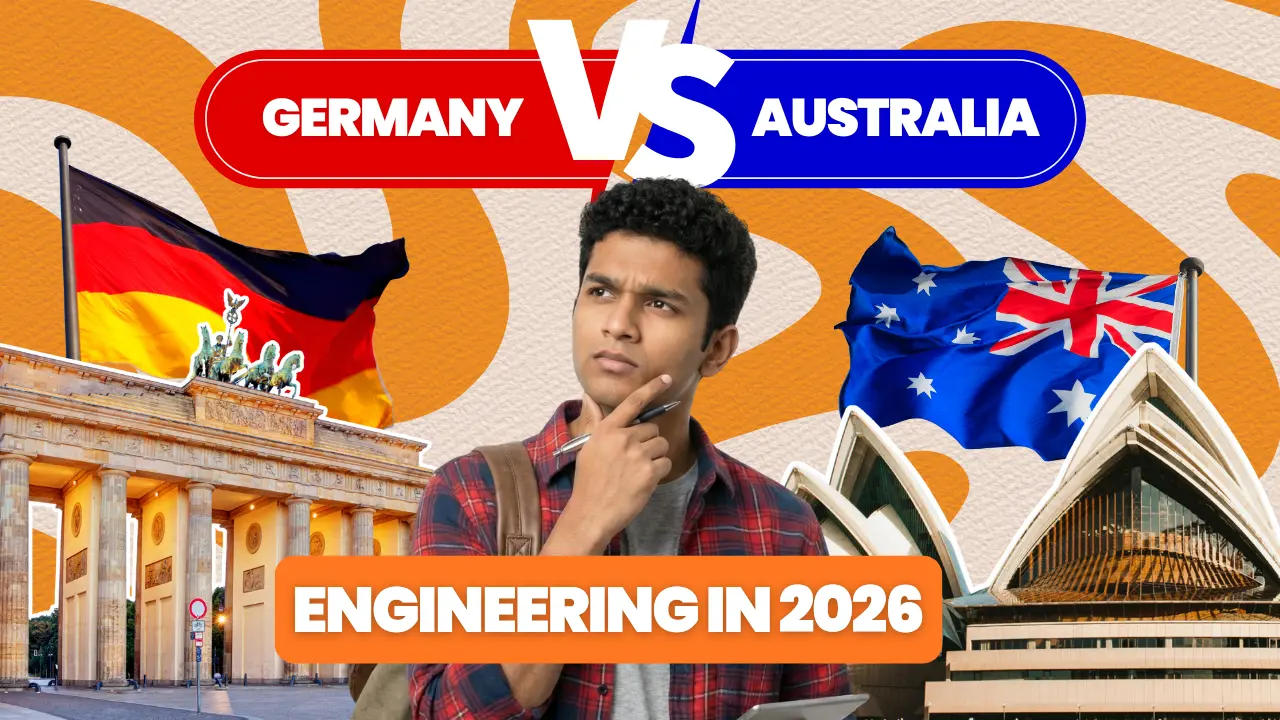
You've decided to study engineering abroad. Smart choice, international experience, better career prospects, potentially higher salaries. But now you're stuck between two completely different options: Germany and Australia.
One offers nearly free education in the heart of Europe's engineering powerhouse. The other promises high wages and sunshine in an English-speaking country. Both have excellent universities, strong job markets, and clear pathways to work permits after graduation.
The problem? They're so different that the "right" choice isn't obvious. Let's break down what each country actually offers for the 2026-2027 intake, focusing on the latest visa rules, realistic costs, and what your life would actually look like.
What's Changed for 2026-2027
Before diving into comparisons, let's understand what's new. Both countries have updated their policies specifically to attract engineering talent but in different ways.
1. Germany's Opportunity Card (Chancenkarte): This new point-based system, fully implemented in 2026, allows you to enter Germany to search for jobs even before you have a formal offer. If you have a recognized engineering degree, this is a massive advantage. You're not rushing to find sponsorship before your student visa expires, you have structured time to find the right opportunity.
2. Australia's Visa Overhaul: Student visa fees have increased to AUD 1,600+ (~₹97,200+), and the old "Genuine Temporary Entrant" requirement has been replaced with a clearer "Genuine Student" test. The process is more transparent but requires stronger evidence of your study intentions and financial capacity.
3. Engineering Focus: Both countries are investing heavily in infrastructure, renewable energy, and advanced manufacturing. Germany emphasizes Industry 4.0 and automotive innovation. Australia focuses on massive infrastructure projects and mining technology. Your specialization matters when choosing.
The Cost Reality: What You'll Actually Pay
This is where the countries diverge dramatically. Understanding the complete financial picture, not just tuition, but living costs, work opportunities, and hidden expenses, is essential.
Germany: Low Cost, High Value
- Tuition: Most public universities charge €0 for tuition. Yes, actually zero. You pay a semester fee of €200-400 (₹21,000-42,000) that typically includes public transport passes.
- Blocked Account: Your main upfront cost is the Sperrkonto (blocked account) of approximately €11,904 for 2026 (around ₹12.5 lakhs). This is your money you withdraw monthly for living expenses. It's proof you can support yourself, not a fee.
- Monthly Living: Budget €900-1,200 (₹95,000-1,26,000) monthly depending on the city. Munich and Stuttgart are more expensive; smaller cities like Aachen or Dresden are cheaper.
- Part-Time Work: 20 hours per week during term, unlimited during holidays. Typical student jobs pay €12-15 per hour.
Australia: Higher Investment, Higher Returns
- Tuition: Engineering programs cost AUD 35,000-50,000 per year (₹21-30 lakhs). This is significant upfront investment.
- Proof of Funds: You need to show approximately AUD 29,710 (₹18 lakhs) for living expenses annually.
- Monthly Living: Expect AUD 2,000-2,800 monthly (₹1.2-1.7 lakhs). Sydney and Melbourne are most expensive; Adelaide and Perth offer better value.
- Part-Time Work: 48 hours per fortnight (equivalent to 24 hours weekly). Minimum wage is high AUD 23+ per hour meaning part-time work genuinely helps cover costs.
Side-by-Side Comparison for 2026-2027
Feature | Germany | Australia |
| Top Engineering Universities | TU Munich, RWTH Aachen, KIT | UNSW, Univ. of Melbourne, Monash |
| Average Tuition | €0-€3,000 (~₹0-₹3.2 lakhs) public universities | AUD 35,000-50,000 (~₹21-30 lakhs) |
| Monthly Living | €900-€1,200 (~₹95,000-₹1.26 lakhs) | AUD 2,000-2,800 (~₹1.2-1.7 lakhs) |
| Post-Study Work | 18 months (Job Seeker Visa) | 2-4 years (depending on degree/region) |
| Part-Time Work | 20 hours/week | 48 hours/fortnight |
| Language of Instruction | Master's (English), Bachelor's (German) | English |
| Visa Focus | Academic merit & blocked account | Genuine Student test & finances |
Career Pathways: Getting to Permanent Residency
Both countries want to retain talented engineers, but the pathways differ significantly in structure and timeline.
Germany's Route
After graduation, you get an 18-month Job Seeker Visa specifically to find work in your field. Once employed, you typically transition to an EU Blue Card (for high-skilled workers) or standard work permit.
Timeline to PR: After 2 years of qualified employment (often on Blue Card), you can apply for permanent settlement. Germany recently accelerated citizenship pathways, you can potentially become a citizen in 5 years with good integration (language, employment, civic engagement).
Language requirement: While many Master's programs are English-taught, learning German significantly improves job prospects and is essential for PR and citizenship.
Australia's Route
Australia uses a points-based system. Engineering occupations are almost always on the Skilled Occupation List, giving you strong PR prospects.
Timeline to PR: Variable based on points, but typically 2-4 years after graduation if you're strategic. Working in "Regional Australia" (Perth, Adelaide, Gold Coast, etc.) gives bonus points and an extra year of post-study work rights.
Language advantage: Everything is in English work, daily life, PR applications. No need to learn a new language unless you want to.
The Lifestyle Factor: What Daily Life Actually Feels Like
Numbers don't capture everything. Your day-to-day experience matters significantly.
Germany: European lifestyle with excellent public transport, central location for travel (France, Netherlands, Italy all within a few hours), four distinct seasons, work-life balance culture, excellent social benefits. Weekends might involve hiking in Bavaria, visiting Christmas markets, or taking affordable trains to other countries.
Australia: Outdoor lifestyle with beaches, warm weather year-round in most cities, English-speaking environment, multicultural society, relaxed social culture. Weekends might involve beach barbecues, coastal hikes, or exploring the outback.
Cultural adjustment: Germany requires adapting to a new language and more formal social structures. Australia feels more immediately familiar for English speakers but is geographically isolated from other countries.
Which Should You Actually Choose?
The "best" choice depends on your priorities, not rankings or prestige.
Choose Germany if:
- You're budget-conscious and want minimal debt
- You're interested in automotive, mechanical, or manufacturing engineering
- You're willing to learn German for better job prospects
- You want access to multiple European countries and cultures
- You prefer structured systems and excellent public infrastructure
Choose Australia if:
- You can afford higher upfront investment
- You prefer English-speaking environments
- You're interested in mining, civil, or infrastructure engineering
- You want outdoor lifestyle and warm weather
- You value higher earning potential during and after studies
Neither choice is objectively "better." Germany offers financial accessibility and European engineering prestige. Australia offers English-language convenience and high wages. Your personality, financial situation, and career goals determine which aligns better.
The Bottom Line
For the 2026-2027 intake, both Germany and Australia are actively seeking engineering talent. Germany's new Opportunity Card and nearly-free education make it incredibly accessible. Australia's high wages and clear English-language pathways offer different advantages despite higher costs.
The decision isn't about which country is superior, it's about which fits your specific situation. Can your family afford Australia's higher costs? Are you willing to learn German for better German job prospects? Do you prefer a European or Australian lifestyle?
Research specific universities in your engineering specialization, understand the complete cost picture including living expenses, and honestly assess which environment will help you thrive not just academically, but personally and professionally.
Need Help Deciding Between Germany and Australia?
Confused about which country matches your engineering specialization and budget? Not sure how to navigate the new 2026 visa requirements? Need help understanding the complete financial picture including hidden costs?
Get personalized guidance from Leap Scholar. We can help you compare universities specific to your field, understand realistic costs and scholarship opportunities, navigate visa requirements for both countries, and plan your pathway from study to PR. Start planning now.

Kirti Singhal
Kirti is an experienced content writer with 4 years in the study abroad industry, dedicated to helping students navigate their journey to international education. With a deep understanding of global education systems and the application process, Kirti creates informative and inspiring content that empowers students to achieve their dreams of studying abroad.
Users also read

Top 10 Industries That Create the Most Billionaires in 2026: Guide for Indian Students

Stanford MBA Career Diversity: Industries, Salaries and What Indian Students Need to Know

Anthropic Academy: 16 Free AI Courses With Certificates in 2026 That Indian Students Cannot Afford to Ignore