Blogs
Blogs  Leap Digest
  Events
  About Us
 Expert Insights
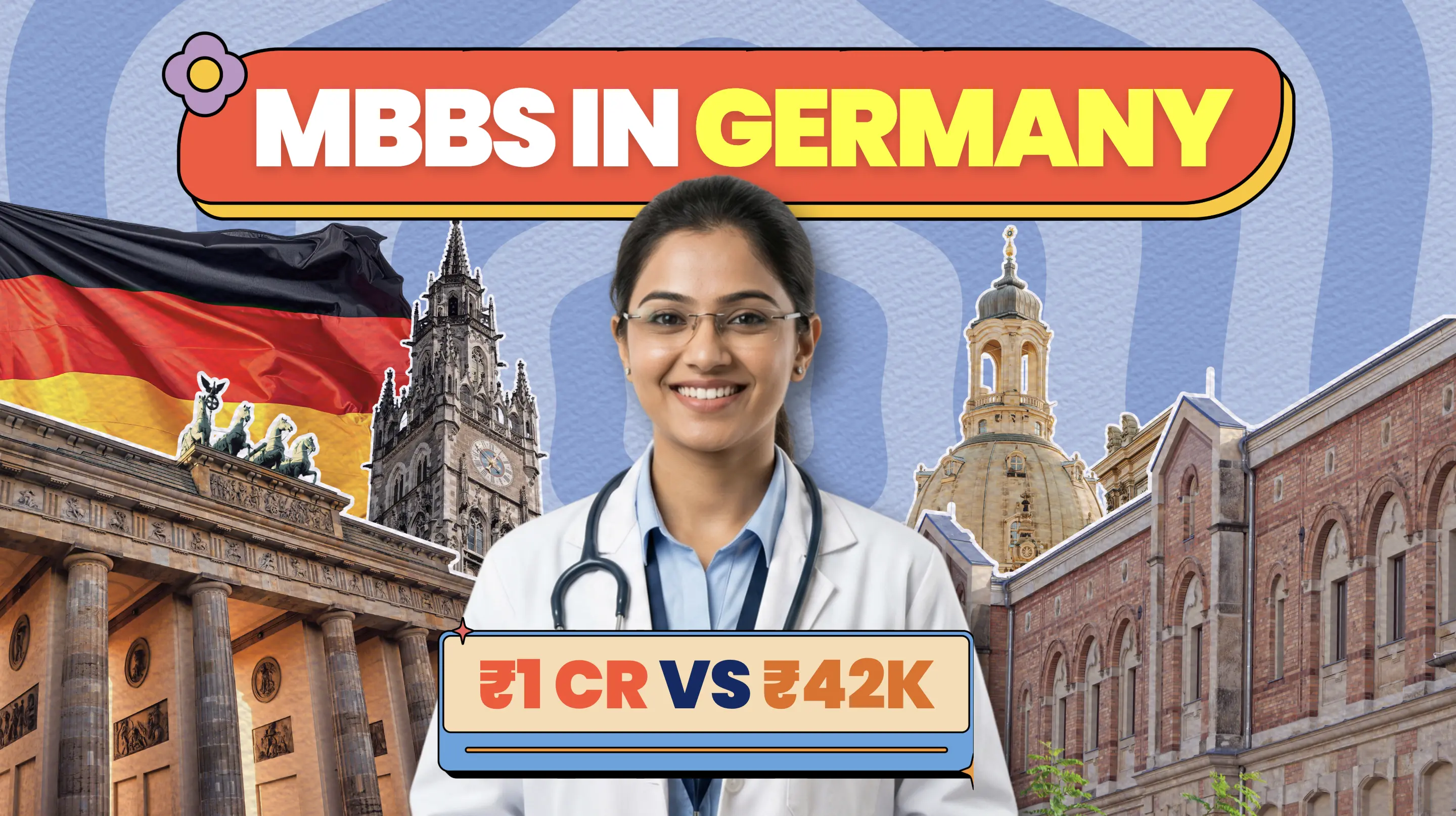
The German Magnet: 68% Growth in Indian Enrollment Reshapes Study Abroad Landscape

Something remarkable is happening in Germany that most Indian families still don't fully grasp. The country has registered an unprecedented surge in international student enrollment, with Indian students absolutely leading the charge.
Here is a look at the staggering numbers:
- 138% Growth: The increase in Indian enrollment between 2018/19 and 2023/24.
- 68% Jump: The massive surge recorded between 2022 and 2024 alone.
- The #1 Source: India has now surpassed China as the largest source country of international students in Germany.
This dramatic shift isn't accidental. It's the result of a powerful confluence of factors: affordability that's unmatched globally, academic excellence particularly in STEM fields, clear post-study pathways to permanent residency, and growing uncertainty surrounding visa policies in traditional destinations like the UK, Canada, and USA.
Germany promises something increasingly rare: a world-class degree without crushing debt. Let me show you why this matters.
Education Without the Debt Drama
The single most powerful factor driving this surge is brutally simple: money. Or more accurately, the lack of money you need to spend.
Most public universities in Germany charge no tuition fees for international students, regardless of nationality. Zero. Nothing. You pay a small semester contribution that covers administration and public transport. When you look at the "math" side-by-side, the difference is life-changing:
| Destination | Average Annual Tuition (Master's) | Est. Total Tuition (2 Years) |
| Germany (Public) | €0 (Zero) | ₹0 |
| United Kingdom | £15,000 – £30,000 | ₹32 – ₹64 Lakhs |
| United States | $20,000 – $50,000 | ₹34 – ₹84 Lakhs |
Note: You pay a semester contribution of €250 to €400 (~ ₹22,000 to ₹36,000) per semester, which covers administration costs and often includes unlimited local public transport.
The Blocked Account Requirement While tuition is free, you must prove you can support yourself. As of 2026, you need to open a Blocked Account with a minimum of €11,904 (approx. ₹11.1 Lakhs) for your first year. This remains your money to spend on monthly living expenses.
The financial savings are immense, though admission to these tuition-free public universities is highly competitive. You're competing with strong students globally who all recognize the value proposition.
The STEM Powerhouse Advantage
The majority of Indian students in Germany over 60% are drawn to its globally renowned strengths in Science, Technology, Engineering, and Mathematics. Specifically, Engineering disciplines dominate: Mechanical Engineering, Automotive Engineering, AI, Data Science, and related fields.
This isn't just about cheap education. Germany's technical universities like TU Munich, RWTH Aachen, and KIT Karlsruhe are globally recognized for cutting-edge research and practical, industry-aligned curricula. These aren't regional players, they're world leaders in engineering education and research.
The "Made in Germany" quality label extends directly to university degrees. A German engineering degree carries weight globally because the world knows German engineering standards are among the highest.
Industry Integration That Actually Matters
The Hub of Global Giants: Germany's robust economy, home to global giants like BMW, Siemens, Bosch, SAP, and Bayer, offers unparalleled opportunities for internships and research collaborations. You're not just learning theory, you're working with companies that define global standards in automotive technology, industrial automation, and precision manufacturing.
Bridging the Gap Between Campus and Career: This industry integration means your Master's thesis might be sponsored by Volkswagen, your internship might be at Siemens, and your first job offer might come before graduation. The connection between academia and industry in Germany is seamless in ways that few other countries match.
The English-Taught Reality
Breaking the Language Barrier: One concern Indian students have about Germany is language. The good news: Germany now offers nearly 2,400 English-taught programs, primarily at the Master's level, specifically to attract top international talent.
The Strategic Advantage of Learning German: You can complete your entire Master's degree in English without speaking German. However and this is important, learning German dramatically improves your employment prospects post-graduation and social integration. Many students study in English while gradually learning German during their degree.
The PR Pathway That Actually Works
Germany's government has actively reformed its immigration policies to encourage international graduates to stay and fill critical labor shortages. This isn't lip service, it's codified policy with clear timelines.
1. The 18-Month Job Seeker Visa
Upon graduation, you're automatically eligible for an 18-month Job Seeker Visa. This gives you a year and a half to find skilled employment without needing to leave the country. You're not scrambling to secure a job offer before your student visa expires; you have real time to find the right opportunity.
2. Work Rights During Study
During your studies, you can work up to 120 full days or 240 half days per year. This helps manage living expenses and, critically, gives you German work experience that makes you more attractive to employers post-graduation.
Many students work part-time as research assistants, teaching assistants, or in industry internships. The income (typically €10-15 per hour) meaningfully offsets living costs while building your CV.
3. The Fast Track to Permanent Residency
Here's where Germany really differentiates itself. Once you secure a skilled job, you can apply for Permanent Settlement Permit after just two years of employment if you hold an EU Blue Card (available for high-skilled workers earning above certain thresholds), or three to four years under standard employment permits.
This clear, relatively short pathway to settlement is a major differentiator. You're not stuck in temporary status for a decade hoping policy doesn't change. The timeline is transparent and achievable.
4. The Visa Process Reality
While the APS Certificate Academic Evaluation Centre verification of your credentials is now mandatory for Indian students, adding a step to the process, the overall visa system has been streamlined with digital portals. The APS verification actually speeds up the final visa processing because your credentials are pre-validated.
The German visa success rate for well-prepared Indian applicants is high reportedly 70-80%+ because the requirements are clear and predictable. It's not a lottery like some other countries. If you meet the criteria and submit complete documentation, you're very likely to be approved.
Why the 68% Growth Makes Sense
The enrollment boom underscores a growing realization among Indian students and families that Germany offers a unique combination that's increasingly hard to find elsewhere:
Academic prestige in fields that matter for Indian students (engineering, CS, data science). Zero or minimal tuition fees that eliminate the debt burden. Clear work rights during and after studies. A welcoming immigration framework explicitly focused on retaining skilled graduates for long-term career success.
As visa hurdles and costs escalate in the UK (post-study work rights under threat), Canada (massive application volumes and processing delays), and the US (H-1B lottery uncertainty), Germany has firmly positioned itself as the pragmatic, high-value alternative.
You're not settling for a lesser option to save money. You're choosing a strategic option that offers comparable or better academic quality, superior financial value, and more predictable immigration outcomes.
The Strategic Calculation
For Indian students strong in STEM fields with family financial constraints, Germany's value proposition is almost unbeatable. A two-year Master's in Computer Science or Mechanical Engineering from TU Munich costs roughly ₹20-25 lakhs total (living expenses, blocked account, insurance, travel) compared to ₹50-80 lakhs for comparable programs in the UK or US.
That's the difference between manageable family savings plus modest loans versus financially crippling debt that takes a decade to repay.
The 68% growth in Indian enrollment isn't hype, it's a rational response to an exceptional opportunity. As more students succeed in Germany and return home (or stay and build careers), word spreads. The value is real, the outcomes are proven, and the pathway is clear.
Germany has become the magnet for pragmatic, high-achieving Indian students who want world-class education without the debt drama. That trend is only accelerating.

Kirti Singhal
Kirti is an experienced content writer with 4 years in the study abroad industry, dedicated to helping students navigate their journey to international education. With a deep understanding of global education systems and the application process, Kirti creates informative and inspiring content that empowers students to achieve their dreams of studying abroad.
Users also read

Top 10 Industries That Create the Most Billionaires in 2026: Guide for Indian Students

Stanford MBA Career Diversity: Industries, Salaries and What Indian Students Need to Know

Anthropic Academy: 16 Free AI Courses With Certificates in 2026 That Indian Students Cannot Afford to Ignore