
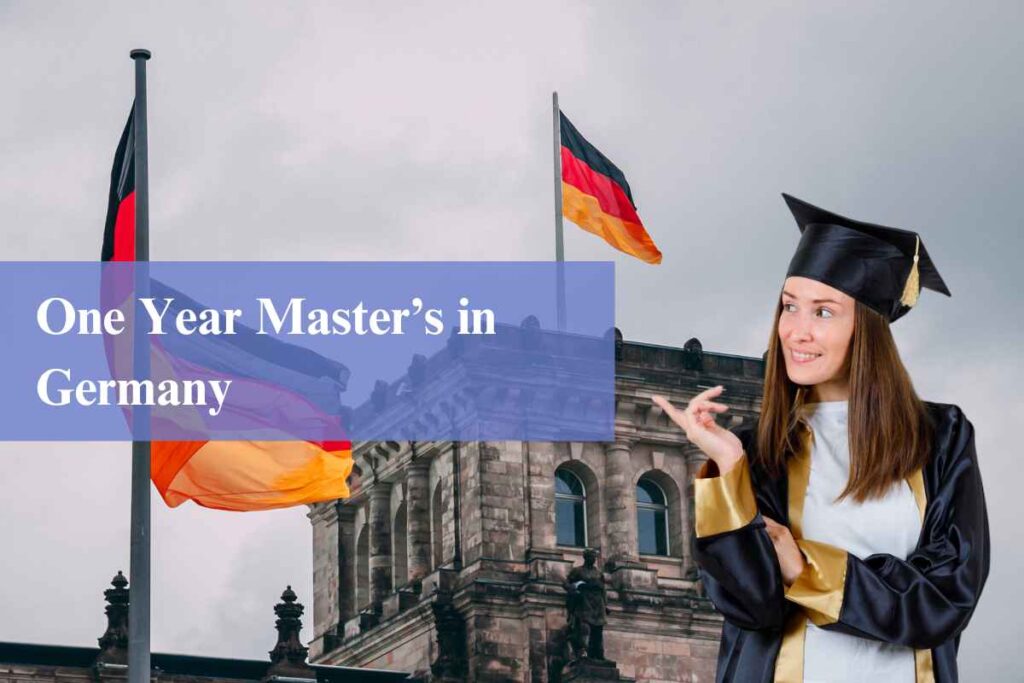
One Year Masters in Germany offers an accelerated pathway for ambitious students who want a world-class education without spending two years on campus. Many Indian students struggle with the high costs and long durations of traditional Masters programs, which can delay their entry into the global workforce. According to DAAD (German Academic Exchange Service), Germany is home to over 400 top-ranked universities offering internationally recognised degrees with low or no tuition fees, making it an attractive destination for students seeking both quality and affordability.
These intensive programs combine rigorous academics with practical exposure, allowing you to save time and money while gaining a competitive edge in the global job market. This guide covers everything Indian students need to know for the 2026-2027 intakes, including top universities, eligibility criteria, program costs in INR, the application process, and post-study work opportunities.
Is One Year Masters in Germany Worth It for Indian Students?
Absolutely. While the traditional two-year Masters is more common, a one-year program offers a powerful, compact alternative. The key is to understand the structure, which is based on the European Credit Transfer and Accumulation System (ECTS). A 1 year Masters typically requires 60-90 ECTS credits and is fully recognised in India and globally, just like a two-year degree.
Here’s a quick comparison to help you decide what’s right for you:

Choose your dream country
 UK
UK
 USA
USA
 Germany
 Australia
 Ireland
 Canada
 UAE
UAE
 France
 Sweden
 Italy
Italy
 Other
Other
When do you want to study abroad?
What's your highest level of education?
Select you current city
How Leap will help you

Personalised University Shortlist

Express Applications with Quicker Admits

End-to-End Application Support
| Feature | 1 Year Masters | 2 Year Masters |
|---|---|---|
| Duration & Cost | Faster (12 months), lower overall living costs, and quicker return on investment. | Longer (24 months), higher living expenses. |
| Intensity | Highly intensive and career-focused curriculum. | More in-depth, with greater scope for research and specialisation. |
| Internship Opportunity | Less time for an integrated long-term internship. | Ample opportunity for a 6-month or longer internship. |
| Post-Study Work Visa | Eligible for the full 18-month job seeker visa. | Eligible for the full 18-month job seeker visa. |
| Best For | Professionals looking to upskill quickly or students with clear career goals. | Students who want a deep academic dive and more research opportunities. |
Top Universities Offering One Year Masters in Germany
Germany is home to a mix of prestigious public and private universities offering accelerated Masters programs. Many of these are taught entirely in English, making them accessible to international students. Some of the leading options include ESMT Berlin, University of Mannheim, WHU - Otto Beisheim School of Management, and Technical University of Berlin, which are globally recognised for their academic excellence and strong career outcomes.
| University | Popular 1 Year Program(s) | Est. Annual Fees (EUR / INR) |
|---|---|---|
| ESMT Berlin | Full-Time MBA | €50,000 / ₹50,96,500 |
| University of Mannheim | Master of Comparative Business Law | €8,500 / ₹8,66,405 |
| WHU - Otto Beisheim School | Full-Time MBA | €45,000 / ₹45,86,850 |
| Technical University of Berlin | MBL in European & Intl. Energy Law | €11,200 / ₹11,41,616 |
| Humboldt University of Berlin | LLM in Intl. Dispute Resolution | €13,000 / ₹13,25,090 |
| Heidelberg University | LLM in International Law | €3,000 / ₹3,05,790 |
| Munich Business School | MBA General Management | €32,000 / ₹32,61,760 |
Popular One Year Masters Courses in Germany
While the choice of university is important, finding the right program for your career goals is critical. Here’s a look at popular 1 year courses in germany for international students, categorised by field, including programs from highly-regarded public universities.
1. Management and MBA Programs
Germany is a top destination for management studies, known for its strong industry connections. One-year MBA programs are typically offered by private business schools and are designed for professionals with work experience.
- MBA in General Management: Offered by schools like ESMT Berlin and Munich Business School, these programs provide a holistic view of business operations. The curriculum covers strategic management, finance, marketing, leadership, and international business, along with practical projects and industry internships.
- Master's in Management (MiM): Some universities offer accelerated MiM programs as a great alternative to an MBA for recent graduates. These programs focus on business fundamentals, analytics, organisational behaviour, and entrepreneurship, often including a capstone project or consulting assignment with a corporate partner.
2. Engineering and Data Science
As an industrial powerhouse, Germany excels in engineering and technology education. While most technical Masters programs are two years long, some specialised one-year options exist, especially in interdisciplinary fields.
- M.Sc. in Data Analytics: Institutions like Arden University Berlin offer programs focusing on big data, machine learning, and predictive analytics. The curriculum typically includes data mining, programming for analytics, statistical modelling, and real-world case studies.
- Specialised Engineering Modules: Some Technical Universities (TUs) offer fast-track or 90-ECTS credit programs that can be completed in just over a year. These may cover advanced topics like robotics, renewable energy systems, embedded systems, and applied research projects, giving students practical experience alongside theoretical learning.
3. Law and Social Sciences
Public universities often lead in law and social sciences, offering excellent and affordable one-year programs, particularly for specialisation.
- LLM in International Law: Programs at Heidelberg University or Humboldt University of Berlin focus on international legal systems, human rights, trade law, and dispute resolution. Students engage in seminars, case studies, and research projects.
- MBL in European and International Energy Law: Offered by the renowned Technical University of Berlin, this program is highly specialised for law graduates. The curriculum covers energy regulations, EU law, sustainability policies, and international energy contracts, combined with workshops and legal research assignments.
4. Arts, Design, and Humanities
Germany is renowned for its vibrant cultural scene and strong creative industries. One year Masters programs in arts, design, and humanities allow students to gain advanced expertise while engaging with Europe’s rich artistic heritage.
- Master of Arts (MA) in Visual Arts / Fine Arts: Offered by institutions like the Berlin University of the Arts, these programs focus on studio practice, contemporary art theory, and interdisciplinary projects. Students participate in exhibitions, workshops, and collaborative projects to build a professional portfolio.
- MA in Communication, Media, and Cultural Studies: Programs at universities like Ludwig Maximilian University of Munich cover media theory, digital communication, cultural policy, and research methods. Students often complete a thesis or applied research project addressing contemporary media challenges.
- Master in Design / Industrial Design: Institutions like the University of Applied Sciences Augsburg offer programs emphasising product design, sustainable design practices, and user-centred innovation. The curriculum includes design studios, prototyping, and collaboration with industry partners.
Eligibility & Requirements for One Year Masters in Germany for Indian Students
Meeting the eligibility criteria is the most critical step. German universities are known for their specific requirements, so careful preparation is key.
Academic Requirements
Eligibility for a one-year Masters in Germany depends on the university and program:
- 4-Year Bachelor's Degrees (e.g., B.Tech, B.E.): Usually accepted without any issues.
- 3-Year Bachelor's Degrees (e.g., B.Com, B.Sc., B.A.): Some universities accept these if your degree includes at least 180 ECTS credits. In other cases, you may need an additional year of study (like a postgraduate diploma or Masters) or relevant work experience.
Tip for Indian students: Degrees from most Indian universities with 3 years of study may require verification of credit equivalence or additional qualifications. Always confirm eligibility directly on the university’s official admissions page before applying.
APS Certificate for Indian Students Applying to One Year Masters in Germany
Indian students applying for a one year Masters in Germany must obtain an APS (Academic Evaluation Centre) certificate. This certificate verifies the authenticity of your academic records and is a mandatory requirement for the German student visa.
Process Overview:
- Submit your academic documents to the APS office in New Delhi.
- Pay the APS processing fee of ₹18,000.
- The verification process can take several weeks, so it’s important to start early to avoid delays in your visa application.
Tip: The APS certificate is a crucial step for Indian students, ensuring that your academic qualifications are recognised by German universities and authorities.
Language Proficiency
- For English-Taught Programs: You will need to submit scores from an English proficiency test.
- For German-Taught Programs: You will need to prove proficiency with a TestDaF or DSH certificate. Even for English-taught courses, learning basic German is highly recommended for daily life and job opportunities.
Standardised Tests & Work Experience
- GRE/GMAT: A GMAT score is often required for MBA programs, while a GRE score may be needed for certain MS or Engineering programs.
- Work Experience: Highly recommended and often mandatory for MBA programs, typically requiring at least two to three years of professional experience.
Cost of a One Year Masters in Germany for Indian Students
One of Germany's biggest advantages is its affordability. While a 1 year masters program in Germany already reduces living costs, tuition fees can also be very low or even non-existent.
Breakdown of Costs for 1 Year Masters in Germany
| Expense Category | Average Cost (EUR) | Approximate Cost (INR) |
|---|---|---|
| Tuition Fees (Public University) | €0 - €3,000 per year | ₹0 - ₹3,05,790 |
| Tuition Fees (Private University) | €10,000 - €50,000 per year | ₹10,19,300 - ₹50,96,500 |
| Blocked Account (Living Expenses) | €11,904 per year | ₹12,12,180 |
| Health Insurance | €1,440 per year | ₹1,46,539 |
| Semester Contribution | €600 per year (€300 per semester) | ₹61,158 |
| Total (Public University) | €13,944 | ₹14,25,667 |
| Total (Private University) | €23,944 - €63,944 | ₹24,40,374 - ₹65,20,459 |
Application Process & Timeline for One Year Masters in Germany
Applying to German universities requires planning. Follow this timeline for a smooth application process for the 2026-2027 intakes.
Step 1: Research & Shortlist (April - July 2026)
- Identify universities and one-year Masters programs that match your profile.
- Carefully check the eligibility criteria, especially regarding your Bachelor's degree and ECTS credits.
- Note down application deadlines (these vary by university).
Step 2: Prepare for Tests & Get APS Certificate (May - September 2026)
- Book your slot and prepare for IELTS/TOEFL and GRE/GMAT if required.
- Apply for your APS certificate. This is a crucial step that cannot be delayed.
Step 3: Prepare Documents (September - November 2026)
- Write your Statement of Purpose (SOP) and get your Letters of Recommendation (LORs).
- Compile all necessary documents: transcripts, degree certificates, CV, and language/test scores.
Step 4: Submit Applications (October 2026 - February 2027)
- Apply directly through the university portals or via Uni-Assist, a centralised application service used by many German universities.
- Pay the application fees and submit before the deadlines.
Step 5: Visa Application (After Receiving Admission Letter)
- Once you receive an acceptance letter, open your blocked account and transfer the funds.
- Get your health insurance confirmation.
- Book a visa appointment with the German embassy or consulate and submit your application.
German Student Visa & Post-Study Work Opportunities After One Year Masters
Germany offers a student-friendly visa system and one of the most favourable post-study work policies in Europe, making it an attractive destination for Indian students.
1. Student Visa for One Year Masters
Indian students must apply for a German Student Visa before travelling to Germany. Key points include:
- Eligibility: Admission to a recognised German university for a one-year Masters program.
- Financial Proof: Show sufficient funds via a blocked account (currently €11,904 / ₹12,12,180) or scholarship.
- Health Insurance: Mandatory for the entire duration of your stay.
- Processing Time: It can take 6-8 weeks, so apply early to avoid delays.
2. Post-Study Work Opportunities (18-Month Job Seeker Visa)
After successfully completing a one-year Masters in Germany, you are eligible to apply for an 18-month residence permit to look for employment.
- You can take up any employment during this period to support yourself.
- Once you secure a full-time job related to your field of study, you can transition to a work visa or EU Blue Card, which opens doors to long-term career opportunities in Germany and Europe.
Tip: Planning ahead for both your student visa and post-study work permit ensures a smooth transition from studies to employment.
Career Opportunities in Germany After One Year Masters (PR Pathway)
Germany’s strong economy, particularly in IT, engineering, data science, finance, and automotive sectors, creates high demand for skilled graduates. Completing a one year Masters significantly boosts your employability and opens doors to well-paying roles.
Top Job Roles & Average Salary Prospects
| Job Role | Average Annual Salary (EUR / INR) |
|---|---|
| IT Project Manager | €65,000 / ₹66,25,450 |
| Data Scientist | €60,000 / ₹61,15,800 |
| Financial Analyst | €55,000 / ₹56,06,150 |
| Marketing Manager | €58,000 / ₹59,10,000 |
| Environmental Engineer | €52,000 / ₹52,99,360 |
Pathway to Work Permit & Permanent Residency (PR):
Once you secure a job related to your field of study, you can apply for a German work permit or an EU Blue Card. Holding an EU Blue Card is a direct route to permanent residency (PR) in Germany, usually after 33 months, or 21 months if you demonstrate B1-level German proficiency.
Tip: Salaries vary depending on the industry, city, and your experience. Graduates from high-demand sectors like IT and data science often command above-average pay, making Germany a strong choice for career growth.
Scholarships for One Year Masters in Germany
Several scholarships can help Indian students finance their studies, including those offered by universities, the German government, and the European Union. Popular options include:
| Scholarship Name | Provided By | Coverage Details |
|---|---|---|
| DAAD EPOS Scholarship | German Academic Exchange Service (DAAD) | Monthly stipend of €992, health insurance, travel allowance, and potential tuition fee waiver. |
| Deutschlandstipendium | German Government & Private Sponsors | Provides €300 per month (₹27,000). |
| University-Specific Scholarships | Individual Universities (e.g., ESMT, WHU) | Varies by university; often, partial tuition fee waivers for academic merit. |
| Erasmus+ | European Union | Covers travel, living allowances, and tuition fees for joint Master's programs. |
For a comprehensive list of scholarships available for Indian students in Germany, see our detailed guide.
Conclusion: Why Choose a One Year Masters in Germany?
A 1 year Masters in Germany for Indian students offers a fantastic opportunity to earn a world-class degree quickly and affordably. With eligibility for the 18-month post-study visa confirmed, a strong job market, and clear application steps, it’s a strategic choice for ambitious Indian students. Ready to fast-track your career with a degree from Germany? The application process can seem complex, but with the right guidance, it can be a smooth journey.
To explore the top one year Masters programs and get expert help with your application, connect with Leap Scholar’s counsellors today!
Frequently Asked Questions (FAQs)
-
Is a one year Masters degree from Germany valid in India?
Yes, a Masters degree from an accredited German university is fully recognized in India and worldwide. The value is determined by the ECTS credits earned, not the duration of the program.
-
How much does a one year Masters in Germany cost for an Indian student?
The cost varies greatly. 1 year masters in Germany public universities, tuition is often free, so the main cost is the blocked account for living expenses (₹10.71 Lakhs for 2026). Private universities can charge tuition ranging from ₹9 Lakhs to ₹45 Lakhs per year.
-
Can I get a Post-Study Work (PSW) visa after a one year Masters in Germany?
Yes. Graduates of one year Masters programs are fully eligible for the 18-month job seeker visa, allowing them ample time to find employment in Germany.
-
Can I work part-time while studying for a one year Masters in Germany?
Yes, international students in Germany are permitted to work for 120 full days or 240 half days per year. This can help you cover your living expenses. However, given the intensity of a one year program, it's important to balance work and studies effectively.
-
Which is better: a one year Masters in Germany or the UK?
Both are excellent choices, but they differ in key aspects. Germany is far more affordable, with no tuition fees at most public universities and lower living costs. It also offers an 18-month post-study work visa. The UK has more one-year program options but comes with significantly higher tuition fees and living expenses, along with a standard 2-year post-study visa.
-
Is it difficult for Indian students to get a job in Germany after a Masters?
While it requires effort, Germany has a strong job market for skilled professionals. Learning German significantly improves your job prospects, even if your degree was taught in English. The 18-month post-study visa provides a sufficient window to secure a good position.
-
Is a one year Masters degree from Germany valid in India and globally?
Yes, a Masters degree from any accredited German university is fully recognised in India and worldwide by employers and academic institutions. The degree's value is based on the ECTS credits earned (usually 60-90), not its duration.








Have Questions? Get Guidance to reach your Dream University
Connect with India's finest counsellors and biggest study abroad community.
Get Guidance