Blogs
Blogs  Leap Digest
  Events
  About Us
 Student Reviews
Circuits, Coding, and California Dreams: How Niyas Landed a Job at Apple
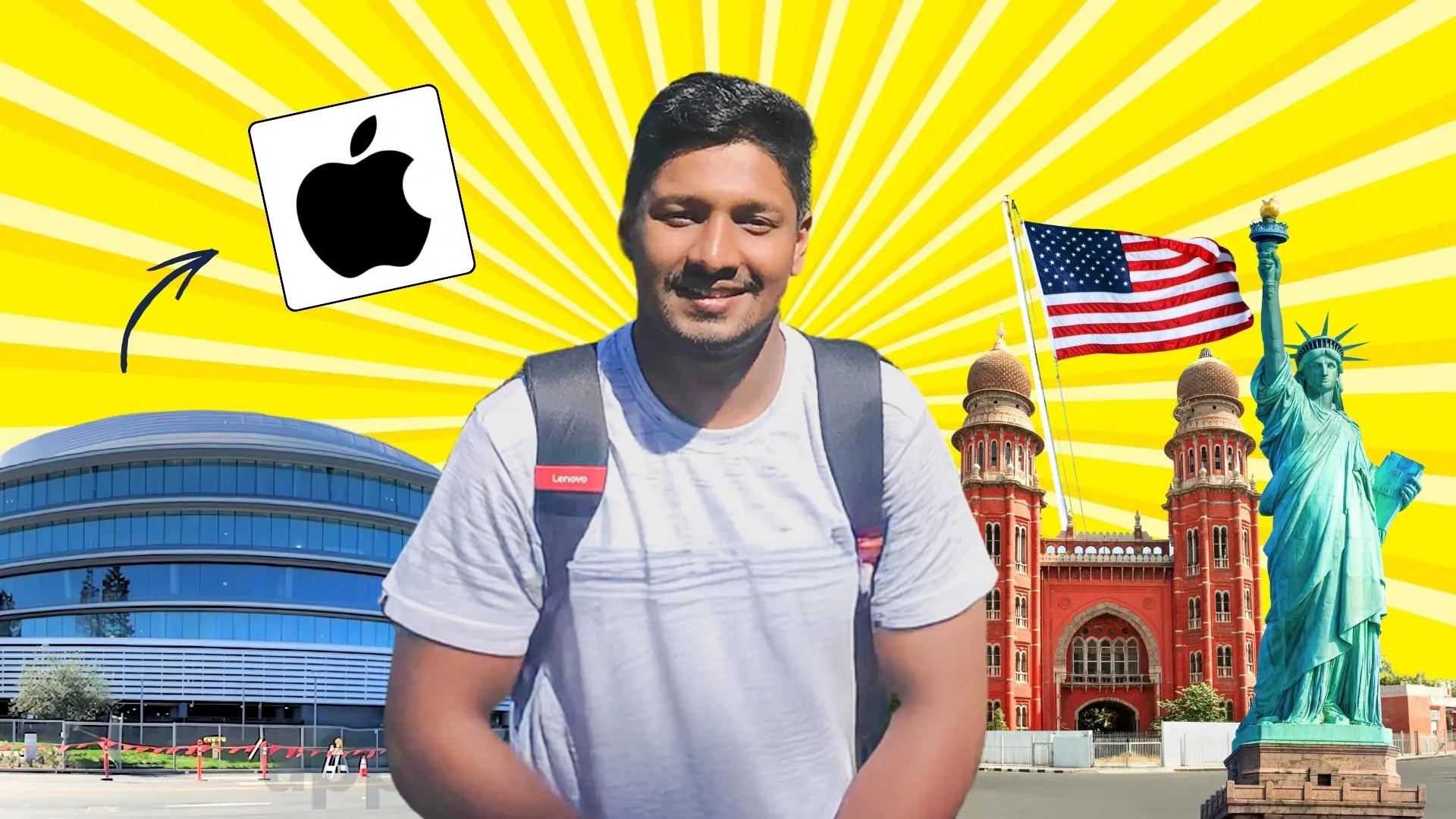
I am Niyas Attasseri . I did my master’s in Electrical Engineering with a specialization in Intelligent Systems and Robotics from UC San Diego. Currently, I am working at Apple as a Software Quality Engineer. I spoke with Leap about my journey for their student expert series—Indians who had studied abroad recently and are still in that country pursuing their dreams— to assist others who wish to follow a similar career path.
Q. Tell us about your background
I completed my undergraduate degree from IIT Madras in chemical engineering. And then I worked for two years in manufacturing since it was relevant to my undergrad. That's when I realized I wanted to get a little more technical with my work. I was only doing managerial work till that point. So I worked on a research project that was aligned towards robotics, and then I got the idea that going for a master's could help me grow in my career.
Q. Why did you pick the US for your master’s?
I was quite specific about wanting to pursue my master’s in the US because, from what I had observed and understood, the opportunities available in the US, especially in my field, far exceeded those in other regions like Europe. While Europe was something I considered, when it came to the sheer volume and diversity of opportunities, particularly in robotics and related areas, the US had an edge.
For instance, the earning potential in the US, especially in the tech sector, is significantly higher than in India. Even after years of working in India, there’s often a ceiling to how much one can earn, and that gap was a serious consideration for me. Secondly, when it comes to robotics, India is still in the early stages of development. Much of the work here is focused on deployment or refining existing open-source tools, while the actual core development, research, and innovation in robotics are largely centered in the US.

Q. Tell us about your student life.
Yeah! Student life in the US was quite a shift from what I experienced during my undergrad in India. One of the biggest differences is the independence. You’re away from your family, and suddenly, everything becomes your responsibility. For example, eating out all the time isn't financially viable here, so you end up learning to cook. Back in India, food was affordable and accessible, either outside or via delivery, but here it’s just not sustainable on a student budget.
Another challenge is transportation. Unlike India, where public transport is cheap and efficient, it’s much harder to get around in the US without a car. Public transport is often limited, and alternatives like Uber are expensive. So, everything takes more time and planning. That’s why time management becomes crucial. If you can plan your day, meal prep, travel time, and coursework, you can make it work. Otherwise, it quickly becomes overwhelming.
Q. Can you give us a breakdown of your expenses and how you financed it?
My tuition was about $33,000 a year (roughly ₹27–28 lakhs), split across three academic quarters since UC San Diego follows a quarterly system.
For housing, I stayed in on-campus graduate housing, which is slightly more affordable, especially in California. I shared a room with a friend, so my rent was about $600 per month (₹50,000), totaling around $7,200 (₹6 lakhs) annually. Add another $200–$300 (₹16,000–₹25,000) per month for groceries, utilities, and other bills, and my total living expenses came to roughly $10,000–$12,000 a year (₹8–10 lakhs).
In terms of financing, I initially took a loan to cover the full cost, tuition, and living expenses, because relying on getting a TA or GSR position from the start isn’t guaranteed. These roles depend heavily on departmental availability and faculty decisions. Fortunately, I was able to secure TA positions for 3 out of the 5 quarters I studied. For those quarters, 50% of my tuition was waived, which helped cut down my loan burden quite a bit.
TAships also came with a stipend. I started with about $1,600 (₹1.3 lakhs) per month and later received up to $2,000 (₹1.65 lakhs). Since my living costs were around $1,000/month, I was able to save a good amount during those periods. I also did a paid internship for about 3–4 months, and the income from that helped me pay off nearly one and a quarter quarters of tuition. All of this together significantly reduced the loan I initially took from a local Indian bank.
Q. How did you land your job? Any strategy that worked for you?
In contrast with India, the US does not have a campus placement system. The process is mostly self-driven. You need to identify roles that sponsor international students, align with your background, and just keep applying. The acceptance rate is super low, you might apply to 100–200 companies and hear back from just one. That was the case for me, too. Between August and December, I got only one interview call, and that ended up being the offer I converted. When you get an interview, you have to give it your 100%, because you might not get another shot soon.
What worked for me was targeting roles that were perfectly aligned with my experience. I wasn’t just looking for a loose match. I wanted my resume to mirror the job description. For example, when I applied to Apple, every requirement listed in the role was something I had already done in my internship. That made it easier for the hiring manager to see me as a strong fit.

Q. Do you have any final thoughts about your master’s journey?
When you come inside, you should be aware of what you are getting into. You have to be strong when you come in. It's not that you cannot do it. Everyone can do it. Everyone does it. But you need to understand that it's not an easy process. And as long as you understand that and you're ready to take it.
Users also read

From HR in India to Quant Analyst in New York: How Carnegie Mellon Helped Tapasya Reinvent Her Career

Leap Scholar Review: A Rejection First, Then Eight Offers Out of Eleven Applications

Leap Scholar Review: A Coffee Conversation That Turned Into an MBA at Liverpool