Blogs
Blogs  Leap Digest
  Events
  About Us
 Student Reviews
From India to Adobe: Aditi’s Journey Building AI Search in California Ask ChatGPT
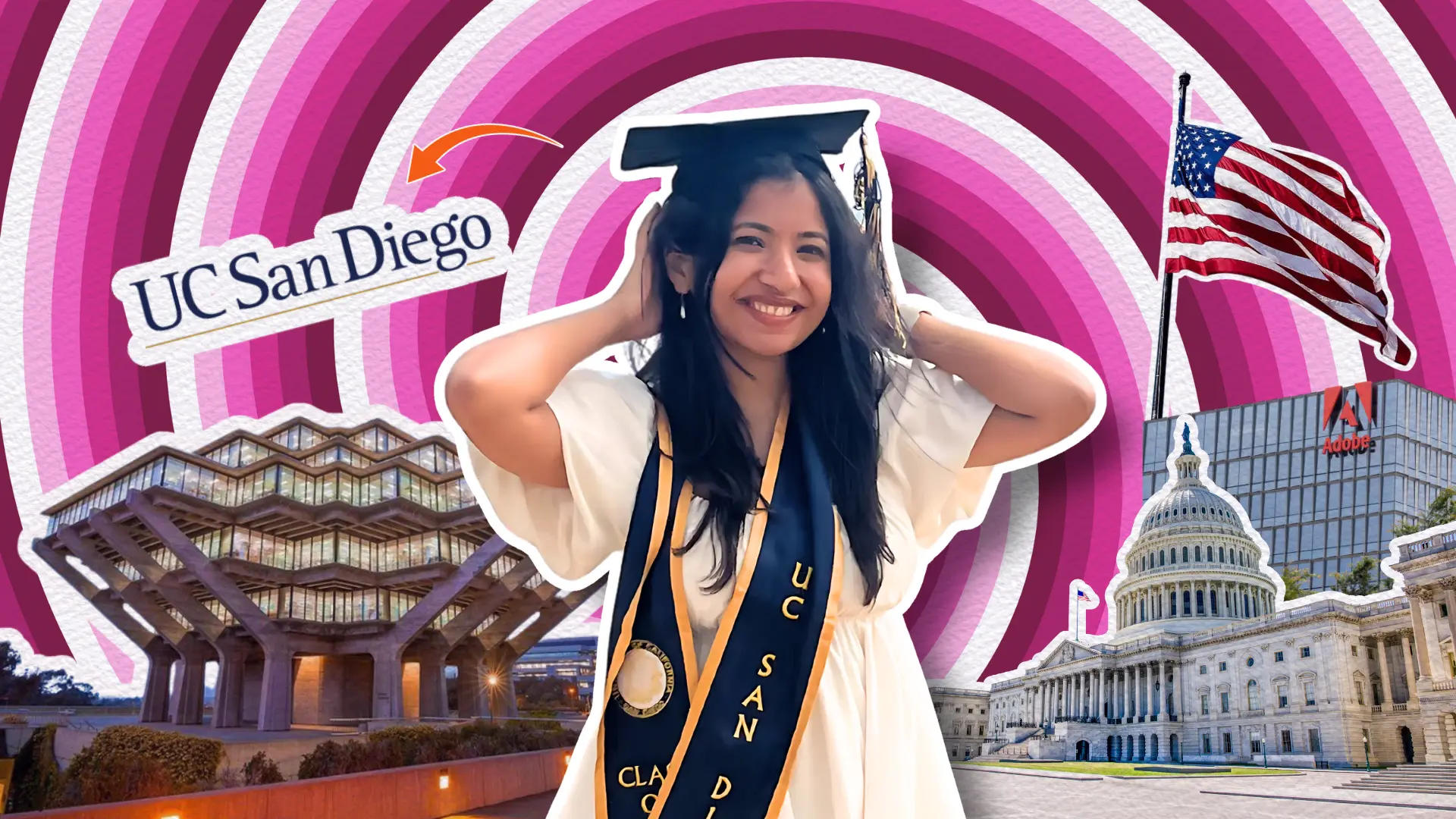
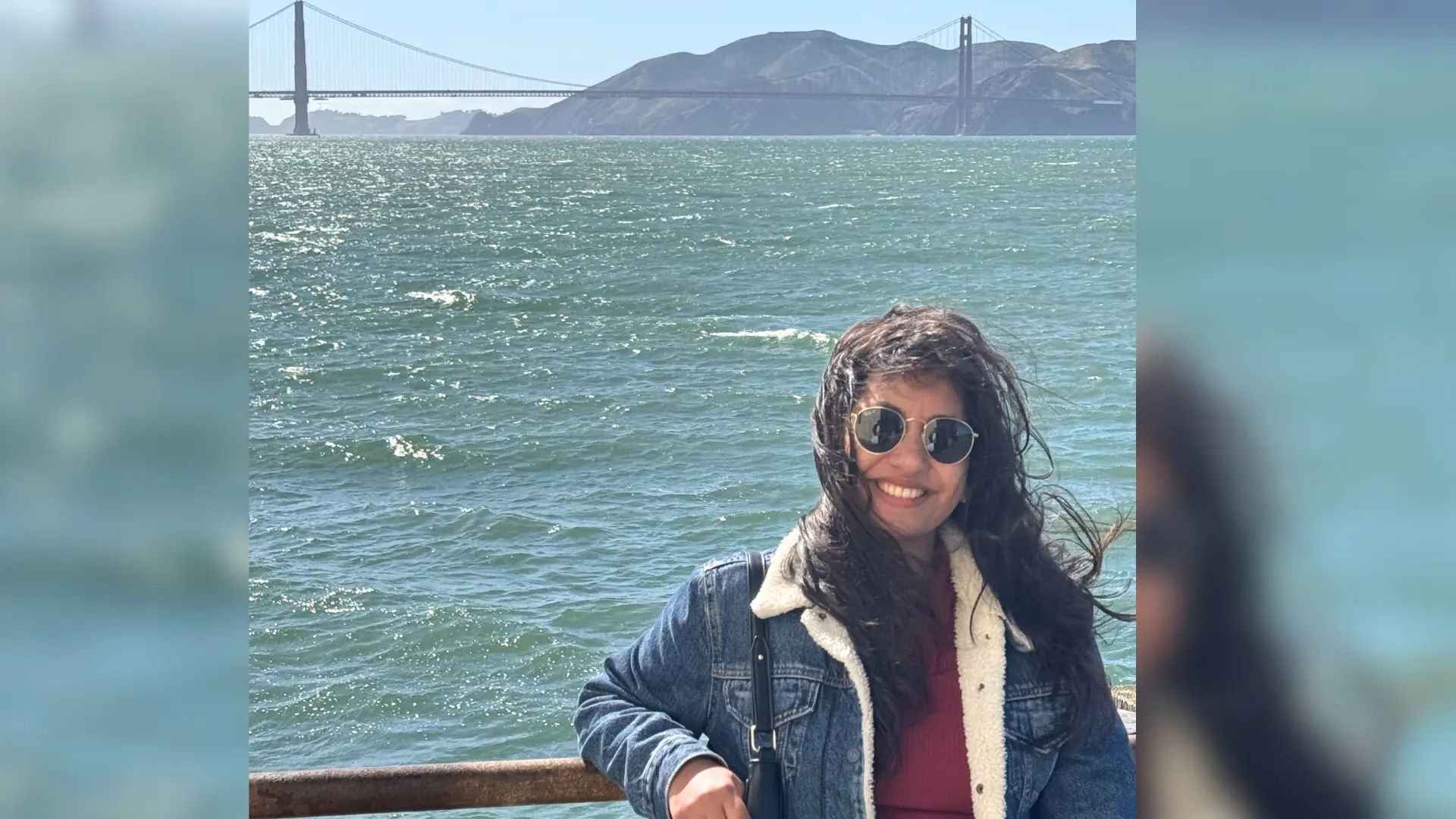
Aditi Agarwal is a software engineer currently based in California, working as a software engineer II at Adobe. Aditi completed her Master’s in Computer Science at UC San Diego and holds a Bachelor’s degree in Computer Science from BITS Pilani. Leap sat down with Aditi to talk about her journey from studying in India to pursuing her MS in the US and landing a role in Silicon Valley.
Q. Tell us about your background.
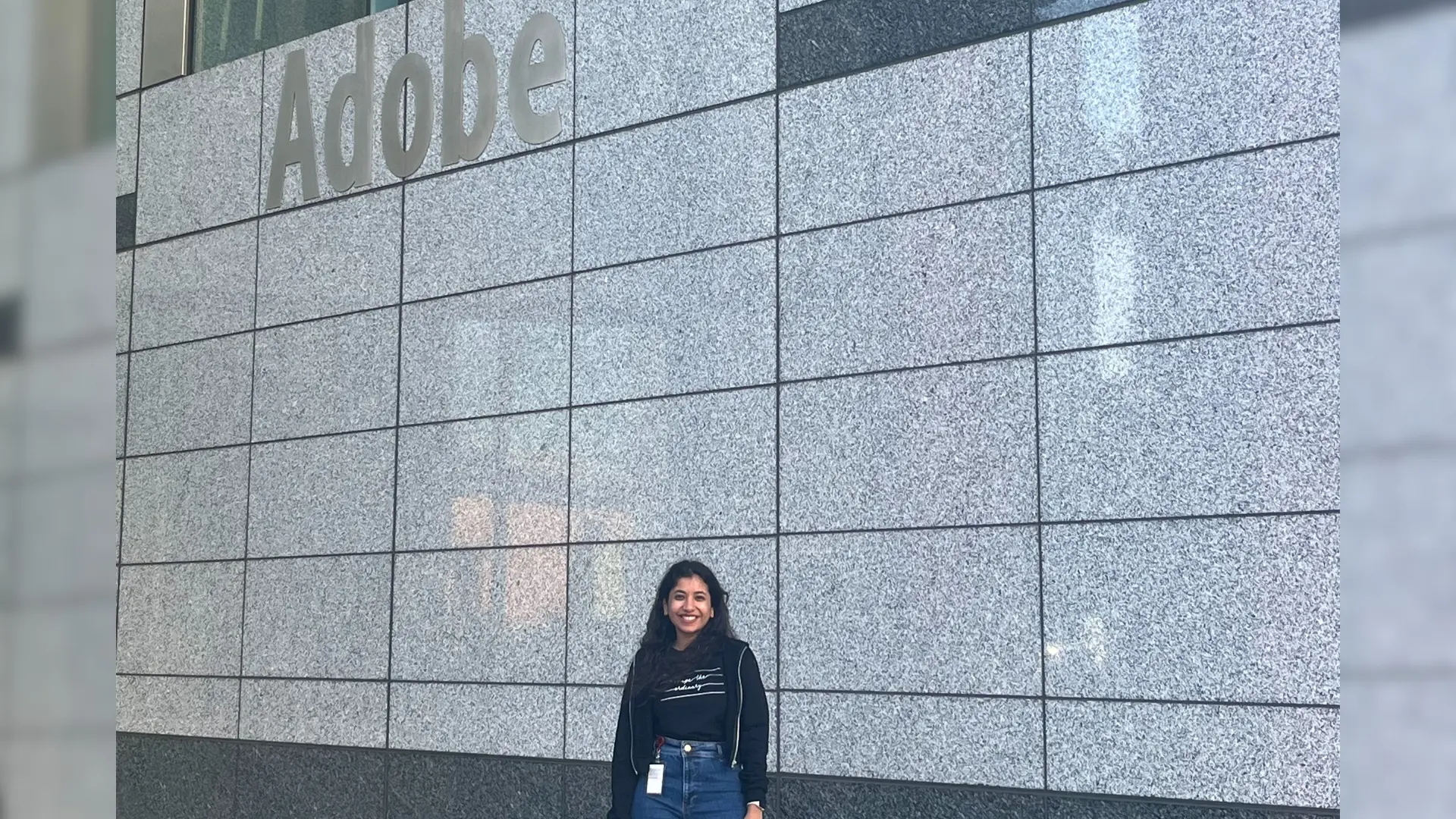
I’m originally from Jaipur, India, a city where moving abroad isn’t always seen as the most conventional path. After my undergraduation, I worked at Microsoft India for a couple of years before moving to the United States to pursue my master’s at the University of California, San Diego (UCSD), specializing in Artificial Intelligence and Machine Learning. Following my master’s, I joined Adobe, where I work on search and recommendation systems across various Adobe products. I work on the Search and Recommendations team at Adobe. Our goal is to unify the search experience across different Adobe products like Photoshop, Lightroom, Creative Cloud, and Acrobat.
Q. Why did you want to go abroad and Why the US?
When I started working at Microsoft, I noticed a significant gap between the kind of work and decision-making happening in India versus at the headquarters in the US. Although that gap is narrowing over time, as a tech enthusiast I wanted to be where the most innovation was happening, and where strategic decisions were being made.
My main goal was to pivot into Artificial Intelligence and Machine Learning. While I’d been exposed to these fields during my undergraduate studies, I hadn’t pursued them full time. I wanted the chance to work on more research-oriented projects and deepen my expertise. When I compared programs across different countries, including the US and the UK. I found that the US offered better post-graduation job opportunities and a richer research ecosystem, with leading universities and faculty in AI and ML.
Q. How did you pick your university? Any tips? .
I can speak best from the MS (Master of Science) perspective. I had an inkling during undergrad that I might want to study machine learning further, so I made sure to talk to a few professors before graduating and worked on some projects with them. That helped me secure strong recommendation letters.
For the SOP, I gave myself at least two months. I spent a lot of time thinking it through and went through four to five rounds of reviewing and editing. My reviewers were mostly my peers who were also applying, as well as seniors from college who were already at various universities. You have to think about what you want to study, what kind of research you want to do, and even where you want to live. I don’t think there’s a “best” school for everyone. For example, my university (UCSD) is excellent for computer vision. If you’re into NLP, you might look at places like the University of Pennsylvania or the University of Washington. In my experience, admissions aren’t a simple formula where the highest GPA or most famous company on your resume automatically gets you in.
Q. How was your student life in the US like?
Of course, moving to a new country brings a lot of changes, both culturally and academically. One of the biggest shifts was learning to manage everything independently. Alongside a heavy academic load, you’re responsible for cooking, cleaning, maintaining your home, managing your studies, and even keeping up with your fitness.
Academically, focus moved away from simply earning good grades to actually completing meaningful projects and developing real skills. The curriculum here is designed to prioritise how much you truly learn in a five- or six-month course. I also noticed that many students here are very passionate about their field of study. Beyond classes, they engage in side projects, Kaggle competitions, and hackathons. While that kind of initiative definitely exists in India too, it was inspiring to see such a strong culture of continuous, self-driven learning here.
Q. How did you land your job at Adobe?
I started my master’s in 2022, and as soon as I arrived, I had to begin looking for internships. One big shift from India to the US was that there’s no concept of campus placements. The entire job hunt is your own responsibility. I began applying to a lot of places, and I also leveraged my network in India to get referrals for open roles. One of those referrals led to an interview opportunity.
While people often say there are no “placement cells” in the US, universities do have career fairs. I’ve noticed many students underestimate these, assuming they only attract small companies or aren’t worth the time. But in reality, companies at career fairs are often very interested in hiring, and especially in today’s economy, you should take advantage of every opportunity.
That’s how I got my interview with Adobe. I interviewed with four different teams, then was able to prioritise my preferences, and ultimately joined my current team as an intern in the summer of 2023. The internship went well, and I received my full-time offer from that experience.
Q. What advice would you give to fresh graduates looking for jobs in the US?
My biggest piece of advice is that there really is strength in numbers. So applying a lot and getting rejected can be tough at first, but you have to get used to it. At the same time, while you should apply broadly, make sure you focus extra effort on the roles that are truly well-suited to your experience. When you’re writing your statement of interest or tailoring your resume, think carefully about how your past work connects with what they’re looking for. These are the things that catch a recruiter’s attention.
Remember that the first round of filtering is typically done by recruiters, not highly technical team members. So the way you position your experience matters a lot. Use the right keywords on your LinkedIn and resume, and show clearly how your background aligns with the role. That’s what will get you through that initial screen.
Users also read

From a Small City in India to Bavaria: How Arjun Patil Built a Career and an MBA Sponsorship in Germany
Leap Scholar Review: My Father Wanted Me in the Family Business. I Chose a Masters in the UK Instead.
Leap Scholar Review: Going Back to School After Fifteen Years in the Industry