Blogs
Blogs  Leap Digest
  Events
  About Us
 Trending News
Germany’s Tech Sector is Aggressively Hiring Indian Graduates: Here’s How to Get In
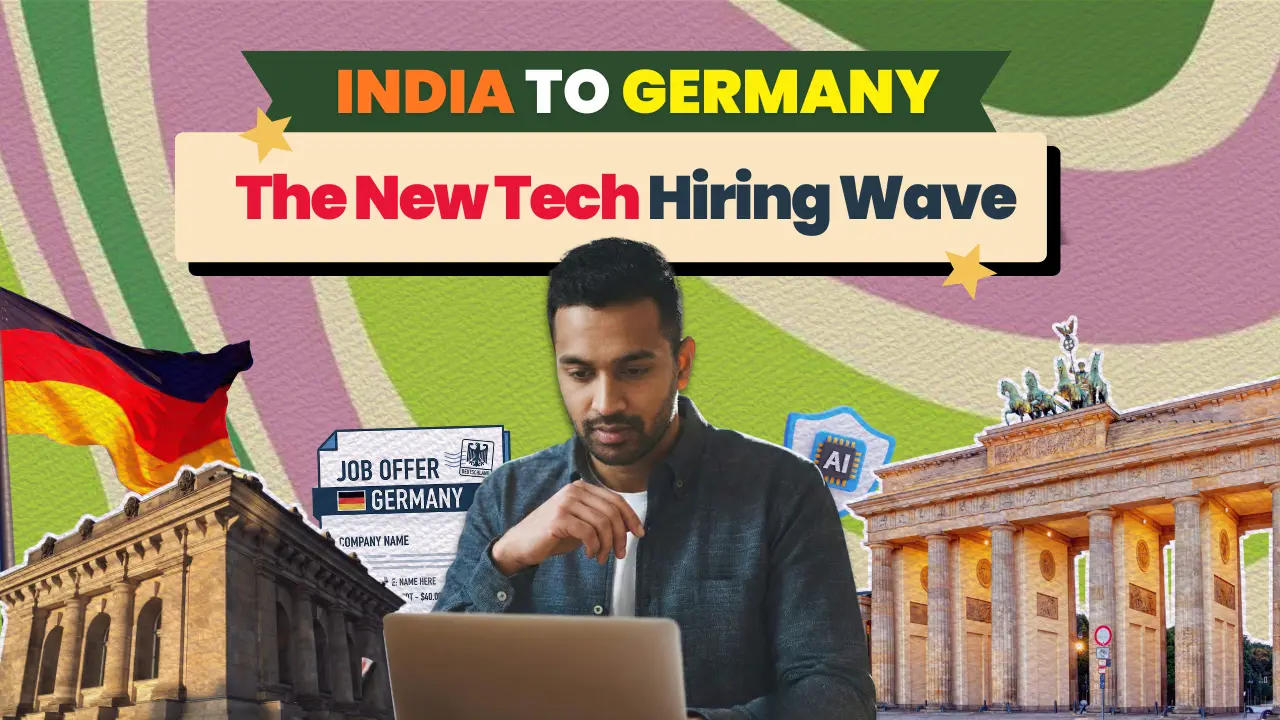
Forget the green card backlog and the high tuition fees in the US. Right now, there is one country offering Indian tech professionals a zero-tuition education, an immediate work visa, and a guaranteed PR path in under two years. That country is Germany. The country has opened its doors for Indian tech professionals, and this time, it's not just about filling roles; it's about actively building careers for a generation that's ready to move. If your LinkedIn feed has been flooded with announcements from batchmates landing in Berlin or Munich, here's what's really going on: Germany is in the middle of a tech talent crisis, and they've turned to India as their primary solution.
Why Germany Needs You Right Now!
Germany's tech industry is facing a shortage of over 137,000 IT professionals. The problem isn't temporary, it's structural. The country has an ageing population, and there simply aren't enough young German graduates entering STEM fields to replace the retiring workforce. Meanwhile, Indian engineers have built a global reputation for technical excellence, problem-solving abilities, and adaptability in multicultural environments.
This isn't a one-sided benefit either. Germany and India formalized their partnership through the Skilled Worker Strategy for India in October 2024, creating smoother recruitment pathways specifically targeting Indian talent across manufacturing, healthcare, and advanced technologies.
As Roland Bleinroth, President & CEO of Messe Stuttgart Global, put it: "We have a scenario where India has a well-trained, young and eager population, and Germany has a need for exactly that profile... that makes this collaboration so promising, and makes it a win-win situation for both sides".
The Opportunity Card: Your Entry Without a Job Offer
The game-changer for Indian graduates is the Chancenkarte (Opportunity Card), which allows you to move to Germany and search for work for up to one year without needing a job offer in hand. This is massive.
This visa operates on a points-based system. You need 6 points to qualify based on factors like education, language skills (English B2 or German A1), and age (under 35 gets you more points).
While on this visa, you can work part-time up to 20 hours per week, which covers your living expenses while you attend interviews for full-time engineering roles. You'll need to show proof of funds for 12 months, which is currently €12,324 (based on the required monthly rate of €1,027 for this specific visa type) in a blocked account or have a part-time job contract to prove financial stability.
The EU Blue Card Just Got Easier
For 2025, the EU Blue Card salary threshold for IT specialists and new entrants (graduated within the last three years) has dropped to €43,759.80 annually.
Even better:
- Experience over Degree: If you have three years of proven IT experience within the last seven years, you can now qualify for the Blue Card without a university degree.
- New Graduates: This opens doors for self-taught developers, bootcamp graduates, and career switchers who've built their skills through real-world projects. Recent graduates from foreign universities (within the last three years) can also qualify for the EU Blue Card at the reduced salary threshold of €43,759.80, regardless of occupation, as long as the job aligns with their qualifications.
What Jobs Are Waiting (and What They Pay)
German tech salaries are competitive, and they come with perks like 30 days of vacation, strong work-life balance, and public healthcare.
Role | Entry-Level Salary (Gross Annual) | Mid-Senior Level Salary (Gross Annual) |
Software Developer | €48,000–€56,000 | €65,000–€85,000 |
Data Scientist | €50,000–€60,000 | €70,000–€90,000 |
IT Security/DevOps | €55,000+ | Up to €100,000 |
Berlin, Munich, and Hamburg are the hottest hubs for tech jobs. Berlin alone hosts nearly one in every five German startups and had almost 8,000 English-speaking open positions in 2022. Companies like SAP, Zalando, Siemens, N26, HelloFresh, and Kayak operate largely in English, making the "I don't speak German" excuse less relevant than ever.
The "German Language" Question
Let's be real: Do you need fluent German to work in tech? For most startup and multinational roles in Berlin, the answer is no.
However, learning basic German (A1 or A2 level) shows recruiters you're serious about integrating into German society and improves your daily life significantly. It's also the difference between getting your Permanent Residency in 21 months (with B1 German) and 27 months with A1.
But don't let language anxiety stop you from applying. Your Python, Java, or cloud engineering skills are what companies are desperate for right now.
The Student Route: Smartest Long-Term Play
If you're not ready to jump directly into job applications, the Master's degree route is arguably the safest bet. Over 400 public universities in Germany offer tuition-free education to international students, including Indians. Yes, you read that right, free tuition. You'll only pay a semester contribution of around €200-€350 for administration and public transport.
- Top universities: Technical University of Munich (TUM), RWTH Aachen, Ludwig Maximilian University of Munich (LMU), Heidelberg University, and University of Stuttgart offer globally recognized degrees in engineering, computer science, and business, all with no tuition fees.
- Job Seeker Visa: While studying, you can work 20 hours per week to cover living expenses. After graduation, you get an 18-month job seeker visa to work in Germany.
- PR Path: Once you land a job earning above €43,759.80, you switch to the EU Blue Card and are on the path to permanent residency within 21-33 months.
Germany vs. USA vs. UK: The ROI Reality Check
If you're comparing destinations, Germany offers stability and accessibility that the US and UK currently struggle to match.
Feature | Germany | USA | UK |
| Public University Tuition | Free / Near-Zero | $30,000–$60,000+ | £15,000–£30,000+ |
| Job Search Visa (Post-Grad/Direct) | Chancenkarte (1 Year) Job Seeker (18 Months) | None equivalent (OPT is job-linked) | None equivalent |
| Permanent Residency | 21–27 months (with Blue Card) | Decades (due to Green Card backlogs) | 5+ years |
The 90,000 Work Visas India Connection
Germany isn't just opening doors, it's rolling out the red carpet. Reports indicate Germany plans to issue 90,000 work visas specifically for Indian professionals in 2025. This massive push targets IT, healthcare, and engineering sectors, reflecting how critical Indian talent has become to Germany's economic strategy. The country faces over 570,000 unfilled positions, and India is seen as the key to bridging that gap.
Your Move: Don't Wait for the Market to Saturate
This is a golden window. Polish your LinkedIn profile. Research the Chancenkarte requirements. Start learning basic German on Duolingo. Look into tuition-free Master's programs if you want a structured pathway. Apply for jobs at English-speaking startups in Berlin, Munich, or Hamburg.
The skills gap is real, the visa policies have been reformed to welcome you, and the timeline to permanent residency is one of the fastest in Europe.
You have the skills Germany needs; now you just need the confidence to take the leap.

Kirti Singhal
Kirti is an experienced content writer with 4 years in the study abroad industry, dedicated to helping students navigate their journey to international education. With a deep understanding of global education systems and the application process, Kirti creates informative and inspiring content that empowers students to achieve their dreams of studying abroad.
Users also read

Vietnam Steps Into the Global Academic Spotlight at APAIE 2026: And Indian Students Should Pay Attention
Vietnam Steps Into the Global Academic Spotlight at APAIE 2026: And Indian Students Should Pay Attention

Indian Passport Fees Rise From July 1, 2026. Here Is What It Means If You Plan to Study Abroad.