Blogs
Blogs  Leap Digest
  Events
  About Us
 Trending News
Canada's Open Work Permit Rules for Indian Student Families in 2026
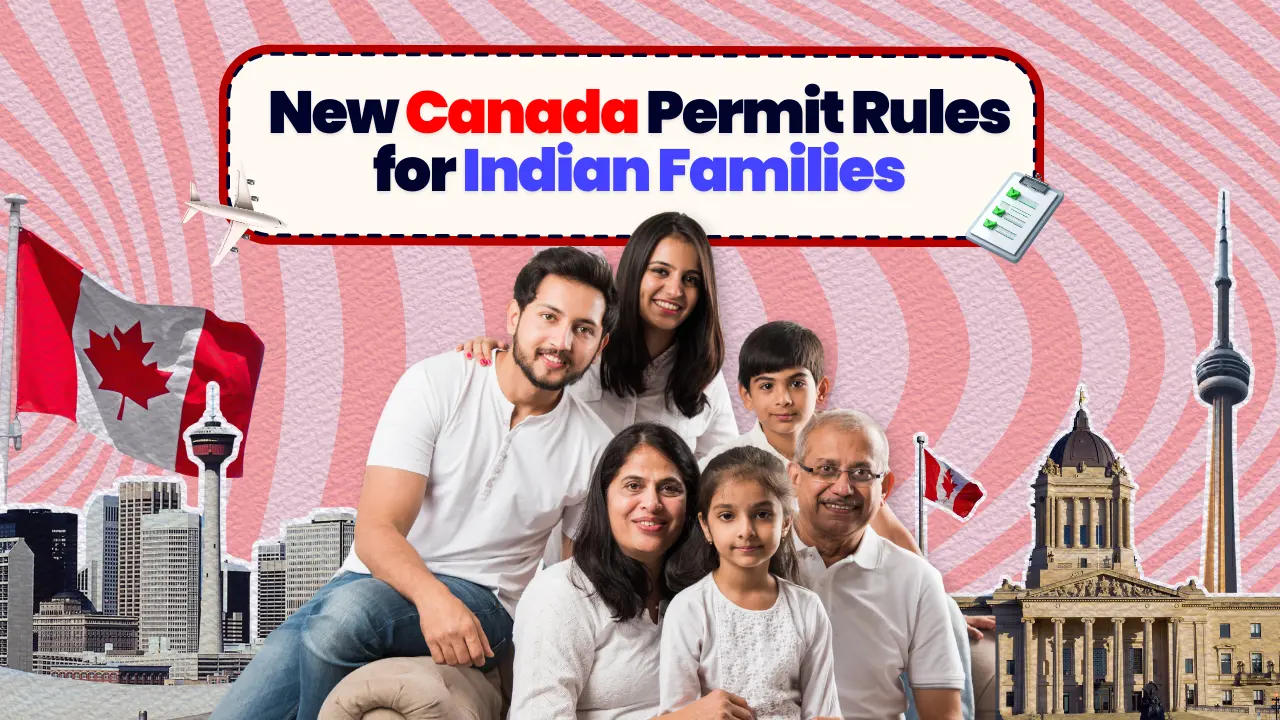
Canada has always been attractive for student families because of one major benefit: the Spousal Open Work Permit. Your partner could work full-time while you studied, making the financial equation manageable. Two incomes. One dream.
That changed in early 2025.
Immigration, Refugees and Citizenship Canada introduced new regulations that fundamentally altered who can bring working spouses to Canada. These aren't minor adjustments- they're substantial restrictions that will affect how you plan your Canadian education in 2026 and beyond.
The opportunity for quality education and eventual permanent residency still exists. But you need to understand exactly what changed and how to plan around it.
What Changed on January 21, 2025
The most critical change: Spousal Open Work Permits are no longer automatic for most students. If you're planning an undergraduate degree or college diploma for 2026 intake, your spouse cannot work in Canada anymore. Period.
The Canadian government made this shift to manage the volume of temporary residents and focus on attracting students in advanced academic programs- those most likely to contribute specialized skills to the economy.
Only spouses of students enrolled in Master's degrees (16 months or longer), Doctoral programs, or certain professional degrees now qualify for work permits. Additionally, you need to prove significantly higher financial resources. We're talking upwards of CAD 22,895 (approximately ₹14 lakh) for a single person, scaling up substantially for each family member.
For couples planning to build a life in Canada together, this means one clear requirement: the principal applicant must target a Master's or PhD program to secure work authorization for their partner.
Who Can Still Bring a Working Spouse in 2026
The new rules create a clear hierarchy based on your study level. Your spouse or common-law partner remains eligible for an Open Work Permit if you're enrolled full-time in:
Master's Programs (16+ Months)
This is now the primary pathway for Indian graduates wanting to bring their spouse. Programs must be at least 16 months long. Anything shorter doesn't qualify. This balances reasonable study duration with family migration benefits.
Doctoral Programs (Any Duration)
If you're pursuing a PhD, your spouse can work without restrictions. No minimum duration requirement.
Certain Professional Degrees
These still qualify:
- Doctor of Medicine (MD)
- Doctor of Dental Surgery (DDS)
- Bachelor of Law or Juris Doctor (LLB/JD)
- Certain Pharmacy degrees (PharmD)
These are regulated professions that Canada actively needs, so they get special treatment.
Who Lost Eligibility Completely
This is the difficult part. Spouses of students in these programs are no longer eligible for work permits:
Most Bachelor's Degrees: This is a massive shift. Undergraduate programs were previously the most popular choice for Indian students. Not anymore.
College Diplomas and Certificates: No longer qualify, regardless of duration or institution.
Short-Term Programs: Language courses, certificate programs under 16 months, programs at private career colleges—none of these allow spousal work permits.
The dual-income strategy was essential for managing Canada's high cost of living. That option is now gone unless you're pursuing postgraduate education. If family migration matters to you, your academic planning must center on Master's or PhD programs.
The Financial Requirements Nearly Doubled
Beyond program eligibility, Canada sharply increased the funds you must prove you have. The required amount for living expenses nearly doubled to CAD 20,635 in 2024, and continues increasing for 2026 applicants.
When you bring family members, these numbers multiply significantly:
Family Size | Required Funds (CAD) | Approximate INR |
| Just you | CAD 22,895 | ₹14 lakh |
| You + Spouse | CAD 28,502 | ₹17.4 lakh |
| You + Spouse + 1 Child | CAD 35,040 | ₹21.4 lakh |
| You + Spouse + 2 Children | CAD 42,543 | ₹26 lakh |
Critical point: These figures are for living expenses only. You must demonstrate these amounts on top of your first-year tuition fees and transportation costs. This is a substantial financial commitment requiring serious preparation.
What Happens with Your Children
If you have kids, the news is relatively better here.
Minor children accompanying a parent with a valid study or work permit can attend primary and secondary school in Canada without needing their own study permit.
However: Some school districts charge international student tuition fees depending on the province and local regulations. It's not automatic free schooling everywhere. Research your specific destination city before assuming free education for your children.
Your Strategic Plan for 2026 Applications
Here's how to navigate these new rules successfully:
Target the Right Program
If you're married or in a common-law partnership, prioritize Master's degrees that run 16 months or longer, or Doctoral programs. This is non-negotiable if you want your partner to work legally.
Verify program duration with your university before applying. Some Master's programs are only 12-14 months, which won't qualify. You need 16+ months minimum.
Prepare Financial Documentation Early
With doubled financial requirements, you cannot leave this to the last minute. Start gathering:
- Guaranteed Investment Certificates (GICs)
- Bank statements showing consistent funds over 4-6 months
- Education loan approval letters with disbursement schedules
- Fixed deposit statements
- Sponsor affidavits if parents are funding your education
The clearer and more comprehensive your financial documentation, the stronger your visa application.
Demonstrate Relationship Genuineness
Your spouse's work permit application requires robust proof of your marriage or common-law partnership. Gather:
- Marriage certificates (with official translations if needed)
- Joint bank account statements
- Shared utility bills or rental agreements
- Photographs together over time showing relationship progression
- Communication records (emails, messages) if you were in a long-distance relationship
- Affidavits from family members confirming your relationship
Immigration officers scrutinize relationships carefully. Weak documentation leads to rejections.
Think Long-Term About Permanent Residency
Here's where the strategy pays off: a Spousal Open Work Permit allows your partner to gain Canadian work experience, which is valuable for your eventual Express Entry or Provincial Nominee Program application.
Canadian work experience significantly boosts your Comprehensive Ranking System (CRS) score. Even under these stricter rules, building a joint Canadian employment profile together remains a massive advantage for permanent residency.
The Real Calculation: Is Canada Still Worth It in 2026?
These policy changes signal Canada's intent to be selective. They want students in advanced programs who will successfully transition into permanent residency and contribute specialized skills to the economy.
It's a tougher bar to clear financially and academically. But the destination remains worthwhile if you qualify.
If you're pursuing a Bachelor's degree: Canada is now significantly less attractive if you're married and need dual incomes. Consider other destinations or plan to study independently while your spouse works in India.
If you're targeting a Master's or PhD: Canada remains viable. The pathway exists, but requires more financial preparation and strategic program selection.
By focusing your application on a qualifying Master's program (16+ months) and preparing comprehensive financial documentation, you can navigate these changes successfully. The path to building a Canadian life for your entire family is still open—it just requires substantially more planning than before.
What You Need to Do Next for 2026 Intake
Get personalized guidance with Leap Scholar. We'll help you:
- Identify Canadian Master's programs (16+ months) that qualify for spousal work permits
- Calculate exact financial requirements for your family size
- Prepare comprehensive financial documentation that meets immigration standards
- Build a complete application strategy including relationship proof and long-term PR planning
Start your preparation now. With higher financial thresholds and stricter eligibility, early planning is essential for success.
Kirti Singhal
Kirti is an experienced content writer with 4 years in the study abroad industry, dedicated to helping students navigate their journey to international education. With a deep understanding of global education systems and the application process, Kirti creates informative and inspiring content that empowers students to achieve their dreams of studying abroad.
Users also read
Vietnam Steps Into the Global Academic Spotlight at APAIE 2026: And Indian Students Should Pay Attention
Vietnam Steps Into the Global Academic Spotlight at APAIE 2026: And Indian Students Should Pay Attention
Indian Passport Fees Rise From July 1, 2026. Here Is What It Means If You Plan to Study Abroad.