Blogs
Blogs  Leap Digest
  Events
  About Us
 Expert Insights
Ireland’s Welcoming Immigration Policies for Indian Students: What Actually Makes It Work
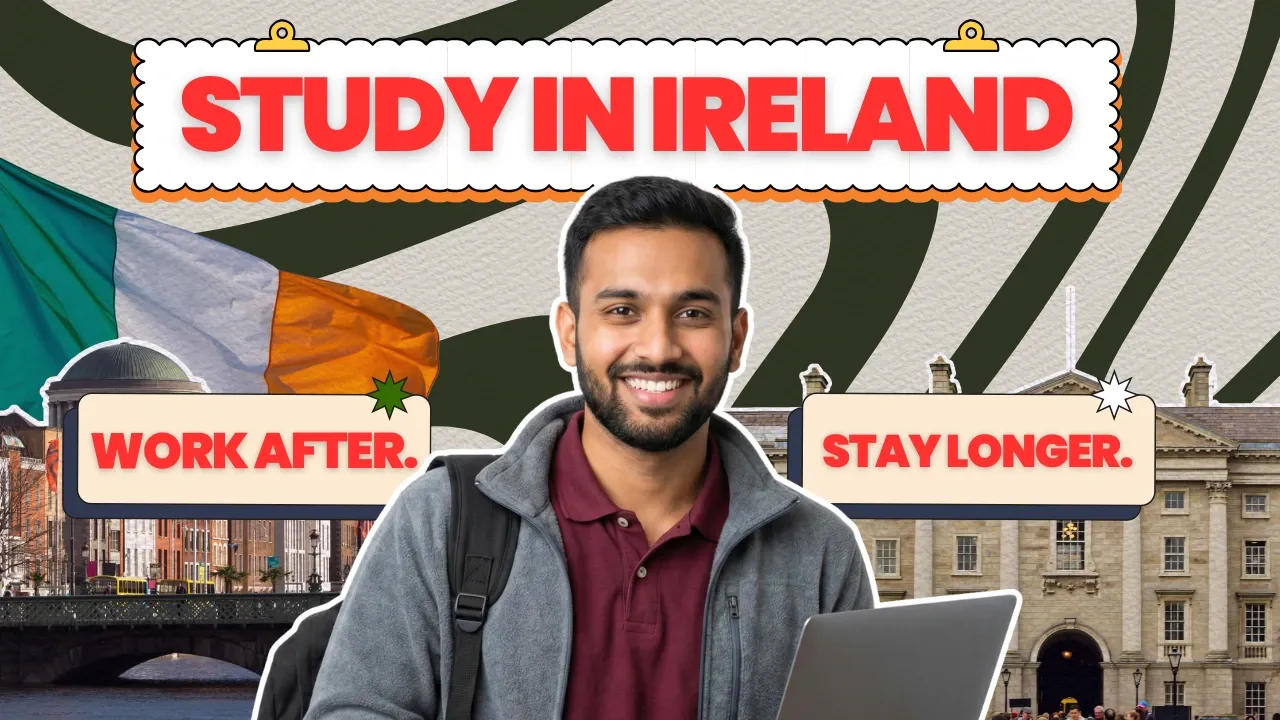
Indian students rarely fail abroad because of academics. They struggle because of immigration rules they don't fully understand. While universities and fees dominate conversations, it is immigration policy that ultimately controls how long you can stay, whether you can work, and if your degree has a future beyond graduation. Getting this right is what separates a successful overseas education from an expensive detour.
Ireland stands out not because it is easy, but because it is predictable. Its student visa system is structured, transparent, and designed with a clear end goal in mind: retaining international talent in critical sectors. For Indian students who want more than just a foreign degree, Ireland’s immigration framework offers something rare: a clear, step-by-step pathway from student status to skilled employment and long-term residence.
This is not about shortcuts or loopholes. It’s about a country that has aligned its education system, labour market, and immigration rules into a single, coherent pipeline.
Here’s what actually makes Ireland’s immigration policies genuinely welcoming for Indian students and why they matter.
Ireland’s Immigration Approach to International Students
Ireland does not treat international students as temporary visitors who must leave immediately after graduation. From a policy perspective, students are seen as future contributors to the economy, particularly in sectors facing long-term skill shortages.
This intent is visible in how student permissions are structured, how post-study work rights are defined, and how smoothly graduates can transition into employment permits. Unlike countries where immigration rules change unpredictably, Ireland’s system prioritises clarity and continuity.
For Indian students, this consistency lowers uncertainty. The visa type is clear. So is how long you can stay after graduation and what options are available once you find employment.
Student Visa Policy for Indian Students
Indian students applying to study in Ireland typically enter on a Long Stay D-Study Visa, which allows them to remain in the country for the duration of their programme.
What works in Ireland’s favour is not leniency, but logic. For students, this reduces uncertainty. If your academic intent, finances, and course relevance are strong, the visa process is straightforward and outcome-driven.
Another advantage is processing predictability. While timelines vary, Indian applicants generally experience fewer last-minute surprises compared to more congested systems like the US or Canada. Once granted, the visa integrates smoothly into Ireland’s immigration registration system (Stamp 2), which governs your rights during study.
What Documents You Need and How Financial Proof Works?
Ireland’s visa documentation requirements are refreshingly direct. There is no excessive paperwork, no ambiguous financial thresholds, and no unrealistic expectations.
Students must show proof of tuition payment, living expenses, academic background, and intent to study. Importantly, the financial requirement is realistic when compared to other English-speaking destinations, making Ireland more accessible without lowering standards.
The clarity here matters. Indian students often struggle not with meeting requirements, but with understanding them. Ireland’s system minimises interpretation and maximises transparency, which significantly reduces visa anxiety.
Work Rights While Studying in Ireland
Ireland allows international students to work part-time during academic sessions and full-time during scheduled holidays. These rights are embedded in the immigration permission itself, not treated as separate approvals.
This matters because part-time work is not just about income. It helps students integrate into the workforce, understand employer expectations, and build early professional exposure in an Irish context.
For Indian students, this early engagement often becomes the bridge to post-study employment, especially in sectors like IT, data analytics, finance, and healthcare.
Post-Study Stay Back: The Third Level Graduate Scheme
This is where Ireland clearly separates itself from many competitors.
Under the Third Level Graduate Scheme, Indian students who complete eligible programmes can remain in Ireland after graduation to seek employment. Bachelor’s graduates receive up to 12 months, while Master’s graduates can stay for up to 24 months.
Crucially, this is not a theoretical permission. Students are legally allowed to work full-time during this period, giving them genuine time to secure skilled employment rather than rushing through unstable job searches.
For many Indian students, this scheme is the difference between an international degree that ends at graduation and one that evolves into a career.
Transitioning from Student Status to Work Permit
Ireland’s immigration system is designed to convert graduates into skilled professionals, not force them to exit and reapply from scratch.
Once a graduate secures a qualifying role, they can transition to employment permits such as the Critical Skills Employment Permit or the General Employment Permit. The Critical Skills route, in particular, is highly attractive due to faster pathways to long-term residence.
This transition is procedural, not discretionary. If you meet the criteria, the system supports your progression. That predictability is what Indian students value most.
Long-Term Residence and Settlement Opportunities
Ireland does not promise instant permanent residency, but it does offer a realistic pathway.
Time spent working under an eligible employment permit contributes toward long-term residence eligibility. After meeting residence and employment conditions, graduates can move toward Stamp 4 permission, which offers greater flexibility and stability.
For Indian students planning long-term global careers, Ireland’s model rewards patience and compliance rather than uncertainty and constant visa churn.
Policies for Spouses and Dependents
Ireland’s dependent policies are structured and conservative, but clear. While student visa holders generally cannot bring dependents during study (except under limited circumstances), employment permit holders, especially Critical Skills permit holders, have more flexibility.
For Indian students planning family timelines carefully, this clarity allows informed decisions rather than unpleasant surprises later in the journey.
How Ireland Compares with Other Popular Destinations
When compared to the UK, Canada, Australia, or the US, Ireland’s immigration system may seem quieter but that’s its strength.
There are fewer sudden policy reversals, fewer contradictory announcements, and less political noise around international students. Ireland’s needs-driven immigration strategy prioritises skills over sentiment, which creates stability for students who plan carefully.
Why These Policies Work Particularly Well for Indian Students
Indian students tend to plan education as a long-term investment, not a short-term experience. Ireland’s immigration framework aligns perfectly with that mindset.
Clear study permissions, legal work rights, structured post-study stay back, and logical employment transitions combine into a system that rewards preparation and competence. For students willing to align their academic choices with Ireland’s skill needs, the immigration pathway is not just welcoming, it's workable.
The Bottom Line
Ireland’s immigration framework works because it is designed with clarity and intent. Indian students are not treated as temporary visitors but as future skilled professionals, with clearly defined rules covering study permissions, work rights, post-study stay-back, and employment transitions. For students who plan ahead and align their education with Ireland’s skill needs, the system rewards preparation with predictability, something increasingly rare in global student migration.
Understanding and navigating this pathway correctly is where many students struggle. LeapScholar counsellors help Indian students map their academic choices to Ireland’s immigration rules, plan post-study work options early, and avoid costly missteps in visa and career planning. If Ireland is part of your long-term study or work plan, getting expert guidance early can make the difference between uncertainty and a smooth transition from student to professional.

Kirti Singhal
Kirti is an experienced content writer with 4 years in the study abroad industry, dedicated to helping students navigate their journey to international education. With a deep understanding of global education systems and the application process, Kirti creates informative and inspiring content that empowers students to achieve their dreams of studying abroad.
Users also read

Top 10 Industries That Create the Most Billionaires in 2026: Guide for Indian Students

Stanford MBA Career Diversity: Industries, Salaries and What Indian Students Need to Know

Anthropic Academy: 16 Free AI Courses With Certificates in 2026 That Indian Students Cannot Afford to Ignore