Blogs
Blogs  Leap Digest
  Events
  About Us
 Expert Insights
10 Impactful Extracurriculars to Supercharge Your Study Abroad Application (2026–2027)
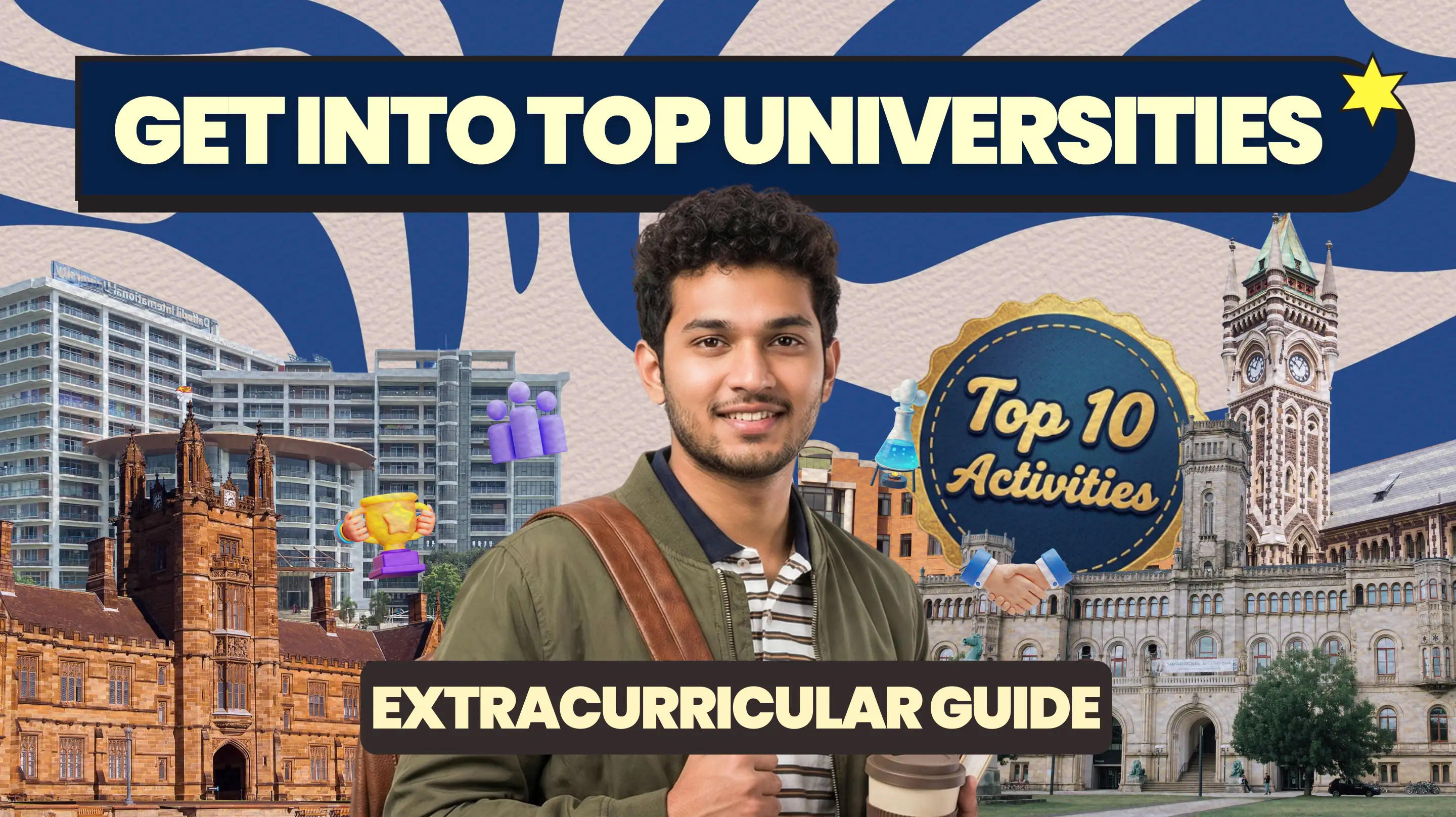
In the high-stakes world of global admissions for 2026, a high GPA is essentially just an entry ticket, it gets you into the stadium, but it doesn't put you on the podium. Admissions officers at top-tier universities are no longer looking for well-rounded students who do a little bit of everything. Instead, they're hunting for angular students: those who have a sharp focus and have made a deep, measurable impact in a specific niche.
As we look toward the 2026–2027 intake, the human element has become the ultimate differentiator. In an era where AI can write an essay or solve a complex equation, universities want to see evidence of empathy, leadership, and curiosity that only a real person can demonstrate.
Top 10 Most Impactful Extracurricular Activities for 2026
Here are the 10 most impactful extracurricular activities that will make your application impossible to ignore, complete with examples of how to demonstrate true impact.
1. The Founder Mindset: Social Entrepreneurship
Admissions officers are captivated by students who don't just join movements but start them. If you see a problem in your local community, be it plastic waste, a lack of digital literacy among seniors, or stray animal welfare, build a solution.
Example: Don't just volunteer at a food bank. Launch a community app that connects local restaurants with excess food to nearby shelters, reducing waste and feeding 50 families a week (approx. ₹42,00,000/$50,000 USD worth of food diverted annually).
That's not just volunteering, that's building a system that works without you.
2. Specialized Research Projects
Intellectual curiosity is the heartbeat of a great application. Engaging in an independent research project shows that you're ready for the rigors of university-level thinking.
Example: Conduct a study on the urban heat island effect in your city using satellite data, and present your findings at a national science fair or submit them to a high school research journal.
You don't need a university lab to do real research, you just need curiosity and persistence.
3. High-Stakes Internships (The Professional Pivot)
Universities love students who have already "test-driven" their future careers. An internship at a tech startup, a law firm, or a local hospital provides a bridge between classroom learning and real-world application.
Example: Instead of just filing papers, work as a marketing intern at a local tech startup, where you manage their social media analytics and help increase engagement by 25% over the summer.
Quantify your impact. "I did marketing" is vague. "I increased engagement by 25%" is specific.
4. Advanced Coding & Hackathons
For STEM aspirants, technical proficiency is a given. What sets you apart is how you use it. Participating in global hackathons or contributing to Open Source projects on GitHub shows that you can collaborate under pressure.
Example: Develop an AI-powered browser extension that detects misinformation in news articles and submit it to a global hackathon, winning a spot in the top 10 finalists.
That browser extension demonstrates both technical skill and social awareness, universities love that combination.
5. Model United Nations (MUN) Leadership
MUN is a classic, but for 2027, the "Delegate" title is no longer enough. You need to aim for leadership. Serving as a Committee Chair or Secretary-General proves that you can navigate complex international diplomacy and manage heated debates.
Example: Serve as the Secretary-General of a regional MUN conference, coordinating logistics for 500+ students from 20 different schools across the country.
Don't just attend MUNs, run them.
6. Creative Thought Leadership (The Digital Portfolio)
Having a "personal brand" is a huge asset. A blog that critiques modern literature or a YouTube channel that explains complex physics concepts shows you're a communicator, not just a student.
Example: Start a YouTube channel dedicated to explaining complex economic theories through pop culture references, gaining 10,000 subscribers by the time you apply.
That subscriber count proves people value what you're saying, it's social proof of your communication skills.
7. Sustainability & Green Advocacy
With global universities prioritizing ESG (Environmental, Social, and Governance) goals, being a climate advocate is a massive win. But you can't just say you care, you need to show results.
Example: Lead a project to install solar-powered charging stations in your school library and calculate the carbon footprint reduction, presenting the data to the school board.
Numbers matter. "I care about the environment" is weak. "I reduced our school's carbon footprint by X tons" is strong.
8. Sports & Athletics (The Discipline Factor)
Being a captain of a sports team or a competitive athlete tells a story of grit. It says you know how to lose, how to win, and how to practice for 500 hours just to improve by one percent. That's the kind of persistence universities want.
Example: As the captain of your school's basketball team, organize a charity tournament that raises ₹2,00,000 (approx. $2,400 USD) for local youth sports programs.
You're combining athletics with community impact, that's the angle that stands out.
9. Cultural & Linguistic Immersion
In a globalized world, being "interculturally competent" is a superpower. Don't just take Spanish classes, actually achieve measurable fluency.
Example: Achieve certified proficiency (e.g., DELE B2 level) in Spanish through intensive self-study and spend a summer volunteering at a community center in Spain.
That B2 certificate is proof. Without it, you're just saying you "know some Spanish."
10. Community Service with a "Legacy"
Instead of "box-ticking" volunteer hours, focus on a legacy project. This is something that will continue even after you leave for your studies abroad. That's sustainability.
Example: Establish a permanent library in a rural school by organizing a book drive that collects 1,000 books and training local teachers on how to maintain the cataloging system.
You're not just donating books and walking away, you're building a system that lasts.
Focusing on Impact: Why Quality Outshines Quantity
Admissions officers in 2026 can spot a "resume-padder" from a mile away. They would much rather see you spend three years dedicated to one NGO than three weeks at five different ones. Your extracurriculars should be the evidence that backs up your claims. If you say you're "passionate about social justice," your activities section should prove it.
Don't do everything, do one thing exceptionally well.
Struggling to figure out which activities fit your profile best? Book a free consultation with a Leap Scholar expert today.

Kirti Singhal
Kirti is an experienced content writer with 4 years in the study abroad industry, dedicated to helping students navigate their journey to international education. With a deep understanding of global education systems and the application process, Kirti creates informative and inspiring content that empowers students to achieve their dreams of studying abroad.
Users also read

Top 10 Industries That Create the Most Billionaires in 2026: Guide for Indian Students
Stanford MBA Career Diversity: Industries, Salaries and What Indian Students Need to Know

Anthropic Academy: 16 Free AI Courses With Certificates in 2026 That Indian Students Cannot Afford to Ignore