Blogs
Blogs  Leap Digest
  Events
  About Us
 Expert Insights
10 Interview Mistakes That Cost You the Job Before You Say a Word
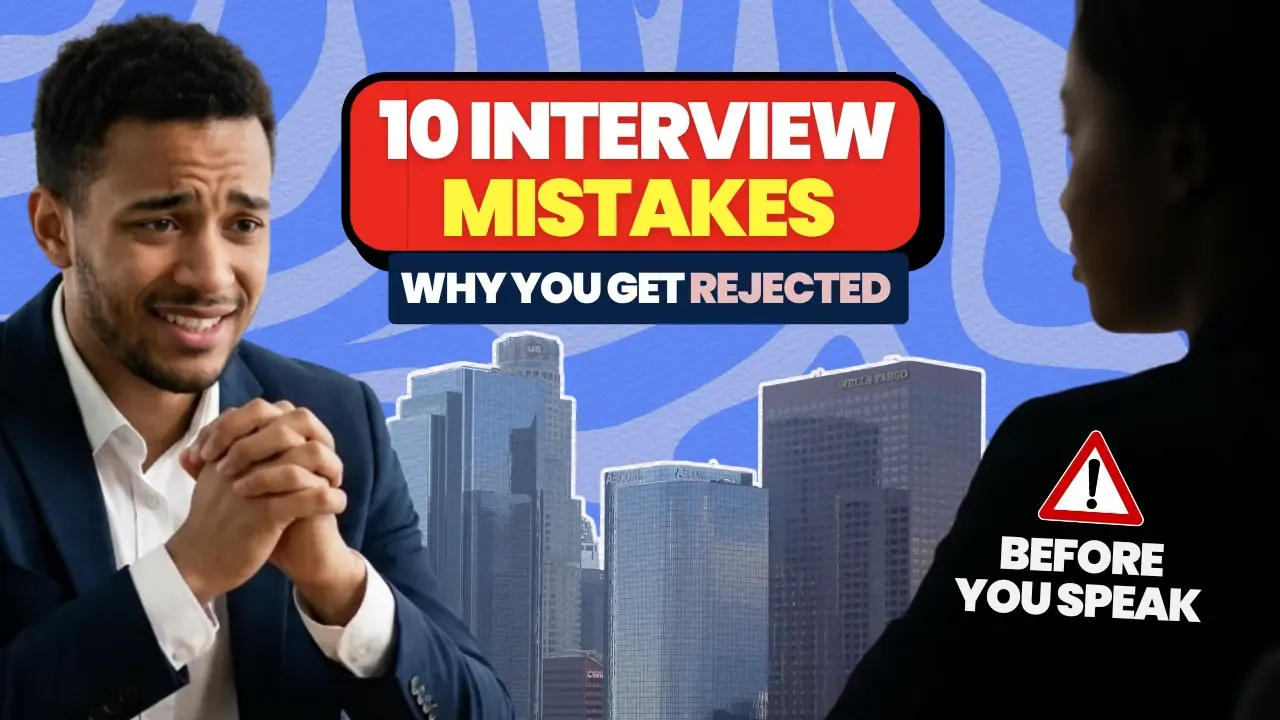
Most interview decisions are made before the candidate finishes answering the first question. Research consistently shows that interviewers form strong impressions within the first few minutes, shaped not by what you say, but by how you walk in, how you greet, and how you sit down.
Here are ten nonverbal and behavioral mistakes that can cost candidates the role before they say anything meaningful, along with suggestions for what to do instead.
1. Thinking the Interview Starts When You Sit Down
It does not.
- How you speak to the receptionist signals how you treat people who are not directly evaluating you
- How you wait in the lobby, calm or anxiously scrolling your phone, is visible to anyone passing through
- In many companies, the hiring manager asks the receptionist: How did they come across when they arrived?
Fix it: Arrive 10 minutes early. Put your phone away the moment you enter the building. Greet everyone warmly. Treat the waiting room as part of the interview, because in most good workplaces, it genuinely is.
2. A Weak or Awkward handshake
In Western professional environments, the handshake is the first physical signal of how you show up. It takes three seconds and is immediately read.
- A limp handshake communicates hesitation
- An overly aggressive grip communicates anxiety trying to compensate
- Odd timing or a grip that ends before it begins sends the same signal: you are not comfortable
Fix it: Firm, brief, confident. Make eye contact during the handshake, not after. Smile naturally and release cleanly. If nerves cause sweaty palms, dry your hands before walking in.
3. Poor Posture and Fidgeting
Your body is talking before your mouth opens.
- Slouching signals disengagement
- Hunching forward signals anxiety
- Tapping the table, clicking a pen, touching your face repeatedly, all signal you cannot manage yourself under pressure
If you cannot control your physical presence in a simple conversation, the interviewer wonders how you will manage yourself in front of a client or in a high-pressure work moment.
Fix it: Sit upright, feet flat, hands resting calmly. Aim for 60 to 70 percent eye contact. A slight forward lean when listening shows genuine interest. Do mock interviews where someone points out your physical habits, not just your verbal answers.
4. Rambling Answers
The candidate begins answering, loses the thread, circles back, adds more context, and arrives somewhere vaguely related to the original question three minutes later.
The problem is not knowledge. It is structure. If an interviewer cannot follow your answer in a simple conversation, they assume they cannot follow your thinking in a team meeting or client presentation.
Fix it: Use the STAR method, Situation, Task, Action, Result. A tight two-minute answer that lands a conclusion beats a thorough five-minute answer that meanders every time. When you find yourself adding qualifier after qualifier, stop and close the point.
5. Over-Rehearsed Energy
Preparation is essential. Memorization is a problem.
Rehearsed answers feel inauthentic, and interviewers are trained to spot them. Hiring is fundamentally a decision about a person someone will work with every day. If everything sounds pre-recorded, the interviewer is watching a performance, not meeting a future colleague.
Fix it: Know your experience well enough to speak about it naturally from different angles. Speak about your time abroad naturally, not as polished bullet points. Your adaptability and cultural intelligence as a study abroad student are real differentiators. Use them.
6. Showing Up Without Researching the Company
Not knowing the company's operations, the role's responsibilities, or recent industry developments clearly conveys a lack of preparation.
- Generic answers that could apply to any company anywhere
- Asking basic questions that two minutes of research would have answered
- Not referencing anything specific about why you want this particular role
Fix it: Research the company website, LinkedIn, and recent news before every interview. Know their competitors and current priorities. Reference specific things in your answers. For international graduates especially, employers want to know you chose them deliberately, not just any company willing to sponsor a visa.
7. Dressing Incorrectly for the Culture
What counts as professional varies significantly between the UK, USA, Australia, and Canada and across industries within each country.
- Overdressing for a startup signals you do not understand the culture
- Underdressing for a corporate role signals poor judgment
- Both create the wrong impression before a single word is spoken
Fix it: Research the company culture before deciding what to wear. LinkedIn, Glassdoor, and the company's own social media show what people actually wear in that office. When unsure, lean one step more formal. The goal is to look like you already work there.
8. Apologising Too Much or Being Self-Deprecating
This is one of the most consistent patterns among Indian students in unfamiliar professional settings. It is also one of the most damaging.
- "I am not sure if my response is the right answer, but..."
- "I am just a student, so I may not fully understand..."
- "This might not be the best example, but..."
Every disclaimer undercuts the answer before it begins.
Fix it: Own your experience. You have a degree, internships, projects, and lived international experience. Confidence in your knowledge is not arrogance; in Western professional environments, it is expected. If you do not know something, say so directly and offer what you do know.
9. Not Knowing Your Own CV
This advice sounds obvious. It happens constantly.
- An interviewer asks about a project on your resume and you fumble
- The credibility of the entire document collapses in that moment
- Every line on your CV is a conversation waiting to happen
Fix it: Read your CV as if you were the interviewer and generate questions from every bullet point. Know every project, every result, every number with specificity. For study abroad students, your international projects and thesis work are often the most interesting things on the page; know them better than anything else.
10. No Questions at the End
Almost every interview ends the same way. The interviewer says, "Do you have any questions for us?"
And too many candidates say, "No, I think you have covered everything."
That sentence is one of the most expensive you can say in an interview. It signals low curiosity, low intent, and that you treated the conversation as a one-way evaluation.
Strong questions to ask instead:
- What does success in this role look like at the six-month mark?
- How does the team measure performance and give feedback?
- What are the biggest challenges the team is currently navigating?
- What do people who thrive in this role tend to have in common?
These questions simultaneously give you useful information and show the interviewer that you think in terms of outcomes and professional growth, not just in terms of getting the offer. For international graduates, they also signal cultural fluency: you understand that professional conversations in Western workplaces are bidirectional.
Conclusion
None of the ten mistakes on this list require talent to fix. They require awareness and deliberate practice before the interview, not during it.
Leap Scholar counsellors work with Indian students on career planning, employer targeting, and interview preparation, helping you convert your international degree into a job offer. Book your free counseling session with Leap Scholar today.
Sources: Silicon Republic , Interview Mistakes 2026 | Underdog.io , Body Language in Interviews | WiseBread , Body Language Mistakes | The Muse , Interview Body Language

Kirti Singhal
Kirti is an experienced content writer with 4 years in the study abroad industry, dedicated to helping students navigate their journey to international education. With a deep understanding of global education systems and the application process, Kirti creates informative and inspiring content that empowers students to achieve their dreams of studying abroad.
Users also read

Top 10 Industries That Create the Most Billionaires in 2026: Guide for Indian Students

Stanford MBA Career Diversity: Industries, Salaries and What Indian Students Need to Know

Anthropic Academy: 16 Free AI Courses With Certificates in 2026 That Indian Students Cannot Afford to Ignore