

Thinking about studying in Singapore? You’re not alone. With its universities, like the National University of Singapore (NUS) and Nanyang Technological University (NTU), consistently ranking among the world’s best, Singapore is a top-tier destination for ambitious Indian students. But world-class education comes with a significant price tag. For international students, annual tuition at Singapore’s public universities typically ranges from SGD 18,000 to SGD 40,000 (₹12.8 lakh to ₹28.5 lakh) for undergraduate programmes.
This is where scholarships in Singapore become essential. They aren’t just a small discount; they are the bridge that makes a dream education possible. This guide is your 2026 playbook for finding and winning the financial aid you need, from fully funded scholarships in Singapore to university-specific grants.
Top Scholarships in Singapore for Indian Students: 2026
Scholarships can benefit students studying in Singapore to save on fees and living costs. We’ve organised the most impactful Singapore scholarships by study level. We’ll start with options for students right out of high school.
External & Major Scholarships
Before exploring university-specific awards, these are some of the most prestigious and high-impact scholarships available to Indian students planning to study in Singapore. This section includes both undergraduate and postgraduate scholarships, covering public universities such as NUS, NTU, SMU, and SUTD.
1. Dr Goh Keng Swee (GKS) Scholarship
The Dr Goh Keng Swee Scholarship is a private-sector award administered by the Association of Banks in Singapore (ABS) to support high-achieving students from 15 Asia-Pacific economies, including India. It is tenable at NUS, NTU, SMU, and SUTD.
Key Facts: Dr GKS Scholarship
- Award Covers
Full tuition & compulsory fees + SGD 6,500/year living allowance (approx. ₹4,62,475) + hostel allowance + one-time settling-in allowance & airfare. - Eligible Courses
Most undergraduate programs at NUS, NTU, SMU, or SUTD. - Eligibility
Open to Indian students with strong academic records and leadership potential. - Application
Apply for admission to the university first; candidates are considered automatically or by indicating interest in the application form. - Bond
Yes, a 3-year bond to work with a Singapore-based company after graduation.
2. National University of Singapore (NUS) Scholarships
As Asia’s top-ranked university, NUS makes significant investments in attracting outstanding international students. Its merit-based scholarships are open across disciplines and are highly competitive.
Science & Technology (S&T) Scholarship
Designed for students from Asian countries (including India) pursuing select STEM programs.
Key Facts: NUS S&T Scholarship
- Award Covers
Full tuition fees + SGD 6,000/year living allowance (approx. ₹4,26,900). - Eligible Courses
Full-time programs in Computing, Engineering, or Science (excluding Pharmacy). - Eligibility
Citizens of Asian countries (excluding Singapore) with excellent Class 12 results (typically ~90%+) and strong co-curricular records. - Application
Apply for admission to NUS; shortlisted candidates are invited separately. - Bond
Yes, a 3-year bond to work in Singapore after graduation.
3. Nanyang Technological University (NTU) Scholarships
NTU is globally recognised for excellence in engineering, technology, and research.
Nanyang Scholarship
NTU’s flagship merit-based award open to students of all nationalities.
Key Facts: Nanyang Scholarship
- Award Covers
Full tuition fees + SGD 6,500/year living allowance (approx. ₹4,62,475) + one-time travel & computer grant. - Eligible Courses
All undergraduate programs. - Eligibility
Open to all nationalities with outstanding academic performance, leadership ability, and strong co-curricular involvement. - Application
Submit a scholarship application along with the admission application. - Bond
No.
4. Singapore Management University (SMU) Scholarships
SMU is known for its focus on business, economics, law, and social sciences.
Lee Kong Chian Scholars’ Programme (LKCSP)
One of SMU’s most prestigious scholarships for high-performing students with leadership and community impact.
- Award Covers
Full tuition fees + one-time notebook grant + funding for international exchange and overseas community projects. - Eligible Courses
All undergraduate programs. - Eligibility
Open to all nationalities with exceptional academic records, leadership skills, and community involvement. - Application
Apply along with the university admission application. - Bond
No.
5. Singapore University of Technology and Design (SUTD) Scholarships
SUTD is known for its interdisciplinary and design-focused approach to engineering and technology education.
SUTD Rainmaker (International) Scholarship
Key Facts: SUTD Rainmaker Scholarship
- Award Covers
Full tuition fees + SGD 10,000/year allowance (approx. ₹7,11,500) + up to SGD 5,000 travel grant for overseas programs. - Eligible Courses
All undergraduate programs. - Eligibility
Open to international students with excellent academic performance, leadership skills, and strong co-curricular records. - Application
Automatically considered during admission to SUTD. - Bond
No.
6. Singapore International Graduate Award (SINGA)
The Singapore International Graduate Award (SINGA) is one of Singapore’s most prestigious government-funded awards for PhD students, jointly offered by A*STAR, NUS, NTU, and SUTD.
Key Facts: SINGA
- Award Covers
Full tuition fees + monthly stipend of SGD 2,700 (approx. ₹1,92,105) + one-time airfare and settling-in grants. - Eligible Courses
PhD programs in Biomedical Sciences, Computing, Physical Sciences, and Engineering. - Eligibility
Open to international graduates with strong academic records, research interest, and excellent recommendations. - Application
Apply directly through the SINGA portal (usually August–December). - Bond
No.
7. University Research Scholarships (NUS & NTU)
Both NUS and NTU offer internal research scholarships for Master’s (by Research) and PhD candidates.
Key Facts: University Research Scholarships
- Award Covers
Full tuition fees + monthly stipend of approximately SGD 2,600–3,000+ (₹1,84,990 – ₹2,13,450+). - Eligible Courses
Master’s (by Research) and PhD programs. - Eligibility
Open to all nationalities with strong academic credentials and admission to a full-time research program. - Application
Indicate scholarship interest during program application. - Bond
No.
8. ADB-Japan Scholarship Program (ADB-JSP)
Funded by the Japanese government, this scholarship supports students from developing countries pursuing select Master’s programs at partner institutions, including NUS.
Key Facts: ADB-JSP
- Award Covers
Full tuition fees + monthly living stipend + travel expenses + health insurance. - Eligible Courses
Approved Master’s programs in economics, management, science, and technology at NUS. - Eligibility
Indian citizens with at least 2 years of full-time work experience, under 35 years of age, and admitted to an eligible Master’s program. - Application
Apply after securing admission to the university. - Bond
Yes, recipients must return to their home country after graduation.
The 2026 Financial Snapshot: Costs vs. Scholarships
Understanding the cost is key to planning. Scholarships in Singapore are designed to offset these specific expenses.
| Cost Item | Estimated Annual Cost (SGD) | Estimated Annual Cost (INR) |
|---|---|---|
| Undergraduate Tuition | SGD 30,000 – 55,000+ | ₹21.3 lakh – ₹39.1 lakh+ |
| Postgraduate Tuition | SGD 35,000 – 70,000+ | ₹24.9 lakh – ₹49.8 lakh+ |
| Living Expenses | SGD 15,000 – 20,000 | ₹10.7 lakh – ₹14.2 lakh |
| Total (Est.) | SGD 45,000 – 90,000+ | ₹32.0 lakh – ₹64.0 lakh+ |
Required Documents to Apply for Scholarships in Singapore
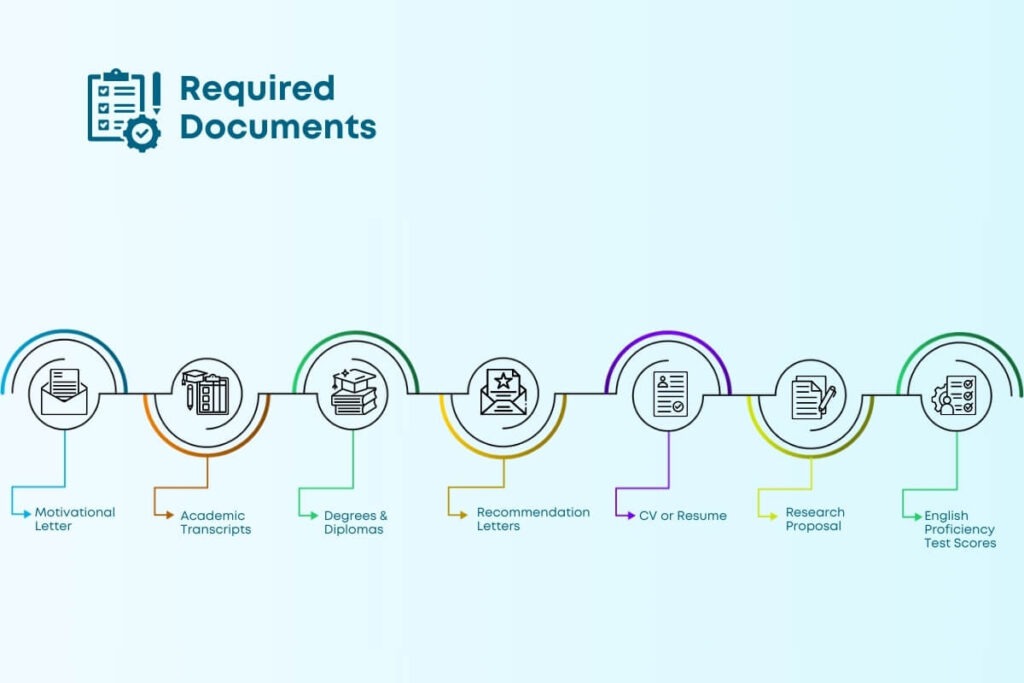
Now that you’ve decided to pursue a scholarship, you’ll need to gather some key documents for scholarships in Singapore.
Checklist of Key Documents:
- Motivation Letter: Be clear about your academic and career objectives, why you have selected Singapore and your top university, and how the scholarship will contribute to the long-term impact. (Example: In the case of SINGA, make connections to the research interests and the innovation objectives of Singapore.)
- Academic Transcripts: Include formal transcripts of your secondary education, university or postgraduate education, according to lthe evel of scholarship. They should be written in English or be certified in any foreign language.
- Degree Certificates or Diplomas: Provide notarized copies of all the degrees and diplomas obtained to ensure that your education level is verified.
- Recommendation Letters: Add 2-3 recommendation letters by professors, academic supervisors, or employers who can confirm that you were excellent academically, a leader, and have potential for research.
- Curriculum Vitae (CV) or Resume: Present a structured CV highlighting academic awards, research projects, internships, and community engagement relevant to your chosen field.
- Research Proposal (for postgraduate/research scholarships): Provide the description of your research topic, objectives, research methodology, and projected outcomes. As an illustration, SINGA applicants are expected to match proposals with A+STAR or NTU research focus areas.
- English Proficiency Test Scores: Provide valid IELTS or TOEFL or PTE scores and most of the Singapore universities demand evidence of English proficiency (IELTS 6.5+ or TOEFL iBT 90+ is the desired average).
- Passport Copy: A valid passport is required in order to identify and record a visa to study in Singapore.
- Other Supporting Documents: You might also be required to provide other documents, such as a portfolio (when you are applying to a design/arts program) or financial statements (when you are applying to a need-based award).
How to Secure Scholarships in Singapore?
A successful application is about strategy, not luck.
1. Start Your Research NOW (12-18 Months Before): You do not have to wait until you start applying. Find out which scholarships in Singapore suit your academic background (e.g. NUS scholarship for Singaporean Indian students) and major. Check official university websites; the only way the truth will be known.
2. Academically (At this point): This is a must. In case of a Singapore scholarship to Indian students following the 12th, you will require excellent results in the 10 th and 12 th board examinations.
3. Develop a Circumstantial Profile (Now): The best scholarships are non-academic. Partake in management, meaningful projects, or research papers (in postgrads).
4. Plan Major Paperwork (6 Months Prior):
- Statement of Purpose (SOP): Customize to the values of the university and the scholarship.
- Letters of Recommendation (LORs): Obtain them through professors who know you very well.
5. Test Scores: You should make sure that your IELTS/TOEFL scores are valid and that they satisfy the requirements.
6. Meet the Deadlines (3-6 Months Before): The majority of scholarship deadlines occur in October-December when the intake starts the next August. There is no option of missing a deadline.
Conclusion:
Securing a scholarship in Singapore for Indian students is a marathon, not a sprint. The competition is intense, but the opportunity to study at a globally-ranked institution, funded by a prestigious award, is unparalleled. But there are many reasons to study in Singapore. You have the 2026 roadmap. The next step is to take action. Start researching the specific university programs that fit your goals and begin building the academic and personal profile that will make you the candidate they can’t ignore. Ready to explore your options? Talk to Leapscholar counselors for guidance.
Frequently Asked Questions(FAQ’s)
-
How can I get a full scholarship in Singapore?
To secure a full scholarship in Singapore, you need a strong academic record, a clear SOP, and solid extracurricular or research achievements. Applying early through government or university scholarships like SINGA or ASEAN and meeting all eligibility and English language requirements improves your chances.
-
Do Indian students get scholarships in Singapore?
Yes, Indian students are eligible for several scholarships in Singapore offered by universities, the government, and private bodies. Popular options like SINGA, NUS Research Scholarships, and NTU India Connect often cover tuition, living, and travel expenses.
-
Who is eligible for the SINGA scholarship?
SINGA (Singapore International Graduate Award) is also open to international students (including Indians) applying to PhD programs at A*STAR research institutes, NUS, NTU or SUTD. The applicants should possess good academic background, research interest and English language. No compulsory GRE or TOEFL is necessary, and they might help to make your profile stronger.
-
How to apply for a Singapore government scholarship?
A Singapore government scholarship is also available in the form of official portals like SINGA (scholarships in research programs), or MOE/ASEAN scholarships (undergraduate and postgraduate programs). Applications normally demand academic transcripts, recommendation letters, statement of purpose, and evidence of mastery of the English language. Applicants who have been shortlisted will be interviewed or evaluated.
-
Who is eligible for Singapore scholarship?
Singapore scholarships are available to international students who are Indians and perform well in their academics. The eligibility can also be based on the course, level of study, work experience (on certain postgraduate programs) and English proficiency.
-
What are the best scholarship programs in Singapore?
The best scholarships are SINGA Scholarship (PhD), Dr. Goh Keng Swee Scholarship, NUS and NTU undergraduate scholarships, and the ADBJapan scholarship program to master level students.










Have Questions? Get Guidance to reach your Dream University
Connect with India's finest counsellors and biggest study abroad community.
Get Guidance