

Does your heart pound when you have to speak English? Maybe you can read and write perfectly, but when it’s time to talk, the words get stuck. You’re not alone.
With over 1.5 billion speakers, English is the language of global business, academics, and travel. For students aiming to study abroad, mastering it isn’t just helpful; it’s essential. But here’s the good news: you don’t need expensive classes. You can build fluency right at home through simple habits, like listening to English podcasts, reading aloud, and practicing short daily conversations. This guide will show you exactly how to improve English communication skills step by step. We’ll focus on practical, proven methods (many of them free!) that build not just your vocabulary, but your confidence.
The Real Importance of English Communication Skills: Why Bother?
Before we get to the “how,” let’s talk about the “why.” For students planning to study abroad, strong English communication is your key to unlocking… well, everything.
- Academic Success: Strong communication skills are essential not just for understanding complex lectures, writing essays, or presenting research, but also for meeting university language requirements like IELTS, TOEFL, PTE, or Duolingo English Test, making fluency a non-negotiable skill from the very start.
- Career Opportunities: The best internships and post-graduation jobs require candidates who can communicate ideas clearly and professionally.
- Global Networking: This is your chance to build lifelong friendships and professional connections with people from all over the world.
- Daily Life: From ordering coffee to navigating a new city, confidence in English makes the entire experience less stressful and more enjoyable.

Choose your dream country
 UK
UK
 USA
USA
 Germany
 Australia
 Ireland
 Canada
 UAE
UAE
 France
 Sweden
 Italy
Italy
 Other
Other
When do you want to study abroad?
What's your highest level of education?
Have you completed Class 12th?
What was your Class 12 CGPA/percentage?
Are you a student or a parent/guardian?
What do you want to study?
Select your current city
How Leap will help you

Personalised University Shortlist

Express Applications with Quicker Admits

End-to-End Application Support
The importance of English communication skills goes beyond passing a test; it's about being able to fully participate in your new life. So you should learn how to improve English communication skills.
The 4 Pillars of English Communication Skills: Understanding the Input vs the Output
When it comes to mastering English, especially for studying or working abroad, it’s not just about knowing the language; it’s about using it effectively. Language learning has two main stages: Input (absorbing information) and Output (producing and expressing it). Both are equally important, and most English proficiency tests, like IELTS, TOEFL, or PTE, are designed to evaluate how well you perform across these four core skills.
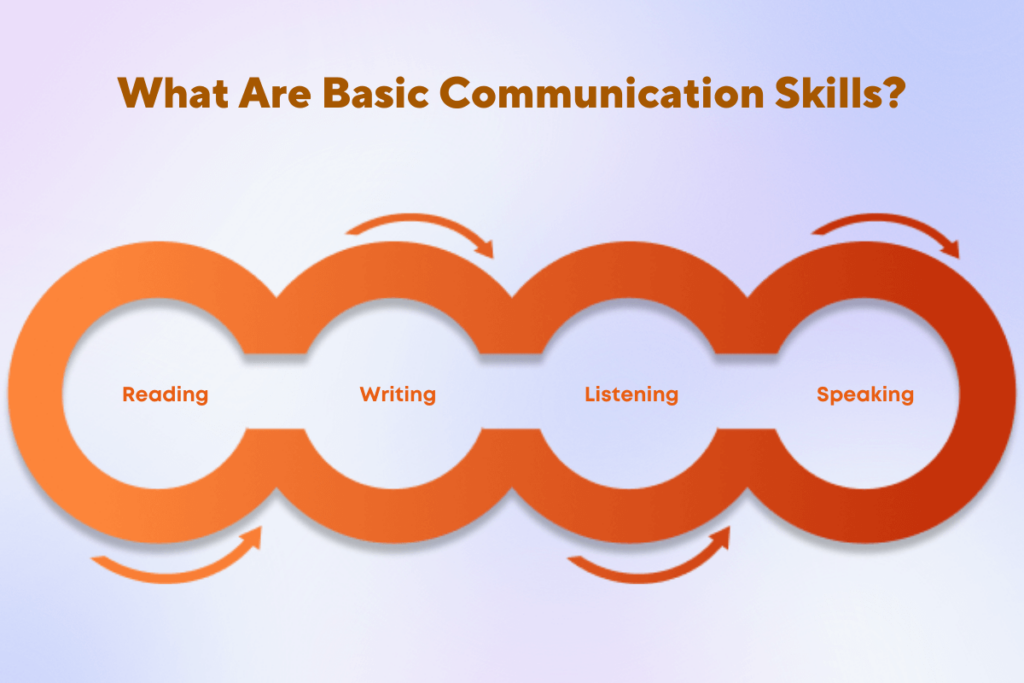
Input (Absorbing)
- Listening: Understanding spoken English, different accents, and tone is vital for academic success. In university lectures or seminars, you’ll need to follow complex discussions and take notes accurately. Similarly, in tests like IELTS or TOEFL, the Listening section checks how well you can grasp meaning and intent, beyond just words.
- Reading: Strong reading skills help you interpret textbooks, research papers, and case studies efficiently. At the academic level, you’ll need to analyse arguments, evaluate sources, and extract key details, the very skills that standardized tests assess in their Reading modules.
Output (Producing)
- Speaking: Being able to express your thoughts clearly and fluently is crucial in class discussions, group projects, and presentations. In the IELTS or Duolingo Speaking section, for example, examiners measure your pronunciation, coherence, and spontaneity, the same qualities that define confident communication in real-world academic settings.
- Writing: From essays and lab reports to emails and research proposals, clear writing is the foundation of academic excellence. Tests like TOEFL and PTE include structured writing tasks to evaluate your ability to form logical arguments, a skill that will directly support your university coursework.
Bridging the Gap
Most learners don’t struggle with understanding English; they struggle with using it. This is called the output gap, when you’ve absorbed plenty of input (lessons, vocabulary, grammar) but lack real-world practice in speaking and writing. The key to fluency lies in balancing both sides. Learn how to improve English communication skills by strengthening your output through regular practice, feedback, and active interaction. You’ll not only perform better in language proficiency tests but also communicate naturally in lectures, research collaborations, and everyday campus life.
Mastering all four pillars, Reading, Writing, Listening, and Speaking, is the key to how to improve English communication skills. This helps you adapt faster, excel academically, and connect more deeply in a global learning environment.
Join Leap Scholar's FREE masterclasses if you aim to crack IELTS.
7 Actionable Tips to Improve English Communication Skills
Here are seven practical ways to start improving today, with a special focus on how to improve English communication skills.
1. Listen Actively (Don't Just Hear)
There's a difference between passively hearing an English movie in the background and actively listening. Active listening is your foundation.
- How to do it: Put on a podcast, a TED Talk, or a show on Netflix.
- Your task: Don't just follow the subtitles. Listen for the rhythm. How do words connect? When does the speaker's voice rise or fall (intonation)? Try to guess the meaning of a new word from the context before you look it up.
- Try This: Listen to a 1-minute audio clip. Afterwards, try to summarize the main idea out loud in one or two sentences.
2. Master the "Shadowing" Technique
This is one of the most powerful tips to improve English language skills for speaking. "Shadowing" means imitating a native speaker in real-time.
- How to do it: Find a short audio clip (a podcast or movie dialogue) with a clear speaker. Play the audio and try to speak along with the speaker, copying their pronunciation, speed, and intonation exactly.
- Why it works: It trains your mouth muscles to produce new sounds and builds a natural-sounding rhythm. It feels silly at first, but it's incredibly effective.
3. Readout Aloud!
Reading builds your vocabulary, but reading aloud builds your speaking skills.
- How to do it: Take a book, news article, or blog post (like this one!). Read it out loud to yourself.
- Why it works: It connects the visual word on the page (input) to the spoken word from your mouth (output). It's a safe, simple way to practice pronunciation and flow without the pressure of a conversation.
4. Talk to Yourself
This is the single best way on how to improve communication skills in English at home for free. Why? Because there's zero pressure and zero fear of making a mistake.
- How to do it: Narrate your day.
- "Okay, now I am making coffee. I need to get the mug from the shelf."
- "I'm reading an email from my professor. It looks like the deadline is next Tuesday."
- Why it works: You get used to forming English sentences and your brain starts to "think" in English, which is the next crucial step...
5. Stop Translating, Start Thinking in English
Fluent speakers don't translate in their heads (e.g., Hindi -> English -> Spoken English). They just think in English. You can train yourself to do this.
- How to do it: Start small.
- Level 1: Label objects around you in your head. (Chair, desk, laptop, water bottle.)
- Level 2: Form simple sentences. (It's cold today. I feel hungry. I have a lot of work.)
- Level 3: Narrate your day (like in Tip 4, but internally).
- Why it works: This practice cuts out the slow, mental translation step, making your speech much faster and more natural.
6. Record Yourself Speaking
We often don't know what we actually sound like. This is where "reflection" and "practice" come together.
- How to do it: Use the voice recorder app on your phone. Choose a topic (e.g., "What I did yesterday" or "My opinion on a recent movie") and speak for one minute.
- Then, listen back: Don't cringe! Listen like a detective.
- Do you use "um" or "ah" a lot?
- Are you speaking too fast or too slow?
- Did you pronounce a word incorrectly?
- Why it works: You become your own coach. You can spot your specific weaknesses and focus on improving them.
7. Focus on Fluency, Not Perfection
This is the most important mindset shift. The fear of making a grammar mistake is what stops most people from speaking at all.
Your goal is communication, not perfection.
It is much better to say, "I went to the store yesterday" (grammatically wrong) than to say nothing at all. The other person understood you!
Embrace mistakes. As Nelson Mandela said, "I never lose. I either win or learn." Every mistake is a learning opportunity that makes you a better, more confident speaker.
Conclusion: Ready to Take the Next Step?
When you ask how to improve English communication skills? It isn’t about perfection; it’s about progress. Every sentence you speak, every article you read aloud, every podcast you listen to brings you closer to fluency and confidence. Remember, mastering English is not just about passing an exam; it’s about unlocking global opportunities, from world-class universities to international careers. So don’t wait for the “perfect time” and start today.
Pick one tip from this guide and practice it right now. Read out loud for five minutes, listen to a short TED Talk, or record yourself speaking about your day. Small, consistent steps will compound into a real transformation. Are you planning to study abroad but worried about the complex process of selecting and applying to universities? Book a free consultation with our Leap scholar experts now and turn your dreams into reality without hassle.
Frequently Asked Questions
How to improve English communication skills?
You can improve your English communication skills by practicing regularly in real-life situations. Listen to native speakers through podcasts or videos, read English books and articles, write short pieces daily, and speak with friends or language partners. The key is consistency; use English every day through both input (listening and reading) and output (speaking and writing) to see real progress.
How can I speak English 7 tips?
To speak English confidently, listen actively to native speakers, and try shadowing their speech to learn pronunciation and rhythm. Read aloud daily to improve flow, talk to yourself in English to build thinking speed, and try to think directly in English instead of translating. Record yourself to track progress and focus on fluency rather than perfection.
What are the 5 skills in English communication?
The five main skills in English communication are listening, speaking, reading, writing, and viewing. Together, they help you understand and express ideas effectively in different contexts, from academic writing to everyday conversations and digital communication.
What are the 7 C's of communication skills?
The 7 C’s of communication refer to clarity, conciseness, correctness, completeness, concreteness, courtesy, and consideration. These principles ensure that your message is clear, accurate, and well-received, helping you communicate with confidence in both formal and informal situations.
What are the 7 types of English?
The seven types of English generally refer to the main dialects used worldwide: British English, American English, Canadian English, Australian English, New Zealand English, Indian English, and African English. Each variety has its own accent, vocabulary, and expressions, but they all share the same grammatical foundation.
What are the 5 steps to speak English fluently?
To speak English fluently, immerse yourself in the language by listening to English media every day and expanding your vocabulary through context rather than memorization. Speak as often as you can, even if it’s just to yourself, and train your mind to think in English instead of translating from your native language. Consistency is the key; small, daily practice sessions lead to lasting fluency.







Have Questions? Get Guidance to reach your Dream University
Connect with India's finest counsellors and biggest study abroad community.
Get Guidance