
Studying abroad gives you access to high-quality education, global exposure, and strong career prospects. If you are an Indian or international student, choosing the right university can directly impact your academic and professional journey. The QS World University Rankings 2026 is a trusted source to compare top universities around the world.
This guide brings together over 100 top-ranked global universities. It uses the latest QS rankings along with data on acceptance rates and affordability. If you are planning to study for a bachelor’s or master’s degree abroad, this guide will help you choose a university that fits your goals and your budget.
100+ Top Universities in the World: QS World University Rankings 2026
Below is a comprehensive list of the top 100+ universities across the globe. The table includes each university’s country, its QS 2026 ranking, and the estimated acceptance rate to help you evaluate admission competitiveness.
| University Name | QS 2026 Ranking | Country | Acceptance Rate |
|---|---|---|---|
| Massachusetts Institute of Technology (MIT) | #1 | United States | 4.03% |
| Imperial College London | #2 | United Kingdom | 14% |
| University of Oxford | #4 | United Kingdom | 15.80% |
| Harvard University | #5 | United States | 3.43% |
| University of Cambridge | #6 | United Kingdom | 17.50% |
| Stanford University | #3 | United States | 3.90% |
| ETH Zurich | #7 | Switzerland | 27% |
| National University of Singapore (NUS) | #8 | Singapore | 10% |
| University College London | #9 | United Kingdom | 34% |
| California Institute of Technology (Caltech) | #10 | United States | 3.00% |
| University of Pennsylvania | #82 | United States | 3.15% |
| University of California, Berkeley | #17 | United States | 11% |
| University of Melbourne | #19 | Australia | 70% |
| Peking University | #14 | China (Mainland) | 1-15% |
| Nanyang Technological University | #12 | Singapore | 47% |
| Cornell University | #16 | United States | 8.00% |
| University of Hong Kong | #11 | Hong Kong SAR | 37% |
| University of Sydney | #53 | Australia | 30% |
| University of New South Wales | #20 | Australia | 60% |
| Tsinghua University | #17 | China (Mainland) | 15-30% |
| University of Chicago | #13 | United States | 6% |
| Princeton University | #25 | United States | 4% |
| Yale University | #21 | United States | 4.60% |
| PSL University | #28 | France | 11% |
| University of Toronto | #29 | Canada | 43% |
| EPFL | #22 | Switzerland | 23% |
| University of Edinburgh | #34 | United Kingdom | 10% |
| Technical University of Munich | #22 | Germany | 8% |
| McGill University | #27 | Canada | 38% |
| Australian National University | #32 | Australia | 35% |
| Seoul National University | #38 | South Korea | 15% |
| Johns Hopkins University | #24 | United States | 7.50% |
| University of Tokyo | #36 | Japan | 34% |
| Columbia University | #38 | United States | 3.70% |
| University of Manchester | #35 | United Kingdom | 27% |
| Chinese University of Hong Kong | #32 | Hong Kong SAR | 10% |
| Monash University | #36 | Australia | 40% |
| University of British Columbia | #40 | Canada | 54% |
| Fudan University | #30 | China (Mainland) | 17% |
| King’s College London | #31 | United Kingdom | 13% |
| University of Queensland | #42 | Australia | 40% |
| University of California, Los Angeles (UCLA) | #46 | United States | 9% |
| New York University (NYU) | #55 | United States | 8% |
| University of Michigan-Ann Arbor | #45 | United States | 18% |
| Shanghai Jiao Tong University | #47 | China (Mainland) | 15% |
| Institut Polytechnique de Paris | #41 | France | 10% |
| Hong Kong University of Science and Technology | #44 | Hong Kong SAR | 35% |
| Zhejiang University | #49 | China (Mainland) | 20% |
| Delft University of Technology | #47 | Netherlands | 82% |
| Kyoto University | #57 | Japan | 11% |
| Northwestern University | #34 | United States | 7.20% |
| London School of Economics and Political Science (LSE) | #56 | United Kingdom | 8.90% |
| KAIST | NA | South Korea | 22% |
| University of Bristol | #51 | United Kingdom | 67% |
| University of Amsterdam | #53 | Netherlands | 49% |
| Yonsei University | #50 | South Korea | 18% |
| Hong Kong Polytechnic University | #54 | Hong Kong SAR | 2% |
| Carnegie Mellon University | #52 | United States | 11% |
| Ludwig-Maximilians-University | #58 | Germany | 10% |
| Universiti Malaya (UM) | #58 | Malaysia | 34% |
| Duke University | #62 | United States | 5.90% |
| City University of Hong Kong | #63 | Hong Kong SAR | 20-40% |
| KU Leuven | #60 | Belgium | 34% |
| Sorbonne University | #72 | France | 20-28% |
| University of Auckland | #65 | New Zealand | 45% |
| University of Texas at Austin | #68 | United States | 10% |
| Korea University | #61 | South Korea | 8% |
| National Taiwan University (NTU) | #63 | Taiwan | 43% |
| University of Warwick | #74 | United Kingdom | 14% |
| University of Illinois at Urbana-Champaign | #70 | United States | 45% |
| Universidad de Buenos Aires (UBA) | #84 | Argentina | 30% |
| University of California, San Diego (UCSD) | #66 | United States | 25% |
| Université Paris-Saclay | #70 | France | 10% |
| KTH Royal Institute of Technology | #78 | Sweden | 29% |
| Lund University | #72 | Sweden | 58% |
| University of Washington | #81 | United States | 43% |
| University of Western Australia | #77 | Australia | 38% |
| University of Glasgow | #79 | United Kingdom | 22% |
| Brown University | #69 | United States | 5% |
| University of Birmingham | #76 | United Kingdom | 13-15% |
| University of Southampton | #87 | United Kingdom | 84% |
| University of Adelaide | #82 | Australia | 75% |
| University of Leeds | #86 | United Kingdom | 70% |
| Heidelberg University, Ruperto Carola | #80 | Germany | 17% |
| Tokyo Institute of Technology | #85 | Japan | 10% |
| Osaka University | #91 | Japan | 41% |
| Trinity College Dublin | #75 | Ireland | 34% |
| University of Technology Sydney | #96 | Australia | 19% |
| Durham University | #94 | United Kingdom | 41% |
| Pennsylvania State University | #82 | United States | 54% |
| Purdue University | #88 | United States | 49.87% |
| University of Sao Paulo | #108 | Brazil | 9% |
| Pontifical Catholic University of Chile | #116 | Chile | Not Specifically Provided |
| Lomonosov Moscow State University | #105 | Russia | 12% |
| National Autonomous University of Mexico | #136 | Mexico | 8% |
| University of Alberta | #94 | Canada | 58% |
| Freie University Berlin | #88 | Germany | 15% |
| POSTECH | #102 | South Korea | 10-15% |
| RWTH Aachen University | #105 | Germany | 10% |
| University of Copenhagen | #101 | Denmark | 40-50% |
| King Fahd University of Petroleum & Minerals | #67 | Saudi Arabia | 4% |
| KIT, Karlsruhe Institute of Technology | #98 | Germany | 20-30% |
| Uppsala University | #93 | Sweden | 75-80% |
| University of St Andrews | #113 | United Kingdom | 12% |
| The University of Sheffield | #92 | United Kingdom | 85% |
| Utrecht University | #119 | Netherlands | 22% |
| Tohoku University | #109 | Japan | 41% |
| University of Nottingham | #97 | United Kingdom | 11-13% |
| Technical University of Denmark | #107 | Denmark | 46% |
| University of Zurich | #100 | Switzerland | 27% |

Choose your dream country
 UK
UK
 USA
USA
 Germany
 Australia
 Ireland
 Canada
 UAE
UAE
 France
 Sweden
 Italy
Italy
 Other
Other
When do you want to study abroad?
What's your highest level of education?
Select you current city
How Leap will help you

Personalised University Shortlist

Express Applications with Quicker Admits

End-to-End Application Support
Top Affordable Universities in the World for Indian Students
These universities are known for offering top-quality education at lower tuition costs, making them ideal for Indian students looking to study abroad. We've included institutions from the USA, UK, Canada, and Australia that combine affordability with strong academic reputations.
| University Name | Avg. Tuition Fees (INR/year) | Country | QS 2026 Ranking |
|---|---|---|---|
| Memorial University of Newfoundland | ₹5L | Canada | 660 |
| University of the People | ₹1L | USA | Not Ranked |
| University of Manitoba | ₹7L | Canada | 643 |
| University of Chester | ₹8L | UK | Not Ranked |
| University of Southern Queensland | ₹9L | Australia | 410 |
| Technical University of Munich | ₹0 – ₹1.5L | Germany | 22 |
| University of Warsaw | ₹2.5L | Poland | 271 |
| University of São Paulo | ₹1.2L | Brazil | 108 |
| University of Ljubljana | ₹2L | Slovenia | 535 |
| University of Porto | ₹2.8L | Portugal | 237 |
Top Universities in the World for Master’s
These universities are highly recommended for Indian students pursuing postgraduate education abroad, based on academic reputation and industry relevance.
| University Name | Country | QS 2026 Ranking | Best Master’s Programs |
|---|---|---|---|
| University of Michigan | USA | 45 | MS in Engineering, MPP |
| University of Edinburgh | UK | 34 | MSc in Data Science, MRes Biology |
| University of Sydney | Australia | 25 | MS in Business Analytics, LLM |
| Trinity College Dublin | Ireland | 75 | MSc in Finance, MA in Philosophy |
| Technical University of Munich | Germany | 22 | MSc in Computer Science, MBA |
| KU Leuven | Belgium | 60 | MSc in Engineering, MBA |
| University of British Columbia | Canada | 40 | MS in CS, MBA, MEd |
| University of Manchester | UK | 35 | MSc in Artificial Intelligence, MFin |
| Johns Hopkins University | USA | 24 | MS in Public Health, Data Science |
| University of Queensland | Australia | 42 | MSc in Biotechnology, MPH |
Top Universities in the World for Bachelor’s
Explore the best undergraduate destinations for Indian students, offering strong campus life, scholarships, and high global rankings.
| University Name | Country | QS 2026 Ranking | Best Bachelor’s Programs |
|---|---|---|---|
| Simon Fraser University | Canada | 308 | BBA, Computer Science |
| Monash University | Australia | 37 | Psychology, Business, Engineering |
| University of Canterbury | New Zealand | 261 | BA, BSc, BCom |
| University of Antwerp | Belgium | 280 | BEng, BA in Econ, BSc Biology |
| University of Leeds | UK | 86 | BA Journalism, BSc Finance |
Tips to Apply at Top Universities in the World
Do you dream of studying at Oxford University, Harvard University or another top university? Well, here are some useful tips that can help you get into the best universities in the world.
- Maintain strong academic performance: Top universities look for consistent academic excellence. You need to focus on high grades and choose challenging subjects throughout high school.
- Aim for high standardized test scores: If the universities you are applying to require tests like the SAT, ACT, GRE, or GMAT, then prepare seriously. Strong scores can strengthen your application.
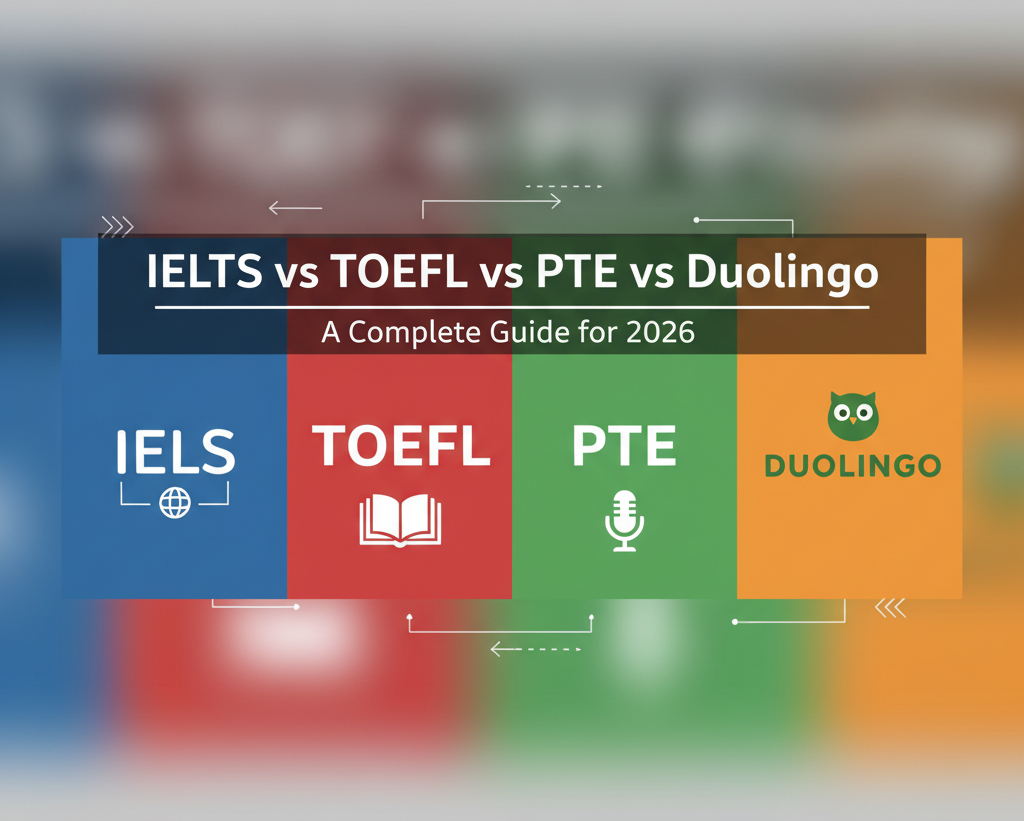
- English proficiency test scores: The universities you are applying to require tests like the IELTS, TOEFL, PTE or Duolingo to check your english proficiency as an international student, then prepare seriously. Strong scores can strengthen your application.
- Write a focused personal statement: Your statement of purpose must clearly explain your goals, achievements, and reasons for choosing that university. Use it to show your character and long-term vision.
- Secure impactful recommendation letters: Ask teachers or mentors who know you well to write your letters of recommendation. They should highlight your academic strengths, discipline, and potential.
- Build a strong extracurricular profile: Universities value students who lead, take initiative, and contribute to their communities. Active involvement outside the classroom helps your application stand out.
- Research the course and university thoroughly: Make sure the university and the program match your career goals. Learn about the curriculum, faculty, and opportunities before applying.
- Prepare for interviews: If your target universities conduct interviews, then prepare by doing mock sessions. Be ready to explain your goals, interests, and motivations clearly.
- Understand financial aid and scholarships: Many top universities offer scholarships based on merit or financial need. Research the process early so you do not miss any deadlines.
To Conclude
Choosing from the top universities in the world for your higher studies is a crucial decision that can shape your future. Universities like Oxford University, UCL, and Imperial College London offer a broad range of study disciplines and prestigious faculty that can help open doors to a world of opportunities for you.
Countries like the US, UK, Canada, and Australia offer a wide array of programs tailored for aspiring professionals like you. These programs provide you with the necessary skills and knowledge needed to excel in today’s rapidly evolving fields, such as IT and healthcare.
At Leap Scholar, we support your journey with valuable resources, including study abroad guides, visa assistance, university selection, and scholarship information.
We offer expert counselling with a team boasting over 50 years of combined experience in helping students study abroad. Ready to take the leap? Book a free counselling session today!
Frequently Asked Questions
-
Q. Which is the number 1 university in the world?
Ans. The Massachusetts Institute of Technology (MIT) is consistently ranked as the number 1 university in the world according to the QS World University Rankings. Located in Cambridge, Massachusetts, MIT is renowned for its cutting-edge research, innovation, and strong focus on technology and science.
-
Q. What is Oxford University’s rank in the world?
Ans. The University of Oxford is ranked 4th in the QS World University Rankings 2026 and 1st in the Times Higher Education (THE) World University Rankings 2026. The university offers 62 undergraduate and 347 postgraduate programs across 4 academic divisions.
Humanities
Mathematical, Physical, and Life Sciences
Medical Sciences
Social Sciences -
Q. Which are the top 3 universities in the world?
Ans. The top 3 universities in the world as per QS World University Rankings 2026 are as follows.
Massachusetts Institute of Technology (MIT)
Imperial College London
University of Oxford -
Q. Where does IIT stand in world ranking?
Ans. The QS World University Rankings 2026 show that Indian universities are making significant progress, with 61% of them improving their ranks. IIT Bombay is the top performer, moving up from 149th to 118th place globally, followed by IIT Delhi and IISc Bangalore.
-
Q. Is MIT better than IIT?
Ans. Comparing MIT and the IITs depends on your preference. MIT is consistently ranked in the list of the top universities worldwide, known for its research, innovation, and academic excellence across a wide range of fields. The IITs, on the other hand, are highly respected within India and are gaining increasing recognition globally. They are particularly renowned for their strong engineering programs.
-
Q. Is Oxford or Harvard better?
Ans. The answer to whether Oxford or Harvard is better depends on your personal preference and the criteria used for comparison. The University of Oxford ranks higher than Harvard in QS World University Rankings 2026, reflecting its strong academic reputation.
-
Q. Which country is best for studying abroad for Indian students?
Ans. The US is renowned for its diverse range of top-ranked universities and research opportunities. The UK, on the other hand, offers prestigious institutions and rich academic programs to choose from. Hence, the best country for studying abroad depends on your field of interest and personal preferences.
-
Q. Which is the best MBA college in the world?
Ans. The Massachusetts Institute of Technology (MIT) is often ranked as the best MBA college globally, known for its focus on innovation, technology, and leadership. It also consistently leads in global rankings. Additionally, other top colleges include Harvard Business School and the University of Chicago, each excelling in different aspects of business management.
-
Q. Which country is the safest to study?
Ans. Iceland is recognised as one of the safest countries in the world for studying. It is positioned as the safest country for 14 consecutive years according to the Global Peace Index. The low crime rates, stable environment, and high quality of life make it an ideal destination for international students seeking a secure place to pursue their education.
-
Q. What are the essential factors you should consider when choosing from the top universities in the world?
Ans. Here are some of the important factors to consider when choosing from the top universities in the world are as follows.
University ranking in your field
Location and living costs
Tuition fees and scholarships
Campus facilities
Faculty expertise -
Q. What tips should you follow to improve your chances of getting accepted into a top university?
Ans. To boost your chances of getting accepted into the top universities in the world, excel academically with a high GPA and strong standardised test scores. Additionally, it is essential to build a well-rounded profile through extracurriculars and leadership roles. Also, don’t forget to craft a compelling personal statement and secure strong recommendations.











Have Questions? Get Guidance to reach your Dream University
Connect with India's finest counsellors and biggest study abroad community.
Get Guidance