
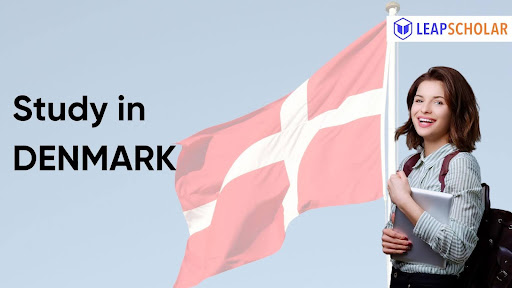
Ever wondered what it’s like to study in one of the world’s happiest countries? For a growing number of Indian students, this isn’t just a daydream. Denmark, with its focus on groundbreaking research, innovative teaching methods, and an unbeatable quality of life, is rapidly becoming a top choice for studying abroad. It’s a country where academic theory meets real-world application, creating graduates who are ready to solve the challenges of tomorrow.
If you’re considering taking your education global, Denmark offers a unique and compelling proposition. This guide provides a complete A-Z walkthrough for Indian students aiming for the 2026 and 2027 academic intakes, covering everything from university selection and application processes to visa requirements and post-study career opportunities.
Why Study in Denmark? Top 4 Reasons for Indian Students in 2026
While countries like the USA and the UK have traditionally been popular, Denmark presents a distinct and modern alternative. The Danish education system is built on principles that resonate with the needs of the 21st-century job market, offering a refreshing change from the often theory-heavy approach in India.
Focus on Innovation and Practical Learning

Choose your dream country
 UK
UK
 USA
USA
 Germany
 Australia
 Ireland
 Canada
 UAE
UAE
 France
 Sweden
 Italy
Italy
 Other
Other
When do you want to study abroad?
What's your highest level of education?
Select you current city
How Leap will help you

Personalised University Shortlist

Express Applications with Quicker Admits

End-to-End Application Support
Danish universities are globally renowned for their project-based and problem-solving learning styles. Instead of just memorising facts, you'll work in groups to solve real-life case studies, collaborate with companies on projects, and engage in critical thinking. This hands-on approach ensures you don’t just earn a degree, but also build a portfolio of practical skills that employers actively seek.
Globally Recognised and High-Ranking Universities
Don't let Denmark's small size fool you. It is home to several world-class universities that consistently rank among the best globally. An engineering degree from the Technical University of Denmark (DTU) or a life sciences degree from the University of Copenhagen holds significant weight in the international job market, opening doors to careers across the globe.
A Safe, Happy, and Sustainable Environment
Denmark is consistently ranked as one of the safest and happiest countries on earth. It offers a secure and welcoming environment for international students. Furthermore, its global leadership in sustainability and green technology means you'll be living and learning in a society that is actively building a greener future, a particularly inspiring setting for students in related fields.
Excellent Post-Study Work Opportunities
Denmark values the talent that international students bring. After graduation from a state-accredited program, students are eligible to apply for a residence permit to seek work. The country’s thriving economy, particularly in sectors like technology, pharmaceuticals, and renewable energy, offers exciting career prospects for qualified Indian graduates.
The Danish Education System Explained for Indians
Understanding the structure of Danish higher education is the first step in finding the right fit for your career goals. The system is diverse and offers various types of institutions.
Types of Higher Education Institutions in Denmark
- Universities: These are traditional, research-intensive institutions offering Bachelor's, Master's, and PhD programs across a wide range of academic fields. They are ideal for students who are academically inclined and may want to pursue a career in research or a specialised field.
- University Colleges (Professionshøjskoler): These institutions offer professionally-oriented Bachelor's degrees, also known as 'Professional Bachelor's degrees'. They combine theoretical studies with mandatory internships, preparing students for specific vocations in areas like engineering, business, social work, and education.
- Academies of Professional Higher Education (Erhvervsakademier): These offer 2-year Academy Profession (AP) degrees and Bachelor's Top-Up programs. They are highly practical and focused on providing skills for direct entry into the job market.
Popular Courses to Study in Denmark for Indian Students
While Denmark offers excellence across many disciplines, certain fields are particularly popular among Indian students due to strong academic programs and high industry demand. These include:
- Engineering (especially Renewable Energy, Environmental, and Software Engineering)
- IT & Computer Science
- Business and Management
- Life Sciences and Biotechnology
- Architecture and Design
Top Universities in Denmark for Indian Students (QS Rankings 2026)
Choosing the right university is a critical decision. To help you, here is a table of leading Danish universities, complete with their latest QS World University Rankings for 2026 and their key strengths.
| University Name | QS World Ranking 2026 | Key Highlights & Popular Fields for Indians |
|---|---|---|
| University of Copenhagen | #101 | Denmark's oldest and largest university. A world leader in Health & Medical Sciences, Life Sciences, and Humanities. |
| Technical University of Denmark (DTU) | #107 | An elite engineering and technology institution. Top choice for Renewable Energy, IT, and Biotechnology. |
| Aarhus University | #100-150 | A comprehensive university with strong programs in Business, Social Sciences, Natural Sciences, and Engineering. |
| University of Southern Denmark (SDU) | #303 | Known for its strong focus on research in areas like engineering, social robotics, and health sciences. |
| Aalborg University (AAU) | #306 | World-renowned for its unique Problem-Based Learning (PBL) model, excelling in Engineering and Social Sciences. |
| Copenhagen Business School (CBS) | N/A | One of Europe's top business schools. Highly sought after for its MBA, Finance, and Management programs. |
Note: Copenhagen Business School (CBS) is a specialised institution and is not ranked in the overall QS World University Rankings. However, it is globally ranked #15 for Business & Management Studies (QS Subject Rankings 2026).
Admission Requirements to Study in Denmark for Indians
The admission process is straightforward but requires careful preparation. Indian students must meet both academic and language proficiency standards.
Academic Requirements for Indian Students
- For a Bachelor's Degree: You will need to have completed your All India Senior School Certificate (CBSE) or Indian School Certificate (ISC) with a strong academic record. This is generally considered equivalent to the Danish upper secondary school-leaving examination. Some programs may have specific subject requirements (e.g., mathematics or physics for engineering).
- For a Master's Degree: An internationally recognised Bachelor's degree is required. While many Danish universities recognise a 3-year Indian Bachelor's degree, some specific Master's programs might require a 4-year degree or have prerequisite course requirements. Always check the specific university and program page for precise details.
English Language Requirements
Since most programs popular with international students are taught in English, you must provide proof of your language skills.
- The most commonly accepted tests are IELTS, TOEFL, and PTE.
- A typical minimum score required is an IELTS Academic score of 6.5 overall with no band less than 6.0, or a TOEFL iBT score of 83 or higher. These requirements can be higher for certain programs, so it's crucial to verify.
- While it's a common query, studying in Denmark "without IELTS" is generally not an option for admissions or the visa process, unless your entire prior education was officially documented as being taught in English and the university explicitly accepts this. It is highly recommended to take one of the standardised tests.
How to Apply to Study in Denmark: A Step-by-Step Guide (2026-2027 Intakes)
Timing and documentation are key to a successful application. The main intake for Danish universities is in the Autumn (starting August/September).
Step 1: Research and Shortlist Universities (Nov - March 2026)
Begin your research at least a year in advance. The application window for the Autumn 2026 intake typically opens in late 2025 and closes between January and March 2026 for non-EU students. Carefully check the exact deadlines on your target university websites.
Step 2: Prepare Your Documents
Gather all necessary documents, including:
- Academic transcripts and certificates from your Class 10th, 12th, and Bachelor's degree.
- A well-crafted Statement of Purpose (SOP) or Motivational Letter.
- Letters of Recommendation (LORs), if required.
- Your updated CV or resume.
- A copy of your passport.
- Your English language test score sheet (IELTS/TOEFL).
Step 3: Submit Your Application
For Bachelor's degrees, applications are submitted through a centralised national portal, optagelse.dk. For Master's degrees, you will typically apply directly through the online portal of each university. Be mindful of application fees, which can range from €50 to €100 per application.
Step 4: Receive Your Offer Letter
If your application is successful, the university will send you an official letter of acceptance. This document is essential for the next and most critical stage: your visa application.
Denmark Student Visa: Guide for Indians to Study in Denmark
For non-EU citizens, including Indians, you need to apply for a student residence permit, not just a visa. This permit allows you to live in Denmark for the duration of your studies.
Key Documents for Your Denmark Student Residence Permit
- Your official letter of acceptance from a state-accredited Danish university.
- Proof that you have paid the tuition fee for the first semester or year.
- Proof of Funds: This is a critical requirement. You must prove you can support yourself financially. For 2025, the Danish Immigration Service (SIRI) requires students to show they have approximately DKK 6,837 per month. For a year, this amounts to DKK 82,044, which is roughly ₹11 Lakhs. This amount must be in a bank account in your name.
- A valid passport and passport-sized photographs.
- Proof of travel insurance.
How to Apply for the Student Visa from India
- Your university will typically initiate the first part of the application online (Form ST1).
- You will then complete your part of the application on the SIRI website.
- After submitting the online application and paying the visa fee, you must book an appointment at a VFS Global centre in India (located in major cities like Delhi, Mumbai, Bengaluru, etc.).
- At the VFS centre, you will submit your biometric information (fingerprints and photo) and your original documents for verification.
- The typical processing time for a Danish student residence permit is 60 to 90 days, so it is crucial to apply as soon as you receive your offer letter and have paid your tuition fees.
Cost of Studying in Denmark for Indian Students (2026-2027)
While Denmark offers a high standard of living, it's also one of the more expensive countries in Europe. Proper financial planning is essential.
Tuition Fees for Indian Students
Higher education is free for EU/EEA citizens, but non-EU students, including Indians, must pay tuition fees.
- Annual tuition fees for Bachelor's and Master's programs can range from €6,000 to €16,000 (approximately ₹5.4 Lakhs to ₹14.4 Lakhs).
- Fields like medicine and engineering are typically at the higher end of this range.
Monthly Cost of Living in Denmark
Living expenses vary significantly depending on your lifestyle and the city. Copenhagen is the most expensive, while cities like Aalborg or Odense are more affordable.
| Expense Category | Average Monthly Cost (DKK/INR) |
|---|---|
| Accommodation (Shared) | kr. 3,000 - 5,000 (₹40k - ₹67k) |
| Food & Groceries | kr. 1,500 - 2,500 (₹20k - ₹34k) |
| Transport | kr. 300 - 500 (₹4k - ₹6.7k) |
| Books & Personal Supplies | kr. 500 - 800 (₹6.7k - ₹10.7k) |
| Total Estimated Monthly | kr. 5,300 - 8,800 (₹71k - ₹1.18L) |
Note: These are estimates for 2026. Actual costs may be higher. The initial proof of funds required for the visa already accounts for these living expenses.
Scholarships in Denmark for Indian Students
To help offset the costs, several scholarship opportunities are available for talented Indian students.
- Danish Government Scholarships for non-EU/EEA Students: These are administered by individual universities. They are offered as either a full or partial tuition fee waiver and sometimes include a grant to cover living costs. These are highly competitive and awarded to academically brilliant students.
- University-Specific Scholarships: Many universities, such as the Technical University of Denmark (DTU) and Aarhus University, have their own scholarship programs for gifted international students.
- Erasmus Mundus Joint Master's Degrees: These prestigious scholarships are funded by the EU and are available for specific Master's programs offered by a consortium of universities, including some in Denmark. They are very generous, often covering all costs.
Work and Career Opportunities for Indians in Denmark
Denmark provides a structured framework for students to gain work experience and launch their careers after graduation.
Working Part-Time While You Study in Denmark
As an international student, you are permitted to work:
- Up to 20 hours per week during the academic term.
- Full-time (37 hours per week) during the summer holidays (June, July, and August). Common part-time jobs include roles in restaurants, cafes, delivery services, and retail.
Post-Study Work Visa and Career Prospects
Important 2026 Update: As of May 2025, the Danish government has implemented new rules. The post-study job search permit and work rights are now only available to students graduating from state-accredited and quality-approved higher education programs. Students from unaccredited private institutions are no longer eligible. Therefore, it is more important than ever to verify the accreditation status of your chosen program.
For eligible graduates, after completing your degree, you can apply for a residence permit that allows you to stay in Denmark to search for a job. The key industries with a high demand for skilled professionals include:
- Information Technology and Software Development
- Life Sciences and Pharmaceuticals
- Green Energy and Sustainability
- Logistics and Shipping
- Engineering and Construction
Frequently Asked Questions (FAQs)
-
Q. Is Denmark expensive for Indian students?
Ans. Yes, Denmark is considered expensive compared to India. Both tuition fees and living costs are high. However, the quality of education, high standard of living, and potential for good salaries after graduation can provide a strong return on investment.
-
Q. Can I get PR in Denmark after studying?
Ans. Obtaining Permanent Residency (PR) in Denmark is a long-term process. After securing a job post-graduation, you would work on a work permit. You can apply for PR after residing in Denmark continuously for a number of years (typically 8, or 4 under certain fast-track rules) and meeting several stringent requirements, including employment, integration, and language proficiency in Danish.
-
Q. Is it easy for an Indian to find a job in Denmark?
Ans. Finding a job depends on your field of study, skills, and networking efforts. Graduates in high-demand sectors like IT, engineering, and pharma have a significant advantage. While many Danes speak excellent English, learning the Danish language will vastly improve your job prospects and social integration.
-
Q. Is learning Danish necessary?
Ans. For daily life and studying in English-taught programs, you can manage perfectly well with English. However, for part-time jobs and especially for long-term career prospects, learning Danish is highly recommended and often becomes essential for roles that require client or local interaction.











Have Questions? Get Guidance to reach your Dream University
Connect with India's finest counsellors and biggest study abroad community.
Get Guidance