
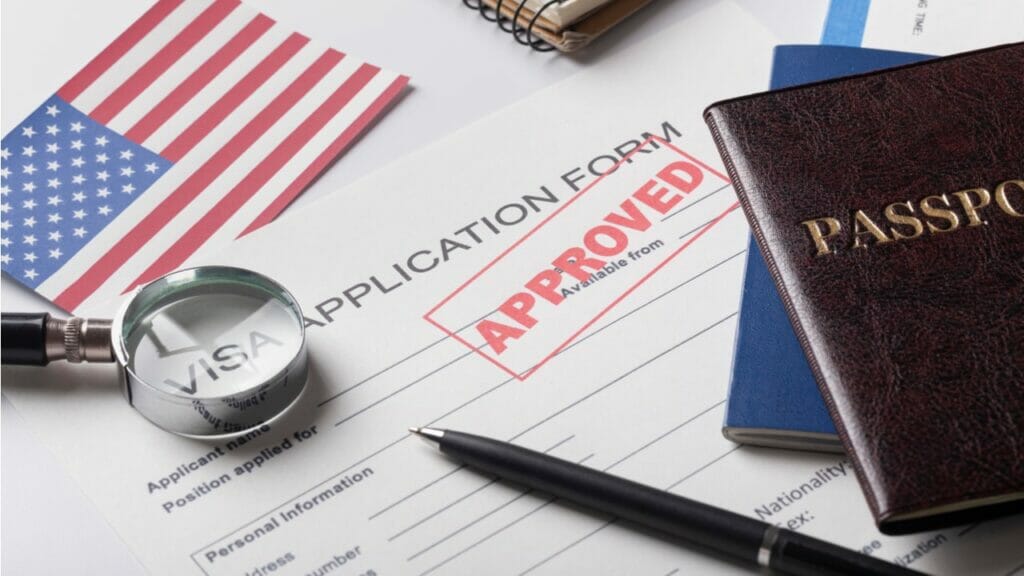
Many Indian students who study in the U.S. plan to stay and work after graduation. To do that, they need a valid working visa for USA. But with the recent visa policy changes and stricter USCIS regulations, the process has become more complex and at times, uncertain.
In 2025, the U.S. introduced several updates affecting international graduates, including higher H-1B registration fees, new fixed-term visa rules for F-1 and J-1 students, and greater discretion for visa officers when reviewing applications. These changes have left many students wondering what’s next and how to plan their career path in the U.S.
Despite the evolving policies, opportunities still exist for skilled graduates from India. The key is understanding the right work visa categories, eligibility criteria, and the updated process for 2026.
This guide explains how to apply for a U.S. work visa from India, covering the latest rules, eligibility requirements, documents, costs, and step-by-step process for each major visa type.
Types of Work Visas for USA 2026

Choose your dream country
 UK
UK
 USA
USA
 Germany
 Australia
 Ireland
 Canada
 UAE
UAE
 France
 Sweden
 Italy
Italy
 Other
Other
When do you want to study abroad?
What's your highest level of education?
Select you current city
How Leap will help you

Personalised University Shortlist

Express Applications with Quicker Admits

End-to-End Application Support
Indian graduates planning to work in the United States can choose from several visa types, depending on their education level, job profile, and employer sponsorship. Each category is managed by the U.S. Citizenship and Immigration Services (USCIS) and the U.S. Department of State, which set annual limits and eligibility criteria.
Here is an updated list of the main working visas for USA in 2026, relevant to Indian students and professionals.
| Visa Type | Duration | Typical Users / Example |
|---|---|---|
| H-1B (Specialty Occupation) | Up to 3 years, extendable to 6 | Indian STEM graduates or professionals working with tech firms like Microsoft or Amazon |
| L-1 (Intra-company Transfer) | 1–3 years | Employees of multinational companies such as Infosys or TCS transferred to U.S. offices |
| O-1 (Extraordinary Ability) | 3 years | Researchers, scientists, or artists with proven achievements |
| H-2B / H-2A (Temporary Workers) | Seasonal | Short-term non-academic employment, mostly in hospitality or agriculture |
| OPT / STEM OPT (F-1 Extension) | 12 + 24 months | F-1 students gaining practical training after graduation |
| J-1 (Intern/Trainee) | Up to 18 months | Students or professionals in structured internship or training programs |
| EB-2 / EB-3 (Green Card Track) | Long-term | Professionals with advanced degrees transitioning from temporary work visas |
Key Notes for Indian Students
- The H-1B remains the most sought-after US work permit visa, with 65,000 regular and 20,000 master’s cap slots each year.
- The OPT and STEM OPT programs together allow up to three years of authorized work.
- Early planning helps students align their academic choices with the most suitable US work visa for Indian graduates.
Choosing the right visa early helps Indian students plan their academic programs and internships around the most suitable working visa for USA in 2026.
OPT vs H-1B Pathway for Indian Graduates
Most Indian students who want to work in the U.S. after graduation follow two main steps:
They first apply for OPT (Optional Practical Training) and later move to the H-1B work visa if sponsored by a U.S. employer.
1. What is OPT?
If you’re on an F-1 student visa, OPT lets you work in your field for 12 months after finishing your degree.
Students in STEM fields can apply for an extra 24-month extension, giving them up to three years of U.S. work experience.
2. Moving to H-1B
After or during OPT, your U.S. employer can sponsor you for an H-1B visa.
This visa allows you to continue working full-time in a “specialized job.”
Every year, employers apply for H-1B slots between March and April, and those selected can start work from October.
Example:
If you graduate in May 2026, you could start working under OPT by July 2026.
Your employer might file your H-1B application in March 2027, and if selected, you could continue under H-1B from October 2027.
Tip:
Build experience early through internships, stay in touch with employers who have sponsored H-1B visas before, and keep your documents ready before the application window opens.
Working Visa for USA Approval Trends and Success Rates 2026
The U.S. continues to maintain a strong record of approving skilled professionals, particularly from India. Below is a breakdown of the most recent data and developments relevant to 2026 applicants.
1. H-1B Visa Success Rate
- According to USCIS FY 2024 data, the H-1B visa approval rate was around 96%.
- Indian nationals accounted for nearly 73% of total approvals, showing consistent employer demand in sectors like technology, engineering, and business services.
2. OPT and STEM OPT Participation
- The Open Doors Report 2024 highlighted a 14% increase in Indian students using the STEM OPT extension compared to the previous year.
- This rise indicates stronger post-study employment opportunities and smoother transitions into long-term work visas.
3. Policy Updates for 2026
- The 2025 U.S. visa policy changes brought higher H-1B fees, tighter employer checks, and digital filing. Despite these updates, approval rates for Indian professionals stayed strong, driven by steady demand from U.S. tech and consulting firms.
- In 2026, these reforms are expected to make applications faster and more transparent.
Key Note for Indian Students
The working visa for USA continues to be a reliable route for Indian graduates. With stable approval trends, strong employer sponsorship, and digitized processing, 2026 offers one of the most positive outlooks for skilled workers aiming to build careers in the U.S. after graduation.
Working Visa for USA Cost and Fees in 2026
The cost of obtaining a working visa for the USA from India has changed after the 2025 USCIS fee revisions. These new rates, effective from April 2025, apply to most employment-based categories such as H-1B, L-1, and O-1 visas.
Here is a breakdown of the updated average expenses for Indian applicants:
| Cost Component | Average Cost (USD with INR Equivalent) |
|---|---|
| H-1B Filing Fee (Employer) | 1,700 (₹1.5 lakh) |
| Visa Application Fee | 205 (₹18,180) |
| Premium Processing (Optional) | 2,805 (₹2.48 lakh) |
| Travel and Health Insurance | 2,000 (₹1.77 lakh) |
| Living Expenses (Per Year) | 40,000 (₹35.47 lakh) |
Most employers cover the H-1B filing cost, but students usually handle application, insurance, and travel expenses. Graduates working in the U.S. earn competitive salaries, with entry-level professionals in tech earning around USD 95,000 (₹84.2 lakh) annually, making the investment worthwhile.
Working Visa for USA Eligibility Requirements
To qualify for a US work permit visa, applicants must meet specific educational and professional standards:
| Eligibility Factor | Requirement (2026) |
|---|---|
| Education | Minimum bachelor’s degree or equivalent in a relevant field |
| Job Offer | Valid offer from a U.S. employer willing to sponsor the visa |
| Specialization | Employment must qualify as a specialty occupation (for H-1B) |
| Work Authorization | Valid status in the U.S. if applying from within the country (e.g., F-1 OPT or CPT) |
| Language Proficiency | Strong English skills proven through academics or communication assessments |
| Documentation | Valid passport, degree transcripts, employment letters, and visa forms |
Employers file the petition on behalf of the candidate, but preparation begins with students identifying sponsors early. Having a STEM background or U.S. internship experience notably improves the chances of selection in the H-1B lottery.
Documents Required for Working Visa for USA
Indian students must prepare a complete set of documents before scheduling their visa interview. Missing or outdated paperwork can delay processing or lead to rejection.
Essential Documents
- Valid Passport (must be valid for at least six months beyond your intended stay).
- Form DS-160 Confirmation Page with barcode and payment receipt.
- Visa Appointment Confirmation Letter.
- Form I-797 (Approval Notice from USCIS, if applicable).
- Form I-20 (for F-1/OPT holders) or Form DS-2019 (for J-1 applicants).
- Job Offer Letter or Employment Contract from a U.S. employer.
- Degree Certificates and Academic Transcripts.
- Resume or Curriculum Vitae (CV) highlighting relevant experience.
- Proof of Work Experience (letters from previous employers).
- Financial Documents (bank statements, tax records, or sponsor details).
- Passport-size Photographs meeting U.S. visa specifications.
Additional (if applicable)
- LCA Copy (for H-1B applicants).
- EAD Card (for OPT/STEM OPT holders).
- Research publications or awards (for O-1 category).
Tip:
Always carry photocopies of all documents and arrange them in the same order as required by the U.S. Embassy or Consulate. Checking the official U.S. Embassy India checklist before the appointment ensures no step is missed.
How to Apply for Work Visa for USA?
Applying for a working visa for USA involves multiple steps coordinated between the applicant, employer, and U.S. authorities. Each stage must be completed in sequence to avoid delays or rejection.
Step 1: Secure Employment
Obtain a confirmed job offer or internship from a U.S. employer willing to sponsor your visa. For OPT or STEM OPT, this can be part of your F-1 status after graduation.
Step 2: Employer Initiates Petition
Your employer files the Labor Condition Application (LCA) and Form I-129 with the U.S. Citizenship and Immigration Services (USCIS). This is required for H-1B, L-1, or similar work visas.
Step 3: Apply for Work Authorization (If on F-1)
Students on an F-1 visa must apply for Form I-765 to obtain the Employment Authorization Document (EAD) under OPT or STEM OPT before starting work.
Step 4: Receive USCIS Approval
Once approved, you will receive Form I-797 (Notice of Action) from USCIS. This serves as proof of petition approval and allows you to proceed with the visa application.
Step 5: Complete DS-160 and Pay Fees
Fill out the DS-160 online form, pay the visa application fee, and print the confirmation page for your records.
Step 6: Schedule and Attend Visa Interview
Book an appointment at the nearest U.S. Consulate in India. Carry all necessary documents, including I-797, I-20 (if applicable), offer letter, academic transcripts, and passport.
Step 7: Biometrics and Visa Stamping
Provide fingerprints, answer interview questions, and submit any additional documents requested. Once approved, your visa will be stamped in your passport.
Step 8: Travel and Begin Employment
Verify visa details carefully before travel. You can enter the U.S. up to 10 days before your start date and must begin work as per the approved visa conditions.
Note: H-1B lottery registrations usually open in March–April, with employment start dates from October. Always confirm timelines and procedural updates on the official USCIS website.
If you’re planning to apply for an H-1B visa, explore our in-depth list of Top 20 H1B Sponsored Jobs in the USA to discover the most in-demand roles, employers, and salary trends for 2026.
Top Universities in the USA with Strong OPT to H-1B Outcomes
Some U.S. universities have established pipelines that help international graduates transition smoothly from Optional Practical Training (OPT) to H-1B employment. These institutions maintain strong ties with tech companies, research organizations, and consulting firms that frequently sponsor skilled international workers.
Universities with High H-1B Sponsorship Track Records
- University of Southern California (USC) – Known for engineering and computer science graduates securing jobs with Fortune 500 firms.
- Arizona State University (ASU) – Offers extensive career support and high post-graduation employment in analytics and IT.
- Northeastern University – Popular for its co-op programs that lead to full-time sponsorship.
- University of Illinois Chicago (UIC) – Strong placement in data, business, and mechanical engineering sectors.
- San Jose State University (SJSU) – Located near Silicon Valley, ideal for tech-driven employment.
Popular Courses Leading to U.S. Work Visas and Average Starting Salaries
Employment opportunities for Indian graduates in the United States remain strong across technology, finance, healthcare, and research. According to the U.S. Bureau of Labor Statistics (BLS 2025), STEM-related occupations are expected to grow by nearly 10% by 2030, creating a steady demand for skilled professionals on work visas.
Computer Science, Information Systems, Data Analytics, Mechanical Engineering, Electrical Engineering, and Business Analytics consistently record high OPT-to-H-1B conversion rates for Indian graduates.
| Course / Field of Study | Typical Job Role | Average Starting Salary (USD / INR) |
|---|---|---|
| Computer Science / IT | Software Engineer | 95,000 (₹84.2 lakh) |
| Data Science / Analytics | Data Analyst / Scientist | 88,000 (₹78 lakh) |
| Mechanical / Electrical Engineering | Design / Systems Engineer | 82,000 (₹72 lakh) |
| Business Administration / Management | Business Analyst / Consultant | 85,000 (₹75 lakh) |
| Life Sciences / Biotechnology | Research Associate | 76,000 (₹67 lakh) |
Tip: Carry photocopies of all documents and organize them in the same sequence as the U.S. Embassy or Consulate checklist. Reviewing the official U.S. Embassy India document list before your appointment helps prevent last-minute issues.
For a detailed understanding of post-study work options, job search steps, and visa-to-employment transitions, read How To Work in USA 2025: Complete Guide for Indian Students to learn how to plan your career path from graduation to full-time employment.
Career Growth and Long-Term Opportunities in the USA
A U.S. work visa provides a clear path from post-study employment to advanced professional roles. Many Indian graduates begin through OPT or H-1B and move into senior positions or permanent residency within a few years.
Career Progression
- Entry-Level (1–2 years): Software engineers or analysts typically earn USD 80,000–90,000 (₹70–80 lakh) annually.
- Mid-Level (3–5 years): Positions in management or consulting average USD 110,000–130,000 (₹97 lakh–1.15 crore).
- Senior-Level (5+ years): Experienced professionals can earn USD 150,000+ (₹1.33 crore) depending on expertise and company scale.
Residency Path
- H-1B professionals may apply for EB-2 or EB-3 Green Card categories after 2–3 years of continuous employment, though Indian applicants often face a 10–12 year backlog.
Earnings Comparison
According to BLS 2025, U.S. visa holders earn around 25% higher salaries than professionals in comparable roles in the UK or Canada.
For Indian graduates, the working visa for USA remains one of the most stable routes to professional advancement and long-term residency prospects.
To understand how Indian students can stay and work in the U.S. after graduation, check out our detailed guide on Post Study Work Visa USA for Indians, which explains OPT, STEM OPT, and pathways to transition into long-term work visas.
Tips to Get a Working Visa for USA After Studies 2026
Indian students planning to work in the U.S. after graduation should start preparing early for visa applications, sponsorship requirements, and employer expectations. Below are key tips to improve your chances of obtaining a work visa after your studies.
1. Begin Early with OPT or CPT
Apply for Optional Practical Training (OPT) during your final semester to gain one year of work authorization. Students in STEM fields can extend it for up to 36 months under STEM OPT, giving more time to find an H-1B sponsoring employer.
2. Target Employers Known for Sponsorship
Research companies with a record of filing H-1B visas such as Google, Deloitte, Amazon, and Infosys USA. Applying to employers familiar with the process improves your chances of sponsorship and timely documentation.
3. Strengthen Your Visa Documentation
Ensure your Form I-20, job offer letter, and Form I-797 (if applicable) are error-free and match your SEVIS records. Minor inconsistencies often lead to delays or denials during the visa transition phase.
4. Common Challenges for Indian Students
Many Indian graduates face issues like late H-1B registration, limited employer sponsorship, and timing conflicts between OPT expiry and visa lottery results. Planning your work start date and filing documents in advance can help avoid these gaps.
5. How to Overcome These Hurdles
Stay in touch with your university’s Designated School Official (DSO) for timely updates on OPT and STEM OPT extensions. Also, maintain active communication with your employer’s HR team to track H-1B filing timelines and maintain lawful status.
For a detailed breakdown of eligibility, visa types, and post-study options, explore our full article on How To Work in USA 2025: Complete Guide for Indian Students which covers every step from student visas to long-term employment pathways.
Conclusion
Securing a working visa for the USA in 2026 demands timely preparation and a clear understanding of visa pathways like OPT and H-1B. With the right support, students can confidently move from education to full-time employment in the U.S.
LeapScholar helps Indian students at every stage of this journey, from visa planning to profile building, ensuring a smooth transition into their global careers.
Frequently Asked Questions
-
1. How can I get a work visa for the USA?
To get a working visa for USA, you need a valid job offer from a U.S. employer who sponsors your application. The employer files a petition with USCIS, and once approved, you attend a visa interview at the U.S. Embassy or Consulate in India with documents like your job letter, qualifications, and passport.
-
2. Can Indians get a US work visa?
Yes, Indians can apply for various types of working visas for USA, including H-1B, L-1, O-1, and J-1. Most Indian professionals qualify through employer sponsorship or post-study work routes such as OPT or STEM OPT extensions.
-
3. Who is eligible for an H1B visa?
An H1B visa requires a bachelor’s degree or higher in a specialty field, a confirmed job offer from a U.S. employer, and proof that the position demands professional expertise. The employer must also meet the Department of Labor’s wage requirements.
-
4. What is an F3 and F4 visa?
The F3 visa is for married sons and daughters of U.S. citizens, while the F4 visa is for brothers and sisters of U.S. citizens. These visas belong to the Family-Based Immigration category and lead to U.S. permanent residency once approved
-
5. How do I get a work visa for USA?
To get a working visa for USA, you must first secure a job offer from a U.S. employer willing to sponsor your visa. The employer files Form I-129 with USCIS. Once approved, you can apply for a visa interview at the U.S. Embassy or Consulate in India with your passport, job letter, and supporting documents.
-
6. How can I get a work permit or work visa in the US?
You can obtain a work permit or working visa in the US through different routes such as H-1B (for skilled professionals), L-1 (for intra-company transfers), or OPT/STEM OPT (for international graduates). Each visa has specific eligibility requirements and application timelines managed by USCIS.
-
7. How can I get a working visa to live and work in the USA for the next 10 years at my current age of 59?
At age 59, you can apply for long-term work or residency-based options such as the EB-2 or EB-3 visa categories, which may lead to a Green Card. These visas are suited for professionals with advanced qualifications or significant work experience. You will need employer sponsorship and proof of professional skills relevant to the U.S. labor market.
-
8. What is the work visa for USA from India cost in 2026?
The work visa for USA from India cost starts at around USD 970 (₹ 86,000). This includes the base filing fee, registration fee, and anti-fraud fee. Additional charges like premium processing (USD 2,805 or ₹ 2.49 lakh) can raise the total cost if faster processing is required.








Have Questions? Get Guidance to reach your Dream University
Connect with India's finest counsellors and biggest study abroad community.
Get Guidance