
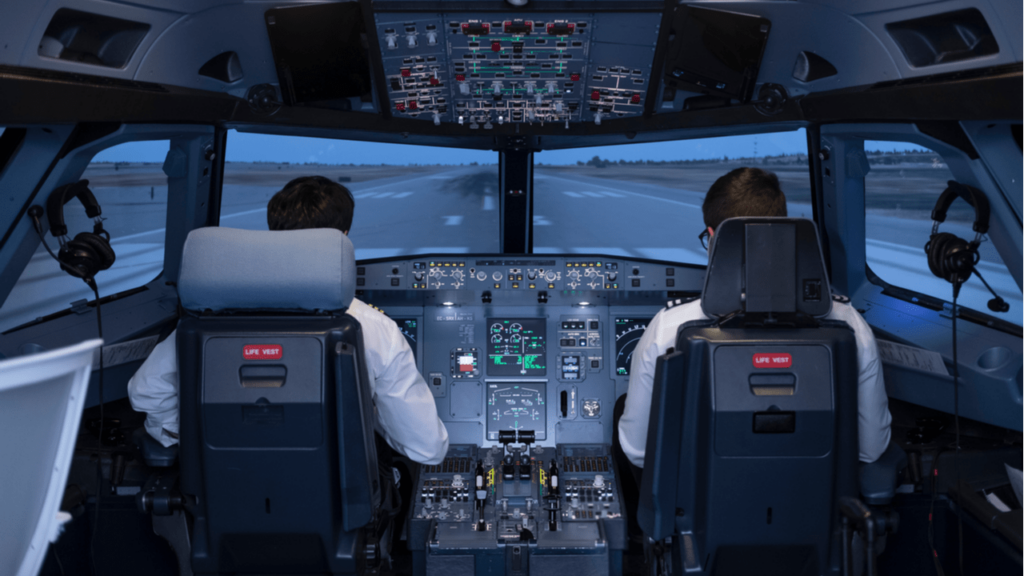
The world is running short of qualified pilots, creating a surge in global demand for skilled aviators. According to Boeing’s Pilot and Technician Outlook 2025–2044, more than 649,000 new pilots will be needed globally over the next two decades. As the demand rises, the United States continues to stand out as the preferred training hub for aspiring pilots worldwide. With its vast network of flight schools, reliable flying weather, and internationally recognised Federal Aviation Administration (FAA) licences, the U.S. continues to set the standard for pilot education.
For Indian students, it offers structured programs, advanced aircraft, and shorter training timelines, making pilot training both efficient and career-oriented. The pilot training cost in USA ranges from USD 70,000 to 100,000 (INR 62–88.7 lakh), depending on the school and total flight hours. Despite the cost, FAA-certified training provides long-term global career value through high safety and skill standards.
This guide outlines every essential detail about pilot training in USA for Indian students in 2026, including eligibility, fees, best schools, visa process, scholarships, and career prospects.
What Is Pilot Training in the USA?
Pilot training in the USA is a professional program that prepares students to earn licences issued by the Federal Aviation Administration (FAA), which governs all civil aviation in the country. Training combines classroom lessons, simulator sessions, and real flight hours with certified instructors.

Choose your dream country
 UK
UK
 USA
USA
 Germany
 Australia
 Ireland
 Canada
 UAE
UAE
 France
 Sweden
 Italy
Italy
 Other
Other
When do you want to study abroad?
What's your highest level of education?
Select you current city
How Leap will help you

Personalised University Shortlist

Express Applications with Quicker Admits

End-to-End Application Support
Key facts for Indian students:
- The pilot training cost in USA ranges from USD 70,000 to 100,000 (about INR 58 – 83 lakh).
- Costs usually include ground school, flight hours, and basic living expenses.
- Knowing the USA pilot training cost in Indian rupees helps students plan funding or education loans early.
- Most flying schools in USA for Indian students are FAA Part 141–approved, offering structured courses and visa guidance.
- The complete program generally takes 18 – 24 months to finish.
- With the right visa, medical fitness, and financial proof, an Indian can become a pilot in USA and later convert the licence for work in India or abroad.
Top FAA-Approved Flight Schools for Pilot Training in USA (2026)
Choosing the right academy is the most important step in your pilot training in USA journey. The best schools combine FAA-approved programs, large aircraft fleets, modern simulators, and good student support. For 2025–26, the following are among the best flying schools in USA for Indian students, known for their consistent results and visa support.
Here are the top FAA-approved flying schools in USA for Indian students:
| Flight School | Primary Location | Approximate Program Fees (USD & INR) |
|---|---|---|
| ATP Flight School | Nationwide (80+ sites) | $80,000 – $124,000 (INR 70.9L – INR 1.10 Cr) |
| Epic Flight Academy | New Smyrna Beach, FL | $70,000 (INR 62.1L) |
| US Aviation Academy | Denton, TX | $68,000 (INR 60.3L) |
| Wayman Aviation Academy | Pembroke Pines, FL | $61,000 – $89,000 (INR 54.1L – INR 78.9L) |
| CAE Oxford Aviation | Phoenix, AZ | $85,000 (INR 75.4L) |
| Embry-Riddle (ERAU) | FL & AZ | $90,000+ (INR 79.8L+) |
| Phoenix East Aviation | Daytona Beach, FL | $75,000 (INR 66.5L) |
Eligibility Requirements for Pilot Training in USA for Indian Students (2026)
To pursue pilot training in the USA in 2026, Indian students must meet several foundational, academic, and medical requirements. These criteria ensure you can handle the technical training and qualify for an eventually converted Indian Directorate General of Civil Aviation (DGCA) license.
Core Eligibility Requirements
- Age: You must be at least 17 years old to begin training for a Private Pilot License (PPL) and 18 years old to apply for a Commercial Pilot License (CPL).
- Academic Background: Completion of 10+2 (High School) with Physics and Mathematics from a recognized board is mandatory. A minimum of 50-60% marks is often preferred by top-tier programs.
- Note for Non-Science Students: If you did not have Physics or Math, you can clear these subjects through the National Institute of Open Schooling (NIOS) to become eligible.
- English Proficiency: Since aviation is conducted in English, you must be able to read, write, and speak it fluently. Most U.S. schools require IELTS (6.0+) or Duolingo (95+) scores as proof.
- Passport: You must hold a valid Indian passport with at least six months of validity remaining from your planned travel date.
Medical Fitness Standards
You must prove you are physically fit to fly. It is best to get these checks done in India before you spend any money on tickets or tuition.
- FAA Class 1 Medical: This is the U.S. standard. It checks your vision, hearing, and heart health (ECG). You can find FAA-approved doctors in major Indian cities like Delhi or Mumbai to get this cleared early.
- DGCA Class 1 Medical: This is the Indian standard. Even if you train in the USA, you need this to work in India later. Getting it now ensures there are no surprises during your license conversion.
Financial Proof
Pilot training is a major investment, usually costing between USD 70,000 and 110,000 (INR 62–98 lakh).
- I-20 Form: Once a school accepts you, they send you an I-20 form. You need this to apply for your student visa.
- Proof of Funds: During your visa interview, you must show "liquid funds" (bank balances or sanctioned loans) that cover at least your first year of tuition and living costs
Pilot Training Cost in USA 2026 and FAA to DGCA License Conversion for Indians
Financial planning is the foundation of your success. For the 2025–26 intake, the total investment typically ranges between USD 70,000 and 110,000 (approx. INR 62.7L to INR 97.5L). This variation depends on your choice of school, the state's cost of living, and how efficiently you complete your flight hours.
Estimated Expense Breakdown (Full Program)
| Expense Category | Estimated Cost (USD) | Estimated Cost (INR) | What’s Included? |
|---|---|---|---|
| Flight Training & Ground School | $55,000 – $85,000 | INR 48.7L – INR 75.4L | Aircraft rental, flight instructor fees, and classroom ground school sessions. |
| Living Expenses (12 Months) | $10,000 – $15,000 | INR 8.8L – INR 13.3L | Housing and food. States like Florida and Texas offer more affordable student housing. |
| Visa, SEVIS & Insurance | $2,000 – $3,000 | INR 1.7L – INR 2.6L | Mandatory SEVIS fee ($350), M-1 or F-1 visa processing, and health insurance. |
| FAA Medical & Supplies | $1,000 – $2,000 | INR 0.8L – INR 1.7L | FAA Class 1 medical exam, flight headsets, flight bags, and uniform supplies. |
| Simulators & Testing Fees | $4,000 – $7,000 | INR 3.5L – INR 6.2L | FAA written exams, check-ride examiner fees, and simulator hours. |
| Total Estimated Investment | $72,000 – $112,000 | INR 63.8L – INR 99.3L | The complete cost for a professional pilot program pathway. |
The Path Back Home: FAA to DGCA Conversion Explained
Once you earn your FAA Commercial Pilot License (CPL), you cannot immediately fly for an Indian airline. You must convert it to an Indian Directorate General of Civil Aviation (DGCA) license. This "bridge" process usually takes 3 to 6 months.
Here is exactly what you need to do to get your Indian wings:
1. Clear the Mandatory DGCA Written Exams
While in the USA or upon your return, you must pass specific theory papers to prove you understand Indian aviation laws and local weather patterns.
- Air Regulations: Laws of the Indian sky.
- Aviation Meteorology: Understanding weather patterns specific to the Indian subcontinent.
- Air Navigation: Planning routes and using instruments in the Indian context.
- Technical Exams: Depending on the aircraft you intend to fly in India.
2. DGCA Class 1 Medical Exam
Even though you have an FAA medical certificate, you must pass a fresh Class 1 Medical conducted by DGCA-authorized centers in India (such as Air Force stations or designated private hospitals).
3. Flying Requirements & Skill Test (Check Ride)
The DGCA requires specific flying experience that must be documented in your logbook.
- Recency Requirements: You may need to complete a few hours of "recency" flying in India if you haven't flown recently.
- The Skill Test: You will perform a flight test (Check Ride) with a DGCA-approved examiner to demonstrate your maneuvers, take-offs, and landings.
- Radio Telephony (RTR-A) License: You must obtain an Indian Radio Telephony license (Wireless Planning & Coordination) to operate aircraft radios in India.
4. Verification and Issue
Finally, the DGCA will verify your U.S. credentials with the FAA. Once all paperwork and tests are verified, you will be issued your Indian CPL, making you eligible for recruitment by airlines like Air India, IndiGo, or SpiceJet.
Step-by-Step Guide: How to Become a Commercial Pilot in the USA for Indian Students (2026)
Becoming a commercial pilot in the USA is a step-by-step journey designed to build your confidence and skills. Think of each stage as a "level up" in your training, following the FAA's world-class standards.
Here is your simple flight plan to earning your wings:
1. Private Pilot License (PPL) – The Foundation
- The Goal: Learn the basics of flying an airplane.
- The Experience: You’ll master take-offs, landings, and experience the thrill of your first solo flight.
- Time: Usually takes 3 to 6 months.
- Note: This is your mandatory first step before moving to professional levels.
2. Instrument Rating (IR) – Flying Through Clouds
- The Goal: Learn to fly when you can't see the ground, using only your cockpit screens.
- The Importance: This is a vital safety skill required for all airline pilots.
- Time: Typically takes 2 to 4 months.
3. Commercial Pilot License (CPL) – Going Pro
- The Goal: Get the legal "green light" to be paid for flying.
- The Experience: You’ll learn advanced maneuvers and fly long-distance "cross-country" routes.
- Time: Including previous steps, this takes about 12 to 18 months.
- Requirement: You must be at least 18 years old to apply
4. Multi-Engine Rating (MER) – More Power
- The Goal: Learn to fly planes with two or more engines.
- The Relevance: Essential for airlines, as almost all commercial jets have multiple engines.
- Time: Usually finished in just a few weeks.
5. Certified Flight Instructor (CFI) – Building Experience
- The Goal: Teach new students while earning a salary and building your flying hours.
- The "1,500-Hour" Rule: Many Indian students on an F-1 visa work as CFIs. This helps you reach the 1,500 flight hours needed for an Airline Transport Pilot License (ATPL)—the final license required to become an airline captain.
Understanding US Student Visa for Indian students
Deciding on the right visa is just as important as picking the right flight school. Your visa choice determines whether you can work in the USA after you finish your training or if you need to head back to India immediately.
1. The M-1 Visa: The Fast Track (Vocational)
Think of the M-1 visa as a "study-only" permit. It is the most common choice for students attending standalone flight schools to get their Commercial Pilot License (CPL) quickly.
- Best For: Students who want to finish training fast and return to India to start their career.
- Duration: Valid for the length of your course, usually up to 24 months.
- Work Rules: You cannot work part-time or after you graduate.
- Going Home: You must leave the USA within 30 days of completing your course.
2. The F-1 Visa: The Career Builder (Academic)
The F-1 visa is for students enrolled in academic programs, like an Aviation Degree at a university.
- Best For: Students who want to gain work experience in the USA before coming home.
- The Big Benefit (OPT): After graduating, you can stay for 12 months of "Optional Practical Training" (OPT).
- Work Rules: During OPT, you can work as a Certified Flight Instructor (CFI). This is a great way to earn a salary (approx. $800–$1,200/month) while building the 1,500 flight hours needed for senior licenses.
Pilot Career Paths in the USA: Job Opportunities for International Students
The career outlook for pilots trained in the USA remains exceptionally strong in 2026, driven by a projected global shortfall of 24,000 pilots this year alone. For international students, the path to these opportunities depends largely on your visa and the flight hours you accumulate.
Immediate Post-Training Roles (Building Your Hours)
Since most major airlines require at least 1,500 flight hours for employment, your first few years will be spent in "time-building" roles.
- Certified Flight Instructor (CFI): This is the most popular route for international students on an F-1 visa. You can earn a salary of $35,000 – $70,000 while teaching new students and logging the critical hours needed for your next step.
- Aerial Survey and Photography: Pilots fly specialized aircraft to map terrain or monitor infrastructure.
- Banner Towing and Sightseeing: Common entry-level roles in coastal and tourist-heavy states like Florida and California.
- Regional Cargo or Charter: Small operators often hire pilots with lower hours for short-haul freight or private passenger flights.
Advancing to Commercial Airlines
Once you reach the 1,500-hour milestone and obtain your Airline Transport Pilot (ATP) certificate, major career doors open.
| Career Phase | Typical Role | Flight Hour Milestone | Estimated Salary (USD) | Estimated Salary (INR) |
|---|---|---|---|---|
| Early Career | Regional First Officer | 1,500 Hours | $70,000 – $120,000 | INR 62 Lakh – INR 1.06 Crore |
| Mid-Career | Regional Captain / Major First Officer | 2,500 – 4,500 Hours | $120,000 – $220,000 | INR 1.06 Crore – INR 1.95 Crore |
| Senior Career | Major Airline Captain | 5,000+ Hours | $250,000 – $500,000+ | INR 2.21 Crore – INR 4.43 Crore+ |
Conclusion: Taking Your Career to New Altitudes
The United States remains the premier global hub for pilot training, offering Indian students an unmatched combination of speed, safety, and advanced technology. While the journey requires careful financial planning and a commitment to rigorous standards, the rewards are immense. From significantly shorter training timelines to a license respected by major airlines worldwide, your investment in a U.S. education is an investment in your long-term career seniority and earning potential.
As you prepare for the 2026 intake, remember these three keys to success:
- Plan Early: Start your DGCA medicals and written exams now to streamline your license conversion later.
- Choose the Right Path: Decide if a vocational M-1 route or an academic F-1 route with work opportunities fits your personal goals.
- Stay Focused: The global pilot shortage means that qualified, FAA-certified pilots are in higher demand than ever before.
Start your journey with Leap Scholar Your path to an international career is just a click away. Whether you are at the beginning of your research or ready to take the next big step, we are here to provide the clarity and support you need to succeed globally.
Frequently Asked Questions (FAQs)
-
1. How much does a Commercial Pilot License (CPL) cost in the USA?
A CPL with multi-engine and instrument ratings typically ranges from $55,000 to $100,000 (₹49–88 lakh), depending on the school and flight hours required
-
2. Can I work in the USA after finishing my pilot training?
Only students on an F-1 visa are eligible for Optional Practical Training (OPT), which allows for 12 months of paid work, often as a Flight Instructor35353535. M-1 visa holders cannot work after training
-
3. Is 10+2 with Physics and Math compulsory for Indian students?
Yes. To be eligible for a pilot license in India (DGCA) and most U.S. programs, you must have completed 10+2 with Physics and Mathematics
-
4. How long does it take to become a pilot in the USA?
Full-time students can complete their PPL and CPL with additional ratings in 18 to 24 months. Accelerated programs may be faster but require intensive commitment
-
5. Are there scholarships available for Indian pilot students?
While full scholarships are rare, academies like Epic Flight Academy and ATP offer merit-based bursaries of $5,000 to $10,000. Indian banks like SBI, ICICI, and Axis also provide specialized education loans for pilot training.










Have Questions? Get Guidance to reach your Dream University
Connect with India's finest counsellors and biggest study abroad community.
Get Guidance