
Which master's specialisation suits a BBA graduate applying to France with 2 years of work experience?
Skip the standard two-year Master in Management and target a specialised one-year MSc in International Business or Business Analytics at a school like SKEMA, EDHEC, or KEDGE, since your 24 months of experience already qualifies you for the accelerated track.

France's business school system quietly sorts applicants by experience level long before it sorts them by subject. Two years of work changes which door you should be walking through, and picking the wrong one means paying for a year of content you don't need.
Why Two Years of Experience Rules Out a Standard MiM in France
A traditional Master in Management is built for candidates straight out of a bachelor's degree with little to no work history, which is why it usually runs two full years. With 24 months of professional experience, you qualify for the shorter, more specialised MSc and Mastere Specialise tracks that most French grandes ecoles reserve for early-career professionals, cutting a year off your timeline and tuition.
Specialised One-Year Tracks Worth Targeting
- MSc International Business or Global Management: SKEMA, NEOMA, KEDGE, and ESSCA all offer this as a natural extension of a BBA, aimed at cross-border business development roles.
- MSc Business Analytics or Digital Marketing: ESSEC, EDHEC, emlyon, and ESCP recruit heavily for these, useful if your two years touched data or e-commerce.
- Luxury Brand or Hospitality Management: Audencia and emlyon offer specialised tracks that leverage France's position as the global centre for luxury retail, a strong fit if your experience was in retail or brand roles.
My Advice
In my experience, the biggest mistake BBA graduates with two years of experience make in France is under-selling that experience in their application essays and letting the school assume they're a fresh graduate. Lead your statement of purpose with what you actually did in those 24 months, and use it to justify why the one-year specialised track, not the two-year MiM, is the right fit for where you already are in your career.
More expert answers

France and Japan reward slightly different profiles from the same BBA base: France's business school ecosystem is built around breadth and choice, while Japan's English-taught options are fewer but tend to connect more directly to manufacturing, logistics and Japanese employers.
Business Analytics: The Strongest All Round Pick
- Keeps the most doors open: consulting, finance, marketing analytics and operations all draw on it.
- Builds directly on a BBA: the business foundation pairs naturally with data skills.
- Available in both countries: strong programmes exist across French business schools and at Japanese universities such as Kobe.
France Vs Japan: What Actually Decides This
| Factor | France | Japan |
|---|---|---|
| Programme breadth | 1,600+ English-taught programmes across management | Fewer options, but includes fully English-taught degrees like Kobe's KIMAP |
| Strongest industry link | Luxury, consulting, international business | Manufacturing, supply chain, automotive, electronics |
| Best if you want | A wide specialised choice and a European career | A tighter niche and long term ties to Japanese employers |
Career Landing After Graduation
France's Autorisation Provisoire de Sejour lets international master's graduates stay for up to twelve months after graduation to look for a job or start a business, which gives a France-based Business Analytics degree a genuine local landing pad rather than a straight return home. Japan's route is different: even on a fully English-taught programme like Kobe's KIMAP, most Japanese employers still expect at least conversational Japanese for anything beyond a narrowly technical role, so factor language study into your two years there if you want to stay on rather than move back to India or on to a third country afterward.
This Information Is Also Available On
Campus France's official listing of management studies programmes, and Japan's official Study in Japan school search database.
My Advice
I would not pick Japan purely because your BBA syllabus talked up its manufacturing sector, unless your two years of experience are actually in operations, procurement or an automotive adjacent industry; Business Analytics or International Business plays more naturally into France's wider ecosystem. If your budget is tight, check Japan's tuition and living costs carefully first, since they can run lower than several French grande ecole programmes.
A Bachelor of Commerce alone is not enough to choose a specialisation; what your 3 years of work were actually in should drive the decision far more than the degree title. France has genuine strength across finance, analytics and management, mostly taught in English, but the wrong pick here means competing against candidates whose work history tells a cleaner story.
Match the Specialisation to What You Actually Did
- Accounting, banking or corporate finance work: MSc Finance, Corporate Finance or Financial Management; ESSEC's Master in Management already includes Finance and Financial Markets tracks.
- Excel, reporting, MIS or forecasting work: MSc Business Analytics or Business Intelligence, a stronger long-term career pivot than staying inside pure commerce.
- Sales, operations or logistics work: MSc Supply Chain Management, an underused option that reads as a coherent story for a BCom-plus-operations profile.
- Mixed sales/admin/business development work: a Master in Management (MiM) or International Business, though check the programme's target experience band first.
One Real Trap: Experience Level vs Programme Design
Three years of work experience can actually work against you on some Master in Management programmes; HEC Paris describes its MiM as aimed at applicants with little or no professional experience, while ESSEC runs a separate Intensive MiM track built specifically for candidates with prior international work history. Applying to the wrong track wastes a strong application.
My Advice
Do not default to Finance just because it is the most obvious BCom-to-France path; write down, in one line, what your 3 years actually involved, and pick the specialisation that continues that story rather than restarts it. If your work was genuinely mixed across functions, Business Analytics is my fallback: it is the specialisation French recruiters currently reward most regardless of your starting sector.
With 3 years of work experience, your previous role should steer this choice more than the country does. A broad, unrelated general management degree is the one option worth avoiding regardless of which country you pick.
France vs Italy for Your 3 Years of Experience
| Factor | France | Italy |
|---|---|---|
| Strongest for | International Management, Finance, Consulting, and Marketing | Luxury and Fashion Management, Operations, and Supply Chain, especially in Milan |
| Example programme | EMLV's Master in Management with an International Business track | Universita Cattolica's own Management programmes in Milan |
| Best if you want | A larger, more established English-taught business school ecosystem | A manufacturing, automotive, or luxury industry connection |
When to Choose Luxury or Brand Management Instead
- Marketing, sales, or FMCG background: Luxury and Brand Management plays directly to France and Italy's genuine strengths in that industry.
- Operations or manufacturing background: Italy's Supply Chain and Operations programmes fit that experience particularly well.
- Finance or accounting background: France's specialised finance master's pathways are usually the stronger match.
This Information Is Also Available On
Campus France's own management-studies overview page, and EMLV Business School's own Master in Management programme page.
My Advice
In my experience, applicants pick a general management degree simply because it feels safe, then find it less differentiated at recruitment than a specialisation that actually connects to their 3 years of work history. Choose Luxury and Brand Management, Finance, or Operations if your work history genuinely supports it, and default to International Business or Global Management only if your 3 years were broad rather than specialised. Avoid a generic Master in General Management from a lesser-known school regardless of price.
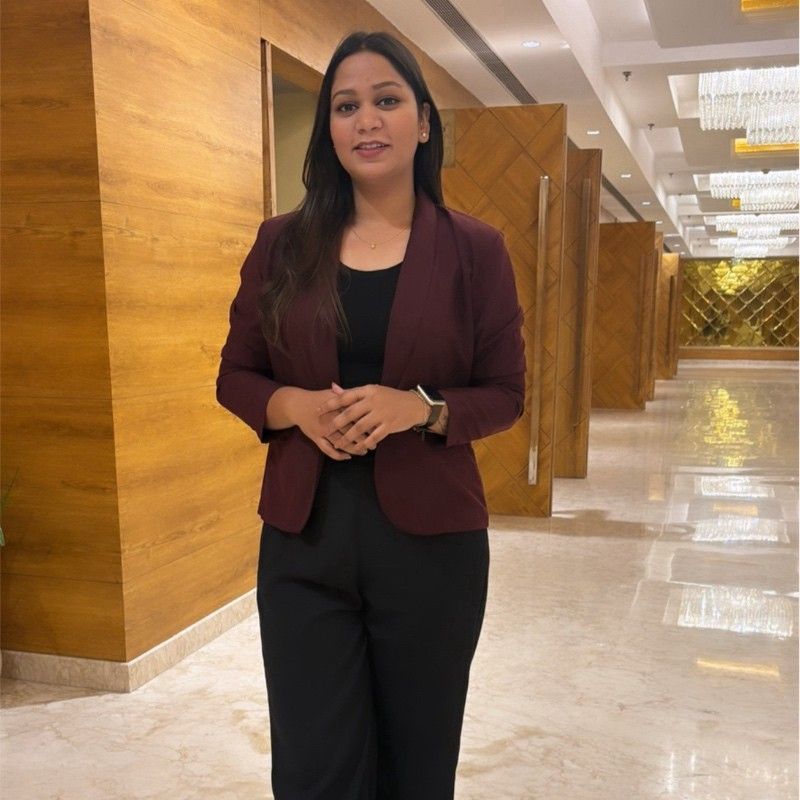
Unlike a traditional MBA, which usually needs 3 to 5 years of experience, a French Master in Management, or Grande Ecole programme, is designed specifically for candidates like you with a BBA and around a year of work experience, so you can target advanced specialisations directly rather than a generic first year.
Specialisation Options And Career Outcomes
| Specialisation | Why It Suits Your Profile | Career Outcomes |
|---|---|---|
| Strategy and Management Consulting | Your 12 months proves the corporate maturity needed for complex problem solving | Management Consultant, Strategy Analyst |
| Corporate Finance and Investment Banking | Demonstrates you can handle fast-paced financial environments | Financial Analyst, M&A Associate |
| Luxury Brand Management | Paris is the global capital for luxury, your experience helps you grasp its operational scale | Brand Manager, Retail Operations Director |
| Data Analytics and Digital Transformation | Pairs your business degree with in-demand tech skills | Business Intelligence Analyst, Product Manager |
How French Schools Structure These Tracks
- HEC Paris offers elite tracks in Strategic Management and Managerial Economics, where your experience helps in competitive case-study interviews.
- ESSEC Business School runs an Advanced Master in Strategy and International Business, plus specialised luxury tracks.
- emlyon business school offers a customisable cohort system with a strong six month employment rate.
- SKEMA Business School lets you exit with a double degree, combining the Master in Management with an MSc in Global Luxury or Financial Markets.
- Many schools also offer an Alternance or work-study format, where your prior experience makes you attractive to employers looking to sponsor an apprentice.
My Advice
Use your 12 months of work experience as leverage to apply for the Alternance or apprenticeship track at schools like Audencia or emlyon, since French employers sponsoring these positions specifically look for candidates who already understand workplace basics. Pick your specialisation based on the industry your first year of experience was in, since French Grande Ecole admissions weigh a coherent career story from BBA to Master in Management far more than an unrelated pivot.
Looking for a specific course in France?
We will find the universities that offer it, and whether you will get in.
More Universities & admissions questions
- When are the spring and fall application deadlines for South Korean universities that I should plan for?
- How much would I pay in first-year tuition for the International MBA program at York University, Toronto?
- What are some effective online German language classes for Indian students preparing to study in Germany?
- Is there a minimum percentage and IELTS score I must meet to apply for a Masters in Thailand?
- By when should my HEP point be completed, should it be this month to avoid delay in UK?
- If I apply to two courses at the same university, do I need separate letters of recommendation for each course or can I use the same letter for both?
- What are the chances of getting a conditional offer letter requiring IELTS even if I have a good 12th standard score?
- Is January 2027 intake possible for masters in business analytics in UK/UAE?
More France questions
- Does my 12th grade percentage affect my master's application in Germany/France for a Bachelor's?
- Can you tell me which colleges provide good scholarships, especially need-based rather than merit-based scholarships in Ireland/France for a Master's?
- What is the typical intake period for my course, and is summer intake available in Germany/France for a Master's?
- Have you discussed your abroad education plan with your parents in UK/Australia?
- Is it necessary to have a resume for the application process in Germany/France for a Master's/MBBS?
- Are there any low-budget countries that offer good education with a good work-life balance in Germany/France?
- Which countries besides UK, Ireland, Canada, and Germany are good for computer science and AI masters programs in France/Netherlands for a Master's?
- What is the average minimum amount of funds required for studying abroad, including tuition and living expenses in Germany/France?